



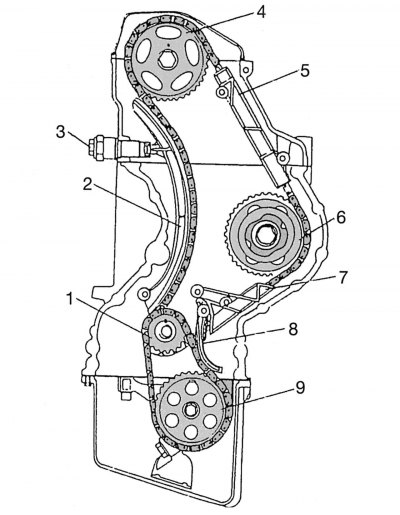
Figure 119. Location of the oil pump in the front of the engine: 1 - crankshaft sprocket; 2 — chain tensioner shoe; 3 - chain tensioner; 4 — camshaft drive sprocket; 5 - upper chain guide; 6 — fuel pump drive sprocket; 7 - lower chain guide; 8 — oil pump drive chain tensioner lever; 9 — oil pump drive sprocket
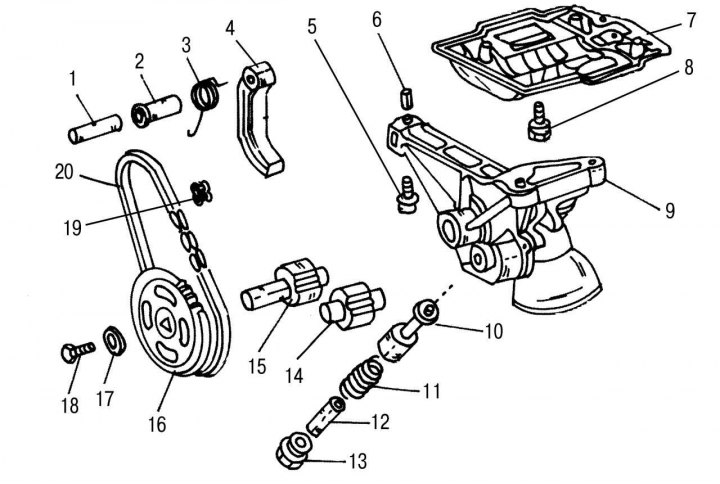
Figure 120. Oil pump structure (engine with index 602): 1 - chain tensioner mounting pin; 2 — chain tensioner guide bushing; 3 - spring; 4 — oil pump drive chain tensioner; 5 — oil pump mounting bolt; 6 - guide bushing; 7 — oil pump partition; 8 — oil pump partition mounting bolt; 9 — oil pump housing; 10 — plunger of the oil pump pressure reducing valve; 11 — spring; 12 — oil pump pressure relief valve stop bolt; 13 — plug; 14 — driven gear of the oil pump; 15 - drive shaft with pinion; 16 - drive sprocket; 17 - washer; 18 — bolt for fastening the oil pump drive sprocket; 19 — oil pump drive chain lock; 20 — oil pump drive chain
Figure 119 shows the location of the oil pump. The oil pump can be replaced without removing the engine. The individual units of the pump and its drive are shown in the figure 120 using a five-cylinder engine as an example. Usually, in case of a breakdown, the pump is not repaired, but replaced as an assembly.
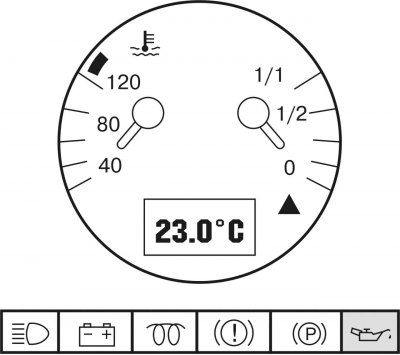
Figure 121. Oil pressure indicator light
Oil level indicator light in instrument cluster (symbol depicting an oil can in Figure 121) lights up when the oil level is at the lower mark on the dipstick and indicates that oil needs to be added. Be sure to use special oil for diesel engines.
Caution! If the oil pressure warning light comes on, stop the engine immediately and bring the engine oil level up to normal.
Information copied from the website: MercedesMan