



Contents: Valve knocking when starting the…↡ Checking hydraulic tappets ↡ Exceeding the rated speed and engine…↡
The E-class engines have a hydraulic valve adjustment system. The use of a hydraulic adjustment system with hydraulic tappets significantly reduces engine noise compared to the operation of conventional valves. The hydraulic tappets are located directly between the camshaft cams and the end of the valve stem, they provide clearance in the valves, and at the same time, the closed valves fit tightly to the seat.
Knocking noises in the engine may also be caused by other faults, which are described below.
Valve knocking when starting the engine
When the engine is started, the hydraulic tappets immediately start working, for this purpose special check valves are used. They are designed to fill the lubrication system and the oil channel of the hydraulic tappets and camshaft bearings with oil.
If the engine has not been running for a long time, the valve knocking is not the cause of the breakdown. The fact is that when the engine has not been running for a long time, the oil from the hydraulic tappets drains. When the engine is started, the hydraulic tappets fill with oil, and the knocking disappears.
If the valve knocking in the cylinder head area continues on a warm engine, this indicates that one or more hydraulic tappets are defective. They cannot be repaired and should be replaced.
The following may be the cause of valve knocking, which lasts from several seconds to 10 minutes:
- the engine oil was changed before starting it;
- the engine has not been running for more than a day;
- the engine starts after repair (replacement of tappets).
Checking hydraulic tappets


(Original article is on the portal: MERCEDESMAN)
1. Warm up the engine to operating temperature and let it idle until the fan comes on.
2. Allow the engine to run at high speed for 2 minutes (2500 min⁻¹).
3. If the valve knocking continues, stop the engine.
4. Remove the cylinder head cover.
5. Turn the engine crankshaft so that the camshaft cams of the cylinder being tested are pointing upward.
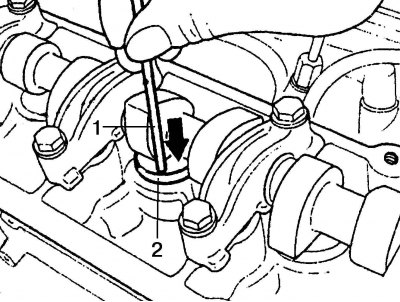
Fig. 5.2. Checking hydraulic tappets: 1 – pin; 2 – pusher
6. Using a wooden or plastic pin 1 (Fig. 5.2), press on the pusher 2.
Caution! Do not use metal tools as this will cause scratches.
If you feel "air" before the valve opens, or the tappet drops quickly and without resistance, the tappet needs to be replaced. This work should be done by specialists in an auto repair shop.
Exceeding the rated speed and engine life
High RPM reduces engine life. If the engine is running at high RPM and unusual knocks or noises are heard, this indicates wear of the crankshaft or valve mechanism. If the wear is severe, the tappet may break, the valve and cylinder will not work. You will feel this by the decrease in engine power. The worst case scenario is the destruction of the valve springs and the impact of debris on the moving piston. As a rule, this leads to serious engine failure.