



Depending on the date of manufacture and engine configuration, the wiring harnesses, fuel lines, vacuum hoses, and coolant hoses in the engine compartment have different wiring. Since this manual cannot cover all configuration options in detail, we suggest marking the removed parts with paint or tags to avoid difficulties during installation.
Note: The procedure for removing and installing a 6-cylinder in-line engine is similar to that given for a 4-cylinder engine.


Removal
1. Set the hood to the vertical position by opening the hood, pressing it and holding it in this position. Press the locking lever marked "PRESS" near the right hinge and release the hood. Gas-filled shock absorbers will bring it to the vertical position.
2. Remove the engine compartment cover from below.
For models produced from 06.1995 to 06.1996, equipped with air conditioning:
3. Remove the viscous coupling of the cooling system fan. It should be noted that the fastening parts have left-hand threads.
For all models:
4. Drain the coolant and remove the radiator.
Attention! On cars equipped with air conditioning, after removing the radiator, it is necessary to protect the condenser with a 400 x 680 x 1 mm plate, which can be made independently from tin and secured with mounting brackets.
5. Disconnect the connector from the mass air flow meter.
6. Remove the cross pipe together with the upper air cleaner cover and the mass air flow meter.
7. Disconnect the cable from the negative terminal of the battery.
Attention! In this case, the codes of the anti-theft system, car radio, and radio are erased from the memory of electronic devices. They must be restored later.
8. Remove the control unit cover.
9. Disconnect the control unit connector by lifting the clamps upward.
10. Disconnect the surge protection connector.
11. Disconnect the wires from the generator.
12. Disconnect the oxygen concentration sensor connector.
13. Disconnect the ground bus from the engine.
For cars with automatic transmission (AT):
14. Disconnect the connector in the engine compartment, front left. In doing so, unscrew the fastener and lift the windshield washer fluid reservoir.
For all models:
15. Disconnect the wire from the outside of the body connected to contact "30" located in the driver's footwell.
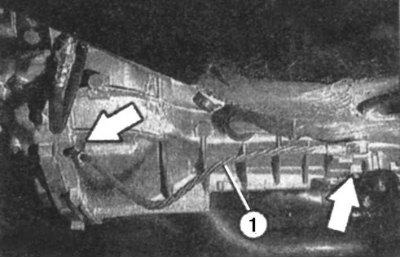
Fig. 5.10. Wire connecting the engine to the body: 1 – wire
16. Disconnect the fastening of wire 1 (Fig. 5.10) of the "ground" connecting the body to the engine.
For models with air conditioning:
17. Disconnect the connector from the compressor.
For all models:
18. If the gearbox is disconnected from the engine, remove the starter.
19. Disconnect the vacuum hose from the canister valve.
20. Disconnect the accelerator rod.
21. Open the fuel tank cap briefly to relieve excess fuel vapor pressure.
Warning! Due to the risk of fire, do not use open flames, heated objects, or smoke. Gasoline vapors are poisonous, so ensure good ventilation of your work area. Wear safety glasses, as the fuel system is under pressure. Disconnecting its components may result in fuel being released.
22. Mark the fuel lines with tags or adhesive tape and disconnect them, after plugging the holes and clamping the hoses with clamps to prevent fuel leakage. Remove any leaked fuel with a rag.
23. Disconnect the vacuum lines from the intake manifold by unscrewing the union nuts.
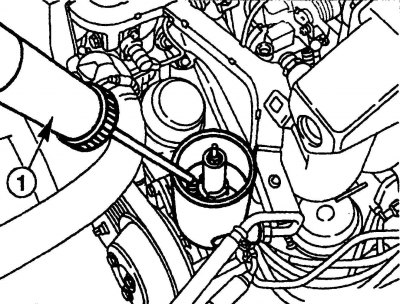
Fig. 5.11. Removing the working fluid from the power steering reservoir: 1 – syringe
24. Using a syringe 1, pump out the working fluid from the power steering reservoir (Fig. 5.11), then disconnect the hoses, plugging the holes with service plugs.
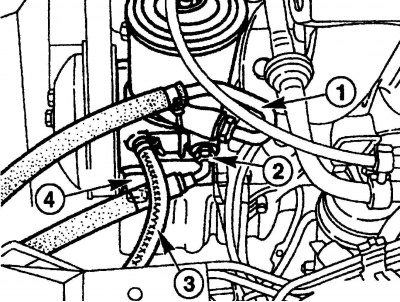
Fig. 5.12. Disconnecting the power steering hoses: 1 – return hose; 2, 3 – high pressure hose; 4 – suction oil line
25. Disconnect return hose 1 (Fig. 5.12) and high pressure hose 2 from the power steering pump.
For vehicles with adjustable ride height:
26. Disconnect the additional high pressure hose 3 and the suction oil line 4, having first loosened the clamps and moved them.
For all models:
27. Disconnect the cooling system hoses from the cylinder head at the rear and from the coolant pump, first loosen the clamps and move them.
Warning! Do not open the air conditioning system circuit - contact of refrigerant with skin may cause local frostbite.
For models with air conditioning:
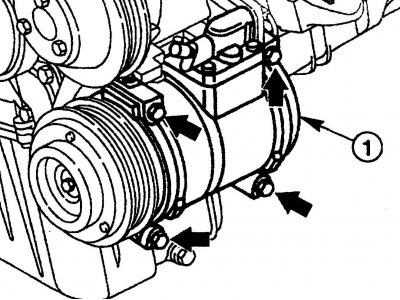
Fig. 5.13. Removing the air conditioning compressor mount: 1 – compressor
28. Unscrew the bolts (fig. 5.13, arrows) compressor mounts 1, then, without disconnecting the hoses, hang it from the body using wire.
For all models:
29. Drain the coolant from the cylinder block into a suitable container by unscrewing the drain plug. After draining, screw the plug back in.
30. Disconnect the control rods from the gearbox.
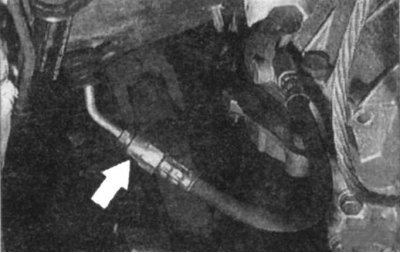
Fig. 5.14. Disconnecting the pipeline from the clutch slave cylinder
31. Disconnect the pipeline from the clutch slave cylinder (Fig. 5.14).
32. Remove the exhaust system.
33. Disconnect the propeller shaft from the gearbox.
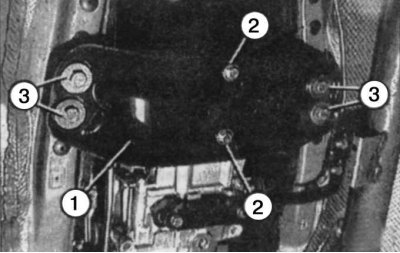
Fig. 5.15. Rear cross beam of the power unit: 1 - beam; 2, 3 – bolts
34. Remove the rear cross member 1 (Fig. 5.15) of the power unit together with the support.
35. Loosen the bolts securing the engine mounts to the body and the front suspension cross member.
36. If the gearbox is disconnected from the engine, remove the lower gearbox-to-engine mounting bolts.
37. Attach the lifting gear slings to the engine lugs and lift the power unit until the slings are taut.
38. Unscrew the upper bolts securing the gearbox to the engine.
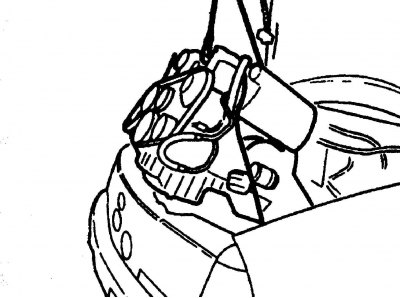
Fig. 5.16. Lifting the power unit
39. Using a crowbar, pry the engine away from the gearbox and lift it upwards. Ensure that the power unit is tilted at an angle of no more than 45° (Fig. 5.16).
Caution! When lifting the power unit, be careful not to damage the body. Pay special attention to the rear eye and oil filter.
40. Remove the engine from the car, disconnect the gearbox.
Checking the technical condition of parts
Make sure that there are no cracks or breaks in the rubber mounts of the power unit, coolant hoses, or pipelines.
The ball bearing located in the crankshaft should rotate easily and without binding.
Make sure the clutch release bearing rotates freely and does not bind during axial movement.
Check the thickness of the friction linings of the driven clutch disc.
Installation
41. Connect the gearbox to the engine if it was removed.
42. Install the power unit into the engine compartment from above, making sure that no parts of the power unit or body are damaged when lowering.
43. Connect the gearbox to the intermediate flange of the engine, tightening the mounting bolts to the following torques: M10x40 – 55 Nm, M10x45 – 55 Nm, M10x90 – 45 Nm.
44. Connect wire 1 to the ground (Fig. 5.10).
45. Install the front powertrain mount bolts and tighten them by hand.
46. Tighten the rear support mounting bolts to the following torques:
- bolts 2 (Fig. 5.15):
- on engines of series 111 and 104 - 25 Nm;
- on the 112 series engine - 30 Nm;
- bolts 3 fastening the rear cross member to the body - 40 Nm;
- bolts and nuts for fastening the rear support to the gearbox - 40 Nm;
47. Tighten the front support mounting bolts to the following torques:
- front suspension beam mounting bolts:
- on engines of series 111 and 104 - 55 Nm;
- on the 112 series engine - 35 Nm;
- engine block mounting bolts:
- on engines of series 111 and 104 - 25 Nm;
- on the 112 series engine - 20 Nm;
- heat shield mounting bolt - 10 Nm;
48. Connect the propeller shaft to the gearbox.
49. Install the starter (if the engine was removed without the gearbox).
50. Connect the ground wire coming from the body to the engine.
51. Connect the gearbox to the control mechanism.
52. Connect the clutch slave cylinder to the pipeline, then remove air from the clutch hydraulic drive.
53. Install the exhaust system components.
For models with air conditioning:
54. Install compressor 1 (see fig. 5.13), tighten the mounting bolts to a torque of 25 N·m, and remove the protective plate for the condenser.
For all models:
55. Install the accessory drive belt.
56. Install the radiator.
57. Install the cooling system hoses and secure them securely with clamps.
For models produced from 06.1995 to 06.1996, equipped with air conditioning:
58. Install the viscous coupling of the cooling system fan. It should be noted that the fastening parts have left-hand threads.
For all models:
59. Install the engine compartment shield from below.
60. Lower the car.
61. Attach the return hose 1 (see fig. 5.12) and hose 2 high pressure to the power steering pump.
For vehicles with adjustable ride height:
62. In addition to the previous operation, connect high pressure hose 3 and suction oil line 4.
For all models:
63. Connect the fuel lines.
64. Connect the vacuum hoses to the engine.
65. Install the control unit box cover.
For models with automatic transmission:
66. Connect the pipes to the valve block.
For all models:
67. Attach the vacuum hose to the canister valve.
68. Install the air cleaner cross pipe, MAF sensor and upper air cleaner.
69. Connect the connector to the mass air flow sensor.
70. Check the brake fluid level in the reservoir, top it up to the normal level if necessary and remove air from the brake system.
71. Pour working fluid into the power steering reservoir and remove air from the system.
72. Fill the coolant into the expansion tank of the cooling system.
73. Check the oil level in the engine and gearbox, top up if necessary.
74. Connect the wire to the negative terminal of the battery.
75. Start the engine and warm it up to operating temperature, check the coolant level in the cooling system, as well as the tightness of the hose connections.
76. Close the hood by pressing the lever near the right hood hinge.
77. Set the clock.
78. Enter the codes for the anti-theft system and radio.
79. Read possible engine fault codes and correct these faults.
[Information copied from the website: MercedesMAN]