



Contents: Lighting in sun visors ↡ Glove compartment lighting ↡ Light in the trunk ↡ Instrument cluster lighting ↡ Switch lighting ↡ Lighting for heating system control ↡ Light Switch Lighting ↡ Ashtray Lighting ↡ Automatic transmission selector ↡ Replacing lamps ↡
Sequence of works


Lighting in sun visors
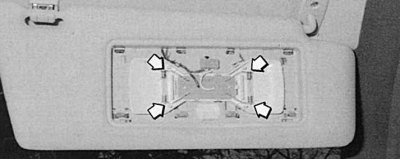
Fig. 10.20. Spotlights in sun visors are installed in spring contacts (arrows)
Use a screwdriver to pry off the cover (hole in the bottom edge) (fig. 10.20).
Glove compartment lighting
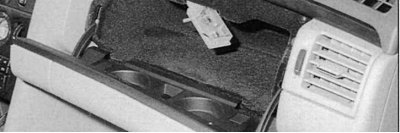
Fig. 10.21. Replacing the lamp in the glove compartment
To replace the spotlight, remove the light fixture from the niche (fig. 10.21).
Light in the trunk
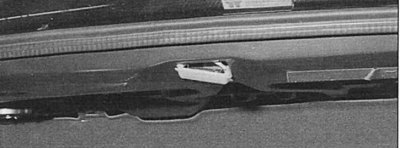
Fig. 10.22. Replacing the lamp in the trunk
With the trunk open, press on the light from behind, remove it from the niche and replace the spotlight bulb (fig. 10.22).
Instrument cluster lighting
Glass-base lamps for lighting and very small lamps are installed in the cluster from the inside. Therefore, to replace them, you must first remove the instrument cluster.
Switch lighting
The backlight lamps are partially non-removable and are replaced together with the switches. Some switches, however, have glass-base lamps with push-in contacts. To replace them, first remove the switch from the instrument panel.
Lighting for heating system control
Remove both rotary switches for the fan and air distribution with pliers wrapped in cloth. There is a small white cover on the outside side of the switch axis. Slide it off and replace the glass-base lamp installed underneath with a sharp tool.
Light Switch Lighting
Remove the rotary switch. There is a glass-base bulb underneath that should light when the rear fog lights are turned on.
Ashtray Lighting
Remove the ashtray insert. There is a glass-base bulb mounted on the side under the cigarette lighter. Carefully replace it with a cloth-wrapped tool.
Automatic transmission selector
Unscrew the center console trim and lift it up a little. In front, on the left side of the switch mechanism, there is a glass-base bulb socket.
Replacing lamps
If a recently replaced bulb stops working, it does not always mean that it is burnt out. Typically, on older cars, corrosion often prevents current from flowing to the bulb socket. In this case, the bulb will light if you move it in the socket. In this case, clean the socket and bulb contacts. Check the reliability of the contact between the bulb and the socket.
A test lamp can be used to easily check whether voltage is supplied to the socket. To do this, find the lamp on the circuit diagram and check its circuit.
If you touched the glass bulb with your bare hands before installing the lamp, be sure to wipe it with a clean cloth afterwards, because any remaining traces of moisture will then evaporate from the hot lamp, causing the diffuser to become cloudy.
On the instrument cluster board, the current to the lamps passes through flat copper connecting tracks. If a scratch interrupts such a track, you can make a jumper in this place from a piece of wire, soldering its ends on both sides of the scratch.