



Contents: Removal ↡ Installation ↡
Removal
Attention! Removing the gearbox is complicated by the fact that access to the bolts that secure the gearbox to the engine is limited.
The torque converter drain plug, visible through the window in the transmission housing
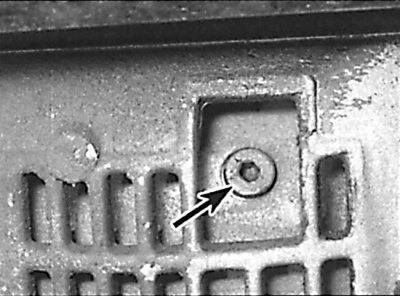
Location of torque converter mounting bolts to drive plate
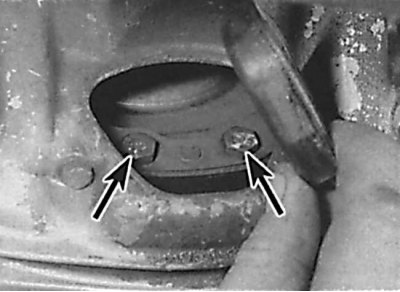
Removal the heat shield from the bottom of the car
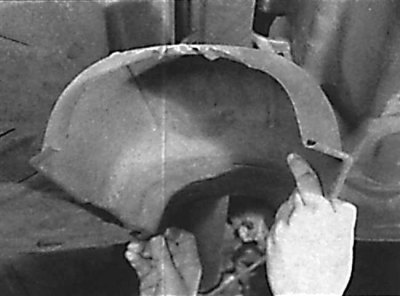
Unscrewing the exhaust system mounting bracket from the bottom of the car
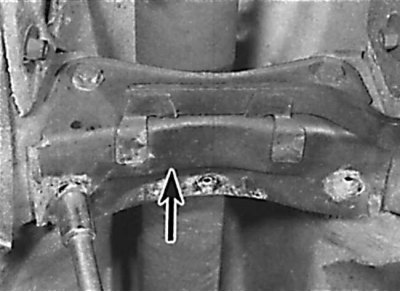
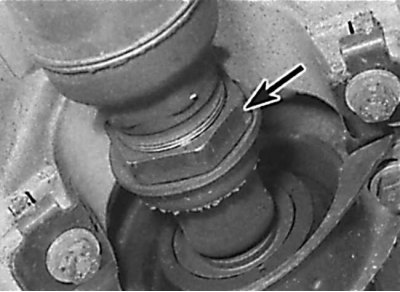
Position of the central bearing clamp nut of the propeller shaft
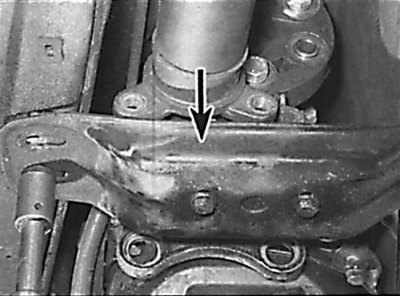
Location of the rear support of the power unit
Disconnecting electrical wires from the traction relay
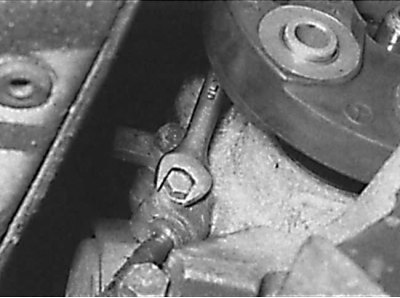
Unscrewing the speedometer drive cable mounting bolt
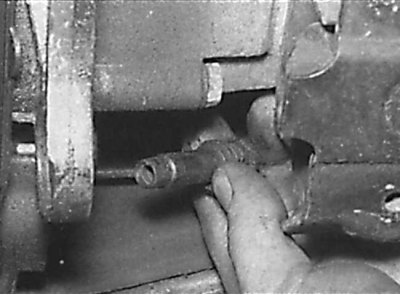
Removal the speedometer drive cable from the gearbox housing
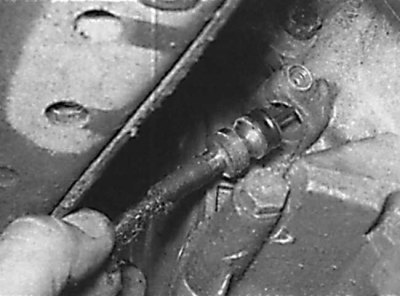
Location of electrical connector for starter interlock switch and reverse lights
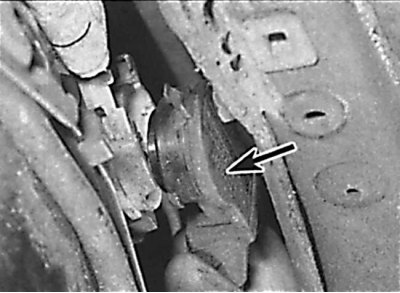
Removal the wire from the left side of the gearbox housing
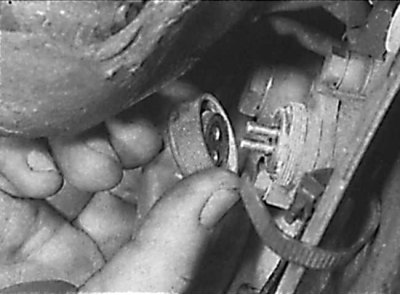
Location of vacuum chamber on left side of automatic transmission
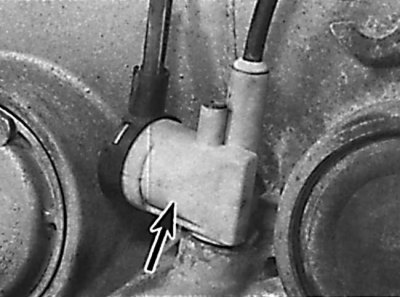
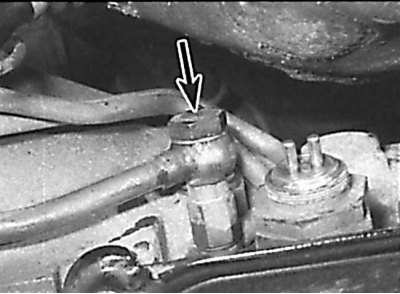
Location of the transmission fluid heat exchanger tube mounting bolt
Removal the transmission fluid dipstick tube for the gearbox
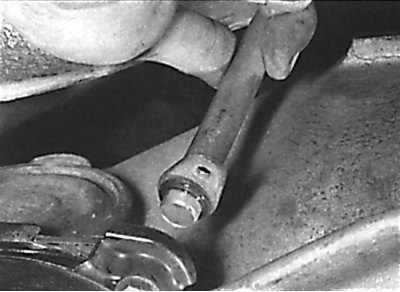
Unscrewing the bolts securing the gearbox to the engine
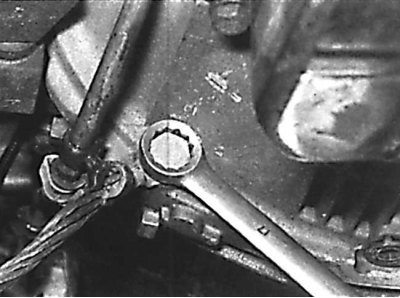
When unscrewing the gearbox mounting bolts to the engine, mark the location of the ground bus.
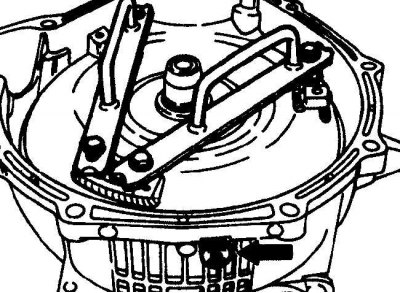
Removal the torque converter using additional handles
1. Open the hood and set it in a vertical position. Install a thin sheet of steel on the engine compartment bulkhead to protect the bulkhead insulation and brake system pipes when removing the automatic transmission.
2. Remove the ground cable from the battery.
3. On models with auxiliary heater, when removing the transmission, be careful not to damage the coolant hose located at the rear of the engine compartment. Unscrew the automatic transmission oil dipstick tube from the cylinder head.
4. Disconnect the automatic transmission pressure control cable from the throttle linkage.
5. Apply the handbrake, then raise the front of the car and secure it on stands. The height of the car should be sufficient to lower the gearbox and remove it from under the car. Remove the lower engine splash shield.
6. If present, unscrew the bolts securing the crossmember located in front of the automatic transmission pan from the bottom of the vehicle. When installing the crossmember, new bolts must be used.
7. Place a suitable container under the transmission fluid drain plug, then remove the plug and drain the fluid from the automatic transmission.
8. Place a container under the window at the bottom of the gearbox housing. Use the pulley mounting bolt to turn the crankshaft until the torque converter fluid drain plug appears in the window (see Fig. Torque converter drain plug visible through transmission housing window).
9. Unscrew the drain plug and drain the fluid from the torque converter.
10. Remove the plastic plug from the clutch housing to access the torque converter to drive plate mounting bolts (see fig. Location of torque converter mounting bolts to drive plate).
11. Remove the six torque converter-to-drive plate mounting bolts by rotating the crankshaft in sequence to access the next pair of bolts.
12. Place a small block of wood between the oil pan and the cross member underneath the vehicle.
13. Remove the exhaust system.
14. If equipped, remove the exhaust heat shield from the underside of the vehicle to access the driveshaft center bearing (see fig. Removing the heat shield from the bottom of the car, Unscrewing the exhaust system mounting bracket from the bottom of the car).
15. Unscrew the brackets that mount the exhaust system to the bottom of the car, located under the propeller shaft. Unscrew the bolts and remove the bracket that mounts the exhaust system to the gearbox. If present, disconnect the electrical wires from the bracket on the gearbox.
16. Disconnect the propeller shaft from the automatic transmission output flange.
17. Loosen the propeller shaft center bearing mounting nut, then loosen, but do not completely remove, the center bearing housing mounting nuts and move the propeller shaft back until it stops (see Fig. Location of the central bearing clamp nut of the propeller shaft).
18. Use a jack to support the automatic transmission through a wooden block.
19. Unscrew the rear support of the power unit from the gearbox and the bottom of the car and remove the support (see Fig. Location of the rear support of the power unit).
20. Disconnect the electrical wires from the solenoid relay on the right rear of the automatic transmission (see fig. Disconnecting electrical wires from the traction relay).
21. Unscrew the mounting bolt and remove the speedometer drive cable from the automatic transmission housing (see fig. Unscrewing the speedometer drive cable mounting bolt, Removing the speedometer drive cable from the gearbox housing). If equipped, remove the speedometer drive cable from the clips on the transmission.
22. Release the retaining clip and, using two screwdrivers and being careful, remove the electrical connector from the starter lock switch and reverse lights (see Fig. Location of electrical connector for starter interlock switch and reverse lights).
23. Unscrew the special knurled nut and disconnect the wire from the left side of the gearbox housing (see Fig. Removing the wire from the left side of the gearbox housing).
24. Disconnect all remaining electrical connectors from the transmission. Remove electrical wiring from the mounting brackets or brackets on the transmission housing.
25. Disconnect the vacuum lines from the vacuum chamber on the left side of the transmission (see Fig. Location of vacuum chamber on the left side of the automatic transmission). Disconnect the remaining vacuum lines from the transmission case. Remove the lines from the mounting brackets or brackets on the transmission case. On some models, you must first disconnect the vacuum lines from the intake manifold in the engine compartment to remove them from the transmission.
26. Remove the mounting brackets and remove the gear shift rod from the gear selector lever on the transmission and from the bottom of the selector lever.
27. Unscrew the connecting bolts and disconnect the transmission fluid heat exchanger feed and return pipes from the gearbox (see Fig. Location of the connecting bolt for fastening the transmission fluid heat exchanger tube). Remove the sealing rings and plug the ends of the tubes and the holes in the gearbox to prevent dirt from entering.
28. Unscrew the transmission fluid heat exchanger pipe mounting brackets from the engine and move the pipes to the side.
29. Release the retaining clip and remove the transmission fluid dipstick.
30. Remove the bolt securing the transmission fluid dipstick tube to the transmission case. If equipped, remove the transmission-to-engine bolt securing the transmission fluid dipstick tube. Remove the transmission fluid dipstick tube from the transmission (see fig. Removing the transmission fluid dipstick tube from the gearbox, Unscrewing the gearbox mounting bolts to the engine).
31. Remove the starter.
32. Make sure the transmission is securely supported by the jack, then lower it until the engine rests on a block inserted between the oil pan and the crossmember. When lowering the transmission, be careful not to damage the brake pipes or other components located on the engine compartment bulkhead.
33. Remove the transmission-to-engine mounting bolts, leaving one bolt on each side of the transmission. Access to the upper transmission mounting bolts is very limited. Socket wrenches with extensions and universal joints must be used to access these bolts. On some models, the upper transmission-to-engine mounting bolt is not accessible from below. Access to the upper bolt is possible from the right side of the engine bay after performing the following steps:
- unscrew the heat shields located near the power steering to access the exhaust manifold mounting nuts;
- unscrew the nuts and remove the rear section of the exhaust manifold from the cylinder head. Remove the gasket.
34. Mark the location of the ground bus and the brackets that are secured with the transmission-to-engine mounting bolts.
35. After unscrewing the upper bolts securing the gearbox to the engine, lift the gearbox to its original position.
36. On 4- and 5-cylinder diesel models, the torque converter must be secured when removing the gearbox, otherwise it may fall. To do this, insert a steel rod through the window in the gearbox housing into the oil drain hole from the torque converter.
37. Remove the remaining transmission-to-engine mounting bolts, then move the transmission away from the engine and, using a jack, lower and remove the transmission from under the vehicle. Be careful not to drop the torque converter when removing the transmission.
38. Remove the torque converter as follows: (see fig. Removing the torque converter using additional handles):
- install the gearbox on wooden blocks in a vertical position with the torque converter facing up;
- using an 8 mm socket wrench, turn the plastic torque converter retainer a quarter turn counterclockwise and remove the retainer. On 4- and 5-cylinder diesel models, remove the rod from the torque converter oil drain hole;
- to remove the torque converter, use the long bolts and the holes for mounting the drive plate, screw on two additional handles. Carefully, evenly remove the torque converter from the gearbox housing;
- place the torque converter in a safe location.
Installation
1. Install the torque converter as follows:
- apply a thin layer of grease to the torque converter drive flange;
- using the additional handles screwed onto the torque converter, install it into place. When installing the torque converter, rotate it sideways and lift it up and down several times so that the teeth of the torque converter engage with the input shaft of the gearbox;
- insert the plastic retainer into place and turn it a quarter turn clockwise. On 4- and 5-cylinder diesel models, secure the torque converter by inserting a steel rod into the torque converter drain hole;
- rotate the torque converter so that the two holes for the torque converter mounting bolts to the drive plate are located at the bottom of the gearbox.
2. Using a jack and a wooden block, lift the gearbox into place.
3. Move the gearbox until the gearbox housing connects to the cylinder block.
4. Bolt the gearbox to the engine, installing the ground bus and brackets that are secured with these bolts.
5. Screw in the torque converter mounting bolts to the drive plate and tighten them to the required torque. To access each subsequent pair of bolts, rotate the engine crankshaft.
6. Further installation is carried out in the reverse order of removal, taking into account the following points.
7. When installing the transmission fluid heat exchanger pipes, use new O-rings.
8. Connect the driveshaft to the transmission flange.
9. Check that electrical connectors and vacuum hoses are connected correctly to the transmission.
10. Install the exhaust system.
11. Fill the gearbox with transmission fluid.
12. Check and adjust the pressure control cable if necessary.