



Warning: Clutch lining dust that coats clutch components may contain asbestos, which is hazardous to health. Do not blow off with compressed air or inhale. Do not use gasoline or other gasoline-based solvents to remove dust. Use brake cleaner or methylated spirits to remove dust into a suitable container. Then wipe the clutch components with clean rags and place them in a sealed, labeled container.
Removal
1. Remove the gearbox as described in Chapter 7A.
2. If you are installing a "native" clutch, apply alignment marks between the clutch housing and the flywheel, which will allow you to correctly install the clutch back.
3. Gradually loosen the bolts securing the clutch housing to the flywheel and remove the washers
4. Remove the clutch housing from the flywheel (see fig. 2.4). Be prepared to catch the driven clutch disc, which may fall out when removing the clutch housing, and determine which side of the disc is installed - usually the two sides of the disc are marked "Engine side" (engine side) and "Transmission side" (gearbox side). The side of the hub with the larger protective side faces away from the flywheel.
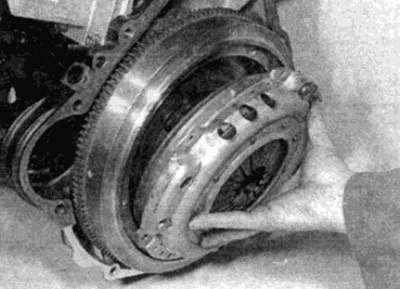
Fig. 2.4. Removing the clutch housing from the flywheel
Examination
5. With the clutch removed, use a dry cloth to remove all traces of dust. Although most friction linings are now asbestos-free, some do, and it would be wise to take protective measures; asbestos dust is hazardous to health and should not be inhaled.
[Information copied from the website MercedesMAN]
6. Check the condition of the friction linings of the driven disk. Pay attention to wear or loose rivets. Check the disk for warping, cracks, broken damper springs (where they are installed) and worn splines. The surface of the friction linings may have a shiny appearance, but if the friction material is visible everywhere, this is acceptable. If traces of oil contamination are found, which have the appearance of a continuous or partial shiny layer, the disc should be replaced. Before installing new clutch components, the source of contamination should be determined and eliminated. Typically, oil leaks from under the rear crankshaft seal or the primary shaft seal of the gearbox (replacement is described in Chapters 2 and 7A, respectively). The disc should be replaced if the thickness of the linings has decreased below or slightly above the level of the rivet heads. Recall that the wear of the driven disc can be checked without removing the clutch and gearbox from the car - see Chapter 1.
7. Check the flywheel and pressure plate surfaces. If grooves or severe scoring are found, replacement is necessary. The pressure plate should be replaced if cracks are found or if the diaphragm spring is damaged or weakened.
8. With the clutch removed, it is recommended to check the condition of the release bearing as described in paragraph 3.
9. Check the centering bearing at the end of the crankshaft. Make sure it rotates smoothly without noise. If the contact surface of the gearbox input shaft is worn or damaged, install a new bearing as described in the relevant section chapters 2.
Installation
10. If new parts are being installed, where applicable, remove all anti-corrosion lubricant from the friction surfaces on the disc and the contact surface on the pressure plate.
11. It is important to ensure that no oil or grease comes into contact with the clutch disc linings or the surfaces of the pressure plate and flywheel. It is recommended that you install the clutch with clean hands and wipe the surfaces of the pressure plate and flywheel with a clean cloth before starting work.
12. Apply molybdenum grease to the splines of the driven disc hub, then place the disc on the flywheel with the side of the hub with the larger protective surface facing away from the flywheel (most pressure plates have a mark on them) "Engine side" (engine side), which should be facing the flywheel) (see fig. 2.12). Keep the driven disc pressed against the flywheel until you install the clutch basket in place.
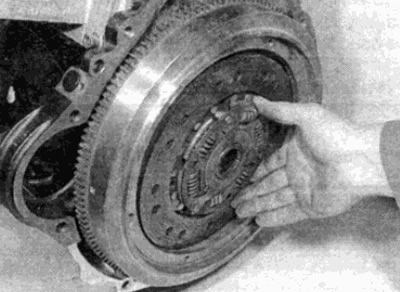
Fig. 2.12. Install the driven disk with the larger protective side of the hub facing away from the flywheel
13. Install the clutch housing, aligning the marks on the flywheel and clutch housing where required. Check that the clutch basket is seated on the dowels on the flywheel. Insert the mounting bolts and washers, then tighten them by hand until the driven disc is clamped but can still be moved.
14. After this, you can center the driven disk so that after connecting the engine and gearbox, the splines of the input shaft of the gearbox pass through the splines in the hub of the driven disk.
15. Alignment can be accomplished by inserting a round rod or a long screwdriver into the hole in the center of the driven disk so that the end of the rod rests against the centering bearing in the end of the crankshaft. If possible, use a blunt instrument, but if using a screwdriver, wrap adhesive tape around the blade to prevent damage to the bearing surface. Move the rod from side to side to move the driven disk as much as necessary to achieve alignment. With the rod removed, inspect the disk hub in relation to the hole in the end of the crankshaft and the circle formed by the ends of the diaphragm spring pins. When the hub is exactly centered, alignment is complete. A centering device can be used, this is simpler and eliminates the need for visual inspection of alignment (see fig. 2.15).
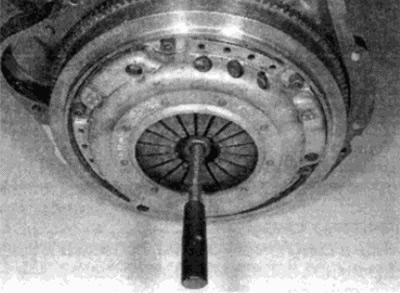
Fig. 2.15. Centering the driven disk using a device
16. Gradually tighten the clutch basket mounting bolts in a diagonal sequence to the required torque. Remove the alignment tool.
17. Install the gearbox as described in Chapter 7A.