
Cars BMW Cars Volkswagen Cars Chevrolet Cars Land Rover Cars Lada Cars Honda Cars Peugeot
English Русский
Български
Беларускі
Український
Српски
Hrvatski
Română
Polski
Slovenský
Magyar
Bookmark News and articles Sitemap Feedback Site search
MercedesMan.ru


A-Class C-Class E-Class G-Class M-Class S-Class Others
190 (W201) (1982-1993) W202 (1993-2000) W203 (2000-2007)
  • Main
  • C-Class
  • W201 (1982-1993)
  • Transmission
  • Clutch
  • Clutch slave cylinder — removal, disassembly and installation

Clutch slave cylinder — removal, disassembly and installation (Mercedes-Benz C-Class W201)

0
Contents: Removal ↡ Disassembly ↡ Installation ↡
Warning: Brake fluid is poisonous: if fluid comes into contact with skin, wash it off immediately and thoroughly: if fluid gets into the stomach or eyes, seek medical attention immediately. Some types of hydraulic fluid are flammable and may ignite when in contact with hot parts; when servicing a hydraulic system, it is best to treat any fluid as flammable and take appropriate precautions, just as you would with gasoline. Brake fluid has a discoloring effect, especially on plastics, so if the fluid spills, it should be washed off the surface with plenty of clean water. Finally, it should be noted that the fluid is hygroscopic (it absorbs moisture from the air). Old fluid may be contaminated and unsuitable for further use. When adding or replacing fluid, always use the recommended type of fluid, and make sure the fluid is fresh and stored in a well-sealed container.


Removal


1. Apply the parking brake, then jack up the front of the vehicle and support it on stands (see "Lifting the car and placing it on supports").

2. Working from the right side of the vehicle, place a container under the slave cylinder, then unscrew the hydraulic tube fitting from the rear of the cylinder. If desired, you can disconnect the flexible hose from the metal tube. Once the fluid has drained, plug the open ends of the tubes/hoses and the slave cylinder.

3. Loosen the two screws securing the slave cylinder to the gearbox bell housing, then remove the cylinder together with the pushrod (see fig. 4.3). Remove the adjusting washer.
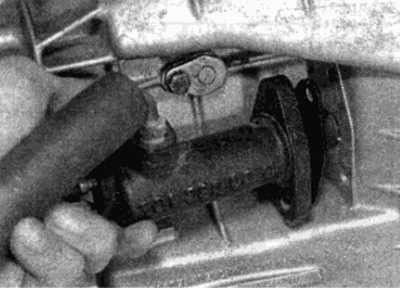


Fig. 4.3. Removing the clutch slave cylinder from the gearbox bell housing

Fig. 4.3. Removing the clutch slave cylinder from the gearbox bell housing


Disassembly


4. Using a screwdriver, carefully pry up the mounting ring and remove the pusher.

5. Tap the cylinder against a wooden block to push out the piston, then remove the piston and spring (see Fig. 4.5, a, b).
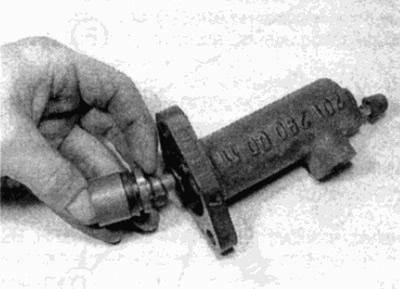
Fig. 4.5, a. Remove the piston of the working cylinder...
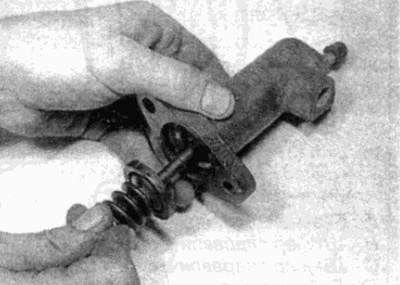
Fig. 4.5, a. Remove the piston of the working cylinder...


Fig. 4.5, b....behind him there is a spring

Fig. 4.5, b....behind him there is a spring


6. Wash all parts in clean hydraulic fluid, then position them for inspection (see fig. 4.6).
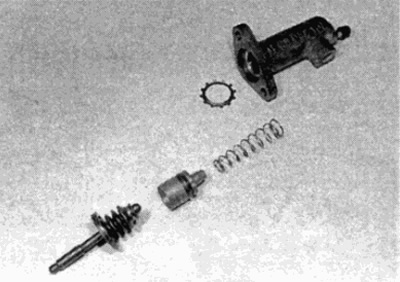


Fig. 4.6. Clutch slave cylinder parts

Fig. 4.6. Clutch slave cylinder parts


7. Check the inside surface of the cylinder and the piston. If scoring or wear steps are found, replace the cylinder assembly. If the cylinder is in good condition, a repair kit consisting of new rubber seals should be purchased. Never use old seals.

8. Remove the old seal from the piston and install the new one using only your fingers. To make installation easier, lubricate the gasket with clean hydraulic fluid. Make sure the sealing edge faces the piston spring.

9. Lubricate the inner surface of the cylinder and insert the spring, with the large turns towards the fitting on the cylinder.

10. Carefully insert the piston, aligning the protruding end with the center of the spring.

11. If necessary, install a new dust seal on the tappet, then insert the tappet into the cylinder. The end of the tappet with the dust boot should face the piston.

12. Press the new retaining ring into place and push it in to secure the push rod.

Installation


13. Begin installation by positioning the adjusting washer with the grooved side facing the bell housing.

14. Place the cylinder and push rod against the housing, making sure that the push rod aligns with the spherical recesses in the clutch release lever.


15. Install and tighten the mounting bolts.

16. Connect the tube and hose, then bleed the air from the hydraulic system as described in paragraph 6.
This article is available at: russian, bulgarian, belarusian, ukrainian, serbian, croatian, romanian, polish, slovak, hungarian
The article has been verified: Lukyanov Nikita Ilyich
Share with friends:
◀ Previous
C-Class 190 (W201) / Clutch
Next ▶

Release bearing and lever — removal, inspection and installation
Clutch — removal, inspection and installation
General Provisions
Technical data
Main hydraulic cylinder — removal, disassembly and installation
Bleeding the hydraulic system
Clutch pedal — removal and installation
More similar articles for repairing other models

☛ Cylinder head — removal and installation Mercedes W168 (1997-2004)
☛ Removal and installation the clutch slave cylinder Mercedes W123 (1976-1985)
☛ Removal and installation the slave cylinder of the interaxle… Mercedes W463 (1999-2019)
☛ Removal and installation the clutch slave cylinder Mercedes W163 (1997-2005)
☛ Removal and installation the clutch slave cylinder Mercedes W140 (1991-1998)
☛ Removal the coaxial clutch slave cylinder Mercedes Vito 2 (2003-2014, diesel)
Link in different formats to this article
Comments and feedback from visitors
No comments yet


How much will 26 + 50 ?


W203 (2000-2007) 
  • General information
  • Introduction to guide
  • User manual
  • Maintenance
  • Power unit
  • Gasoline engines
  • Diesel engines
  • Cooling system
  • Ventilation and heating
  • Supply system
  • Injection system (gasoline)
  • Injection system (diesel)
  • Exhaust system
  • Ignition and control system
  • Charge and launch systems
  • Transmission
  • Mechanical gearbox
  • Automatic gearbox
  • Clutch and drive shafts
  • Differential
  • Chassis
  • Brake system
  • Car suspension
  • Steering
  • Body
  • Exterior (external elements)
  • Interior (internal elements)
  • Electrical equipment
  • Equipment and devices
  • Lighting system
  • Electrical diagrams (2000)
  • Electrical diagrams (since 2001)
W202 (1993-2000) 
  • General information
  • User manual
  • Driving a car
  • Car care
  • Maintenance
  • Power unit
  • Gasoline engines
  • Diesel engines
  • Lubrication system
  • Cooling system
  • Heating and ventilation
  • Ignition system
  • Fuel system
  • Injection system (gasoline)
  • Injection system (diesel)
  • Exhaust system
  • Transmission
  • Clutch
  • Car gearbox
  • Chassis
  • Suspension, wheels and tires
  • Steering
  • Brake system
  • Body
  • Exterior (external elements)
  • Interior (internal elements)
  • Doors and windows
  • Electrical equipment
  • Equipment and devices
  • Power devices
  • Lighting system
  • Electrical circuits
190 (W201) (1982-1993) 
  • General information
  • Introduction to the guide
  • Operation and care
  • Maintenance (gasoline)
  • Maintenance (diesel)
  • Troubleshooting
  • Power unit
  • Petrol engine I4
  • Petrol engine V6
  • Diesel engines
  • Engine overhaul
  • Cooling and heating
  • Power system (carburetor)
  • Injection system (gasoline)
  • Injection system (diesel)
  • Exhaust system
  • Charge and start system
  • Ignition system (I4)
  • Ignition system (V6)
  • Diesel heating system
  • Transmission
  • Clutch
  • Mechanical gearbox
  • Automatic gearbox
  • Cardan shaft and axle shafts
  • Chassis
  • Brake system
  • Car suspension
  • Steering
  • Body
  • Exterior (external elements)
  • Interior (internal elements)
  • Doors, locks and windows
  • Electrical equipment
  • Equipment and devices
  • Electrical circuits
 
MercedesMan.ru © 2017–2026 · Mobile version · Read about Mercedes · Sitemap: EN BG BY UA RS HR RO PL SK HU · Feedback · Site search · Bookmark A-Class (W168) · C-Class (W201) · C-Class (W202) · C-Class (W203) · E-Class (W123) · E-Class (W124) · E-Class (W210) · G-Class (W463) · M-Class (W163) · S-Class (W116, petrol) · S-Class (W126, petrol) · S-Class (W140) · S-Class (W220) · Sprinter · Vito 1 · Vito 2 · Vario 814D ·
 
We only use cookies without which some of the site's features may not be available.