



Warning: Brake fluid is poisonous: if it comes into contact with skin, wash it off immediately and thoroughly; if the fluid gets into your stomach or your eyes, seek immediate medical attention. Some types of hydraulic fluid are flammable and may ignite when in contact with hot parts; when servicing a hydraulic system, it is best to treat any fluid as flammable and take appropriate precautions, just as you would with gasoline. Brake fluid has a discoloring effect, especially on plastics, so if the fluid spills, it should be washed off the surface with plenty of clean water. Finally, it should be noted that the fluid is hygroscopic (it absorbs moisture from the air). Old fluid may be contaminated and unsuitable for further use. When adding or replacing fluid, always use the recommended type of fluid, and make sure the fluid is fresh and stored in a well-sealed container.
Note: Mercedes-Benz recommends using a hydraulic pressure bleeding kit.
1. Correct operation of the hydraulic brake system is possible only if there is no air in it, which is achieved by bleeding the system.
2. When bleeding, add only new, clean fluid of the specified type to the system, never reuse fluid that has spilled out of the system. Make sure you have enough fluid before starting work.
3. If there is a suspicion that the wrong type of fluid has entered the system, flush and fill the entire system with clean fluid of the correct type and replace all hydraulic system seals.
4. If brake fluid is lost due to leaks, locate and repair the leak before continuing.
5. To improve access, apply the parking brake, then jack up the front of the vehicle and support it on stands (see "Lifting the car and placing it on supports").
6. Where provided, remove the underbody shield to improve access to the transmission bell housing.
7. Make sure the hydraulic pipe/clutch hose is intact, that the nipple is tight and that the air bleed valve is on the back of the slave cylinder (fixed underneath the car on the right side of the gearbox) closed.
8. Remove the dust cap and clean any dirt around the air release valve.
Original material on the website MercedesMAN.ru
9. It is recommended to use a pressure bleeding kit. These kits usually work by using compressed air contained in the spare tire. However, keep in mind that you may have to lower the tire pressure than normal - read the instructions that come with the kit carefully.
10. A reservoir with brake fluid under pressure is connected to the reserve tank. The system is bled by alternately opening the valves in the required sequence until the fluid flowing out of the valve no longer contains air bubbles.
11. This method has the advantage that the large volume of liquid provides additional guarantee that air will not enter the system during bleeding.
12. Prepare a clean glass cup, a plastic or rubber tube of appropriate length that fits tightly onto the air release screw and a wrench that fits the air release valve.
13. Install the key and tube onto the slave cylinder valve, placing the other end of the tube in a cup and place the cup over the end of the tube (see fig. 6.13).
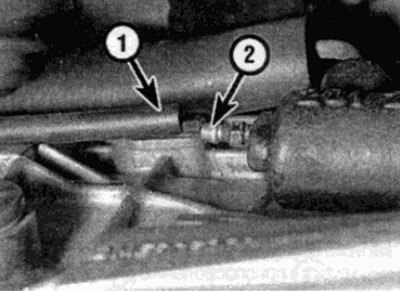
Fig. 6.13. Install the tube (1) onto the air release screw (2) of the working cylinder
14. Connect a pressure release device to the reserve tank according to the manufacturer's instructions.
15. Open the air release valve and allow the liquid to drain into the glass until the liquid with air bubbles stops flowing out.
16. When bleeding is complete, close the air release valve and disconnect the hose and tool.
17. Wash away all traces of spilled liquid, check again that the valve is securely tightened and install the dust cap.
18. Dispose of used liquid - it is not suitable for reuse.
19. Check the brake fluid level in the reservoir and top up if necessary (see "Weekly check").
20. Check the brake pedal for rigidity. If the pedal moves further after selecting the free play, creating a slight resistance, this means that the air has not been completely removed from the system and requires re-bleeding. The presence of air in the system after correct bleeding may be due to wear of the master or slave cylinder seals.
21. When finished, where provided, install the lower protective shield and lower the vehicle to the ground.