



Carefully!
- Brake fluid is dangerous to the eyes and can damage painted surfaces, so be extremely careful when handling it.
- Do not use fluid that has been in an open container for some time as it will absorb moisture from the air, which could result in a dangerous reduction in braking performance.
Safety first!
If the brake fluid level drops quickly and requires frequent topping up, this means there are leaks in the system that need to be identified and repaired immediately.
If you suspect a brake fluid leak, do not drive the car until you have checked the brake system thoroughly. Never risk driving the car if you have any doubts about the brakes.
Advice.
- Make sure your vehicle is level.
- As the brake pads wear, there will be a slight drop in the fluid level in the master cylinder reservoir, but the fluid level should never be allowed to drop below the "MIN" mark.
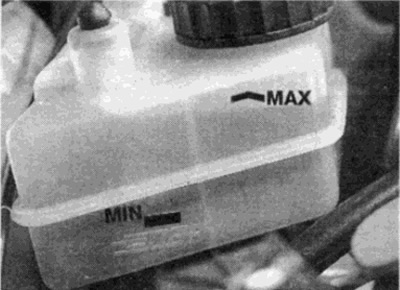
1. The "MIN" and "MAX" marks are on the wall of the reserve tank. The fluid level should be maintained between these marks.
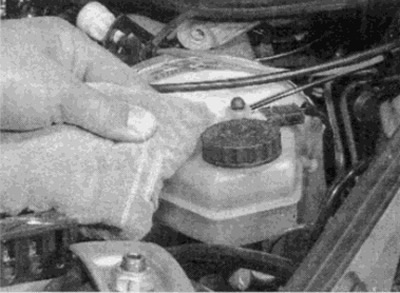
2. Before adding fluid, wipe the area around the filler neck with a clean cloth.
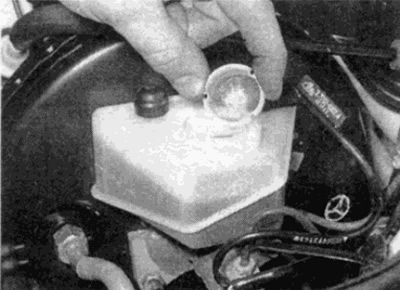
3. Before adding liquid, check that the filter (where it is installed) is clean and free of insoluble deposits.
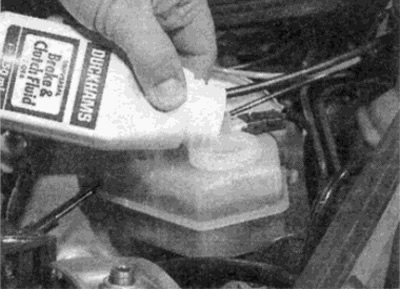
4. Carefully drink the liquid to the "MAX" level, trying not to spill it on the surrounding surfaces. Use only the liquid recommended by the manufacturer; mixing different types of fluids may cause the brake system to fail. After filling, tighten the cap tightly and remove any fluid leaks.
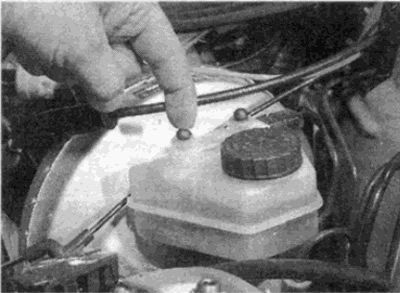
5. Check the operation of the low brake fluid warning light. Place chocks under the wheels, release the parking brake and turn on the ignition. Ask an assistant to press the rubber buttons on top of the reservoir one by one. The brake fluid level warning light should come on.
[Original can be found on the website: mercedesman.ru]