



Stop the vehicle on a firm, level surface, as far away from the road as possible.
If necessary, turn on the hazard warning lights.
If present, put up a warning triangle to alert other drivers to your presence.
Apply the parking brake and engage first or reverse gear (or "PARK" on automatic transmission models).
Place a couple of large stones under the wheels diagonally opposite the one being replaced.
If the vehicle is on soft ground, place a hardwood board under the jack base.
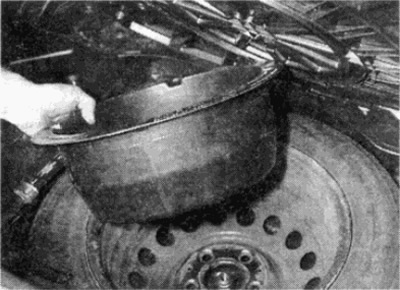
1. The spare tire and tools are stored in the luggage compartment. Lift the carpet, then unscrew the bolts and take out the tool kit container.
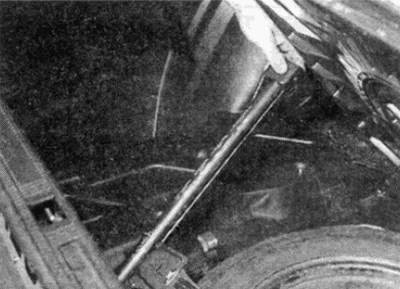
2. Unfasten the jack on the floor of the luggage compartment.
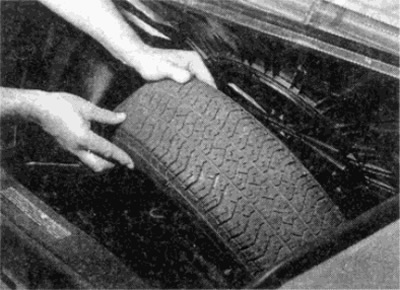
3. Remove the spare wheel from the niche.
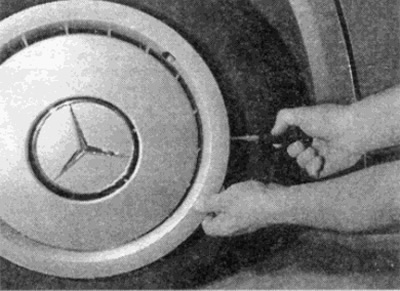
4. Using a wheel wrench, pry off the wheel caps (or hub cap)...
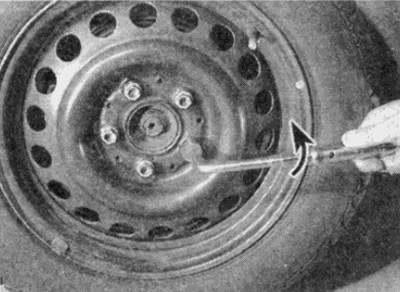
5...then loosen each bolt by half a turn. Where the "secret" wheel bolts are installed, a special adapter will be required.
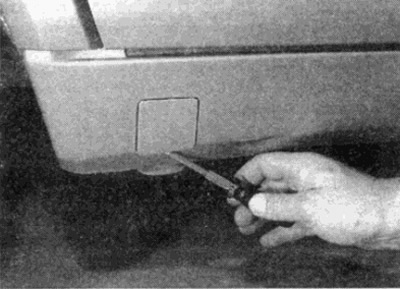
6. Remove the corresponding hatches from the thresholds...
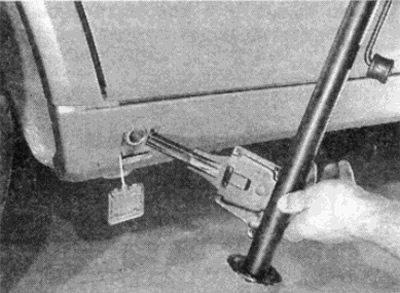
7...and insert the jack until it stops.
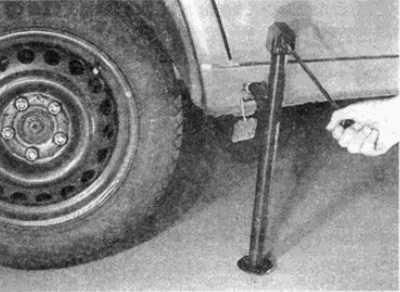
8. After ensuring that the jack is on a solid surface, turn the jack handle clockwise until the wheel is off the ground.
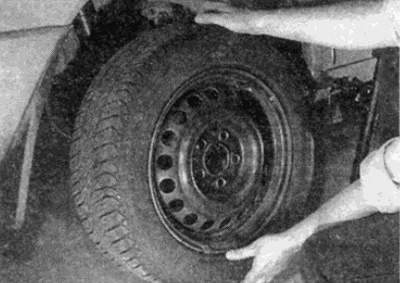
9. Remove the bolts and wheel. Install the spare wheel and tighten the bolts by hand. Lower the car to the ground.
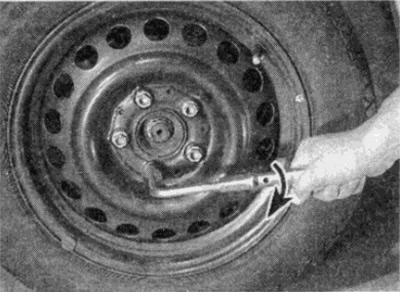
10. Tighten the wheel bolts securely in a diagonal pattern, then install the wheel trim/hubcap. Loosen the bolts as soon as possible and retighten the bolts to the specified torque.
In conclusion...
- Remove the chocks from under the wheels.
- Place the damaged wheel, jack and tools back in their places in the trunk.
- Check the pressure in the newly installed tire. If the pressure is lower than the recommended level, or if you do not have a pressure gauge with you, drive slowly to the nearest garage or repair shop and restore the tire to the correct pressure.
- Repair the damaged tire as soon as possible.
Original published on the website MercedesMan.ru