



Contents: Scalding ↡ Burns ↡ Fall of a raised car ↡ Fire ↡ Electric shock ↡ Fumes or gas poisoning ↡ Poisonous and irritating substances ↡ Asbestos ↡
Scalding
Do not remove the radiator cap or expansion tank until the engine has cooled down.
Engine oil, transmission and steering fluids may also be dangerously hot if the engine has recently been running.
Burns
Any part of the engine, especially the exhaust system, poses a risk of burns. Brake components may be hot immediately after braking.
Fall of a raised car
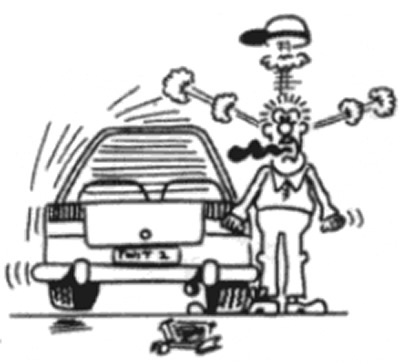
When working under or near a raised machine, always support it with strong blocks or use a ramp or inspection pit.
Never work under a vehicle supported only by a jack!
Be careful when loosening or tightening high torque fasteners when the vehicle is raised. It is recommended that the initial loosening and final tightening in such cases be performed with the vehicle lowered.
Fire
The fuel is highly flammable and fuel vapors are explosive.
Avoid spilling fuel on hot engine surfaces.
Do not smoke or use open flames near the vehicle if any repair work is being carried out on it. Take precautions against sparks that may be caused by electrical appliances or metalworking tools.
Fuel vapors are heavier than air, so do not work on the fuel system in an inspection pit.
Another source of fire is overload or short circuit in electrical wiring circuits. Be careful when repairing or replacing electrical equipment.
Have a fire extinguisher on hand that is suitable for extinguishing fuel and electrical fires.
Electric shock
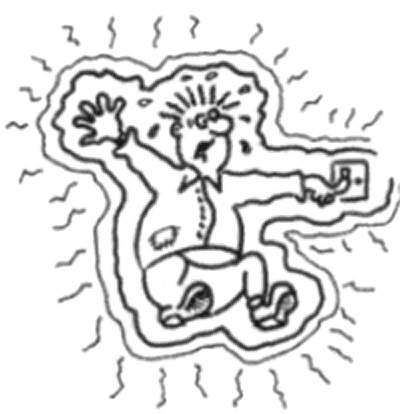
High-tension ignition wires can be dangerous, especially for people with heart disease. Do not touch the ignition system while the engine is running.
Fumes or gas poisoning
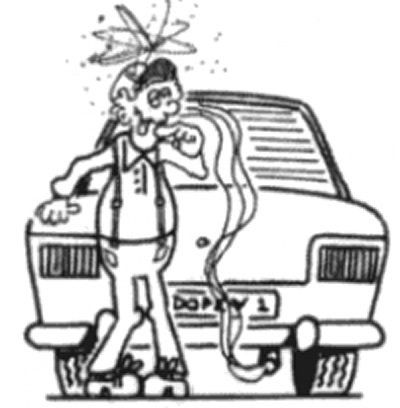
Exhaust gases are poisonous: they usually contain carbon monoxide, which is rapidly fatal if inhaled. Never run the engine for long periods in a closed area, such as a garage with the door closed.
Also toxic are the vapors of fuel and various solvents used for cleaning and for thinning paints.
Poisonous and irritating substances
Article based on data from the website Mercedesman.ru
Avoid skin contact with electrolyte, fuel, especially diesel fuel, brake fluid, lubricants and antifreeze. If you need to pour liquid from one container to another, do not suck the liquid from the hose. If you accidentally swallow any liquid or it gets into your eyes, consult a doctor immediately.
Prolonged contact with used motor oil can cause skin cancer. If necessary, wear rubber gloves or apply a protective cream to your hands. Change any clothing that has come into contact with oil and do not carry oily rags in your pocket.
Air conditioner refrigerant can form toxic gas when in contact with fire, including a cigarette. It can also cause skin burns.
Asbestos
Asbestos dust is a carcinogen: it can cause cancer if inhaled or swallowed. Asbestos is a component of some gaskets, as well as brake and friction linings. If you don't know whether a particular ingredient contains asbestos, it's safe to assume that it does.