
Cars BMW Cars Volkswagen Cars Chevrolet Cars Land Rover Cars Lada Cars Honda Cars Peugeot
English Русский
Български
Беларускі
Український
Српски
Hrvatski
Română
Polski
Slovenský
Magyar
Bookmark News and articles Sitemap Feedback Site search
MercedesMan.ru


A-Class C-Class E-Class G-Class M-Class S-Class Others
190 (W201) (1982-1993) W202 (1993-2000) W203 (2000-2007)
  • Main
  • C-Class
  • W201 (1982-1993)
  • General information
  • Operation and care
  • What do the smudges mean?

What do the smudges mean? (Mercedes-Benz C-Class W201)

0
Contents: Oil on the pan ↡ Oil under the filter ↡ Transmission oil ↡ Antifreeze ↡ Brake fluid ↡ Power steering fluid ↡
Stains on the bottom of the garage, moisture under the hood or under the car clearly indicate a leak, the source of which must be identified. Sometimes this source is difficult to determine, especially if the engine has not been washed for a long time. The trace of the leak may be distorted by the air flow under the car, creating an incorrect idea of the location of the source of the leak.

Warning: Most automotive oils and fluids are poisonous. If they come into contact with your skin, wash them off immediately, and if they come into contact with your clothing, change your clothes.


Advice.
  • The smell of the leak can give you a clue as to what exactly is leaking. Some fluids have a specific color. It is helpful to wash the car thoroughly and place a clean sheet of paper underneath it overnight to determine the location of the leak.
  • Keep in mind that some leaks may only occur when the engine is running.


Oil on the pan
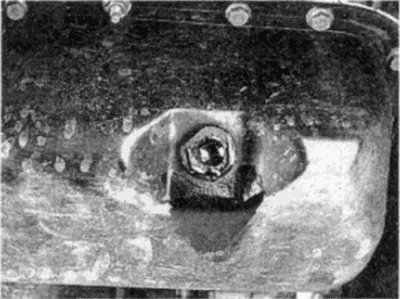


Oil may leak from under the drain plug...

Oil may leak from under the drain plug...


Oil under the filter
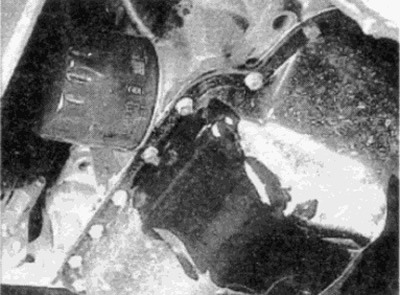


... or from under the filter.

... or from under the filter.


Transmission oil
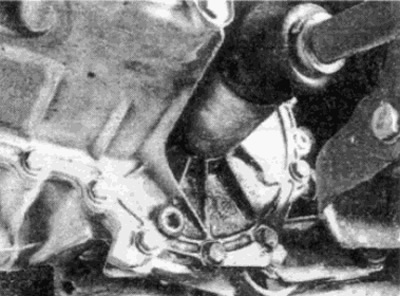


Transmission oil may leak from under the seals on the inner ends of the drive shafts.

Transmission oil may leak from under the seals on the inner ends of the drive shafts.


Antifreeze
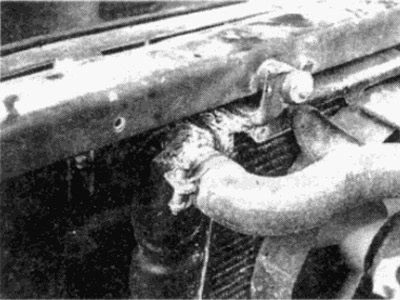


Leaking antifreeze often leaves behind crystalline deposits like these.

Leaking antifreeze often leaves behind crystalline deposits like these.


Brake fluid
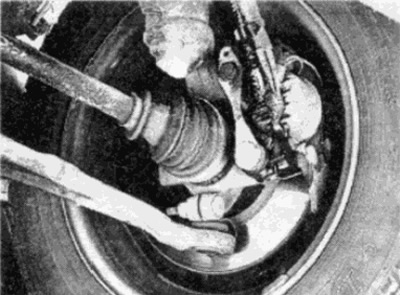


The leaks that appear on the wheels are most likely brake fluid.

The leaks that appear on the wheels are most likely brake fluid.


Power steering fluid
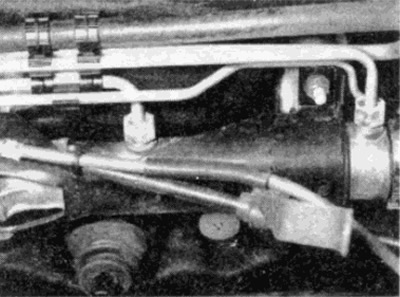


Fluid may leak from the nipples on the rack housing.

Fluid may leak from the nipples on the rack housing.


(Information copied from the website: MercedesMan.ru)
This article is available at: russian, bulgarian, belarusian, ukrainian, serbian, croatian, romanian, polish, slovak, hungarian
The article has been verified: Lukyanov Nikita Ilyich
Share with friends:
◀ Previous
C-Class 190 (W201) / Operation and care
Next ▶

Wheel replacement
Starting the engine from an external battery
If the engine does not start
Specific hazards
Main dangers
Towing a car
Weekly Checks: Introduction
Check points under the hood
Engine oil level
Brake fluid level
Link in different formats to this article
Comments and feedback from visitors
No comments yet


How much will 10 + 28 ?


W203 (2000-2007) 
  • General information
  • Introduction to guide
  • User manual
  • Maintenance
  • Power unit
  • Gasoline engines
  • Diesel engines
  • Cooling system
  • Ventilation and heating
  • Supply system
  • Injection system (gasoline)
  • Injection system (diesel)
  • Exhaust system
  • Ignition and control system
  • Charge and launch systems
  • Transmission
  • Mechanical gearbox
  • Automatic gearbox
  • Clutch and drive shafts
  • Differential
  • Chassis
  • Brake system
  • Car suspension
  • Steering
  • Body
  • Exterior (external elements)
  • Interior (internal elements)
  • Electrical equipment
  • Equipment and devices
  • Lighting system
  • Electrical diagrams (2000)
  • Electrical diagrams (since 2001)
W202 (1993-2000) 
  • General information
  • User manual
  • Driving a car
  • Car care
  • Maintenance
  • Power unit
  • Gasoline engines
  • Diesel engines
  • Lubrication system
  • Cooling system
  • Heating and ventilation
  • Ignition system
  • Fuel system
  • Injection system (gasoline)
  • Injection system (diesel)
  • Exhaust system
  • Transmission
  • Clutch
  • Car gearbox
  • Chassis
  • Suspension, wheels and tires
  • Steering
  • Brake system
  • Body
  • Exterior (external elements)
  • Interior (internal elements)
  • Doors and windows
  • Electrical equipment
  • Equipment and devices
  • Power devices
  • Lighting system
  • Electrical circuits
190 (W201) (1982-1993) 
  • General information
  • Introduction to the guide
  • Operation and care
  • Maintenance (gasoline)
  • Maintenance (diesel)
  • Troubleshooting
  • Power unit
  • Petrol engine I4
  • Petrol engine V6
  • Diesel engines
  • Engine overhaul
  • Cooling and heating
  • Power system (carburetor)
  • Injection system (gasoline)
  • Injection system (diesel)
  • Exhaust system
  • Charge and start system
  • Ignition system (I4)
  • Ignition system (V6)
  • Diesel heating system
  • Transmission
  • Clutch
  • Mechanical gearbox
  • Automatic gearbox
  • Cardan shaft and axle shafts
  • Chassis
  • Brake system
  • Car suspension
  • Steering
  • Body
  • Exterior (external elements)
  • Interior (internal elements)
  • Doors, locks and windows
  • Electrical equipment
  • Equipment and devices
  • Electrical circuits
 
MercedesMan.ru © 2017–2026 · Mobile version · Read about Mercedes · Sitemap: EN BG BY UA RS HR RO PL SK HU · Feedback · Site search · Bookmark A-Class (W168) · C-Class (W201) · C-Class (W202) · C-Class (W203) · E-Class (W123) · E-Class (W124) · E-Class (W210) · G-Class (W463) · M-Class (W163) · S-Class (W116, petrol) · S-Class (W126, petrol) · S-Class (W140) · S-Class (W220) · Sprinter · Vito 1 · Vito 2 · Vario 814D ·
 
We only use cookies without which some of the site's features may not be available.