



- Check all exterior lights and the horn. If you find that some circuits are faulty, refer to the relevant sections for more detailed information chapters 12.
- Visually inspect all electrical connectors, wiring and clamps for damage and integrity, and for any abrasions or damage.
Tip: If you need to check your brake lights and turn signals without someone's help, back up to a wall or garage door and turn on the signals. You can check their functionality by the reflected light.
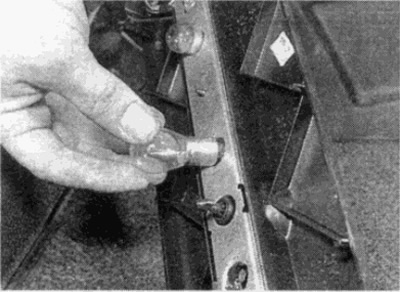
1. If one of the parking indicator lamps or headlights or brake lights does not light, it most likely means that it has burned out and needs to be replaced. Refer to Chapter 12 for details. If both brake lights do not light, it most likely means that the brake light switch is faulty (See Chapter 9).
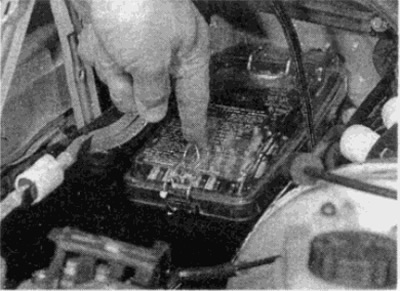
2. If both side light or headlight indicator lamps do not light, this most likely means that either the fuse has blown or the corresponding target is faulty (see chapter 12). The fuses are located on the fuse board in the rear corner of the engine compartment.
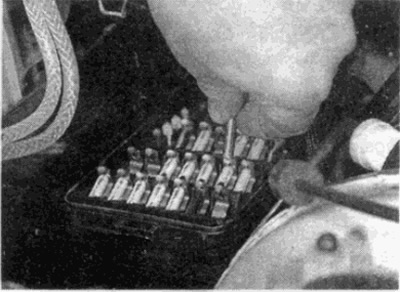
3. To replace a blown fuse, simply pull it out and insert a new one of the same current (see wiring diagrams in chapter 12). If the fuse blows again, it is important to find the cause. The procedure for a complete check is given in chapter 12.