



Note: The hub should not be removed before replacing the bearings, as the inner bearing race is pressed into the steering knuckle and removing the hub will always damage the bearing. A press will be required for disassembly and assembly. If you don't have one, you can use a large bench vice and shims (type of large socket heads). The inner races are pressed into the hub. If the inner race remains on the hub when it is pressed out of the knuckle, a bearing puller with sharp jaws will be required for removal.
Removal
1. Remove the front brake disc as described in Chapter 9. On models with ABS, also remove the front wheel sensor.
2. Remove the grease cap from the center of the hub. If the cap is damaged during removal, it should be replaced (see fig. 3.2).
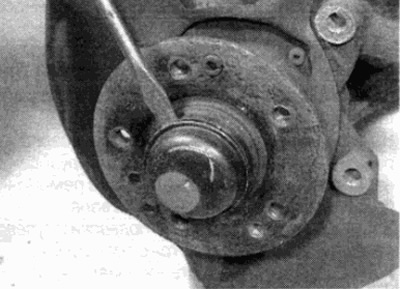
Fig. 3.2. Remove the grease cap from the center of the hub...
3. If necessary, remove the radio interference spring from the center of the shaft axis (see fig. 3.3).
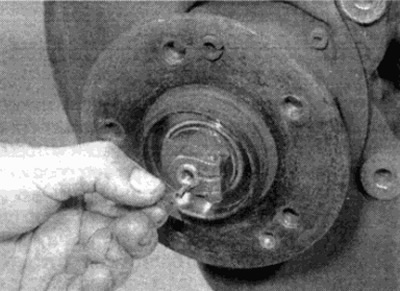
Fig. 3.3. ...and remove the radio interference spring from the hub shaft
4. Loosen the hub nut clamp bolt, then loosen and remove the nut from the shaft (see Fig. 3.4, a, b). Remove the thrust washers (where they are installed).
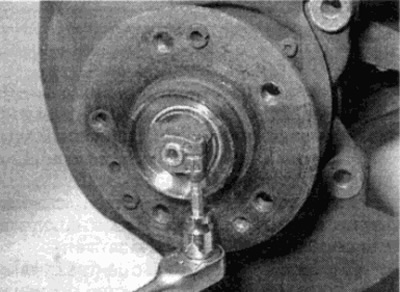
Fig. 3.4, a. Loosen the tension bolt...
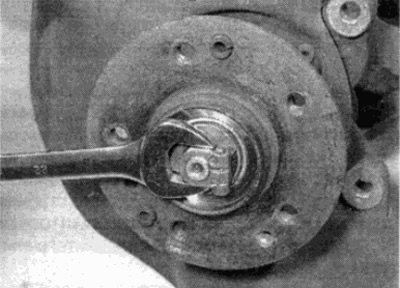
Fig. 3.4, b....and unscrew the hub nut
5. The hub assembly can now be removed from the steering knuckle. If the hub is tight on the shaft, a puller will be required to remove it.
6. If the inner race remains on the hub when it is pressed out of the knuckle, a bearing puller with sharp jaws will be required for removal. Once the race is removed, remove the hub seal.
7. Check the steering knuckle axle. If any damage is found, replace (see paragraph 4).
Disassembly
8. Remove the inner race from the outer bearing.
9. If necessary, carefully pry up the oil seal from the back of the hub with a lever and remove the inner race of the inner bearing.
10. Support the front of the hub and tap out the inner race of the outer bearing using a hammer and drift passed through the back of the hub.
11. Turn the hub over and, in the same way, knock out the outer race of the inner bearing.
12. Clean the hub thoroughly, removing all traces of dirt and grease. Polish off any metal burrs or burrs that may interfere with assembly. Check for cracks, wear or other damage. Replace if found. On ABS equipped models, check that the sensor ring is in good condition.
13. When assembling, apply a small amount of grease (mercedes-Benz recommends CASTROL LMX grease) onto the contact surfaces of the outer race of the inner bearing and the hub. Distribute the grease along the raceways of the inner bearing.
14. Support the hub securely and place the outer race of the inner bearing against the hub. Using a pipe spacer that rests only on the outer edge of the race, press the race until it stops, making sure it enters the hub perpendicularly.
15. Turn the hub over and install the inner race of the outer bearing in the same way.
16. Install the inner bearing inner race. Install the seal on the back of the hub, making sure the sealing lips are facing inwards, and press it in perpendicularly.
17. Fill the hub approximately two-thirds full with grease, then install the inner race of the outer bearing.
Installation
18. Lubricate the lip of the rear hub seal and position the hub on the steering knuckle shaft.
19. Install the thrust washer (where provided) and screw on the hub nut.
20. Rotate the hub while turning the hub nut to press it onto the steering knuckle axle. When the hub is seated correctly, adjust the hub bearing clearance as described in paragraph 2 and tighten the hub nut clamp bolt to the required torque.
21. When the clearance in the hub bearing is adjusted, remove the micrometer.
22. Install the radio interference spring (where it is installed) to the center of the axle shaft.
23. Install the cap onto the hub and drive it in perpendicularly.
24. Install the brake disc and, where necessary, the front wheel ABS sensor, as described in chapter 9.