



Contents: Examination ↡ Adjustment ↡
Examination
1. Apply the parking brake, raise the front of the vehicle with a jack and securely support it on stands (see "Lifting the car with a jack and placing it on supports"). Remove the corresponding wheel.
2. Using metal bushings, install the two wheel bolts, positioning them on opposite sides and tighten securely.
3. Remove the grease cap from the center of the hub. If the cap is damaged during removal, it should be replaced. If necessary, remove the radio interference spring from the center of the shaft axis.
4. Using a large flat-head screwdriver, gently pry the brake pads away from the disc so that they do not affect the movement of the hub bearing.
5. Attach a micrometer with a dial scale to the front face of the hub/disc and position the probe of the instrument so that it touches the end of the axle shaft. Set the zero on the scale of the instrument, then grasp the disc at two opposite points and pull the disc (see fig. 2.5). Read the micrometer and compare the hub bearing clearance with the value given in the Technical Data section at the beginning of this Chapter. If the value is outside the tolerance, adjust the bearing as described in the relevant subsection below.
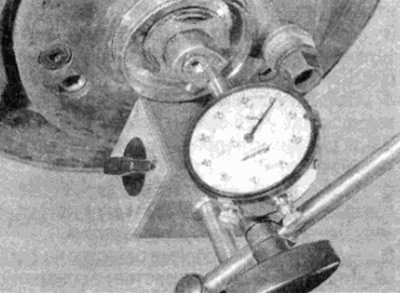
Fig. 2.5. Using a dial micrometer to check and adjust the clearance in the hub bearing
6. If the gap is normal, remove the micrometer, then install the radio interference spring (where it is installed) and hammer the oil cap back into place. Install the wheel. then lower the car to the ground and tighten the wheel bolts to the required torque. Before driving the car, press the brake pedal several times to return the pedal pressure to its previous state.
Adjustment
7. If you have not already done so, follow the steps described in steps 1-4.
8. Loosen the hub nut clamp bolt until the nut can be easily turned (see paragraph 3).
9. Turn the brake disc and tighten the hub nut slightly until the disc becomes difficult to turn. From this position, loosen the nut about one-third of a turn, then tap the end of the hub axle with a wooden hammer to relieve pressure in the bearing.
10. Check the clearance in the hub bearing as described in item 5. If necessary, adjust the clearance by turning the nut as much as necessary. When the clearance is adjusted, tighten the hub nut clamp bolt to the required torque.
11. Check the bearing clearance, then install all removed parts as described in step 6.