



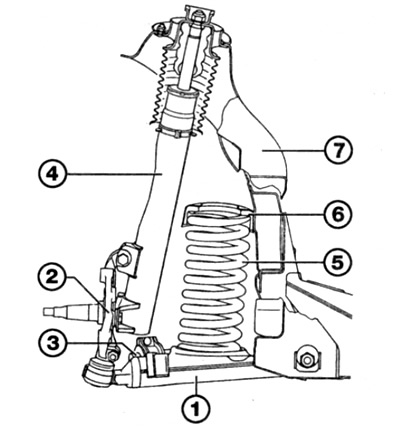
Fig. 1.1. Sectional view of the front suspension
1 Lower arm
2 Steering knuckle
3 Anti-roll bar
4 Shock absorber
5 Spring
6 Spring support cup
7 Body
Independent rear suspension also includes springs and shock absorbers (see fig. 1.2). The shock absorbers are located on the transverse lower suspension arms, which rest on rubber bushings. The hubs are attached to the lower arms and connected to the rear subframe using three rods; two upper rods and one lower. The springs are installed between the lower arms and the car body. Most models are equipped with a rear anti-roll bar. The stabilizer bar is mounted on rubber supports and connected to the lower arms with connecting links.
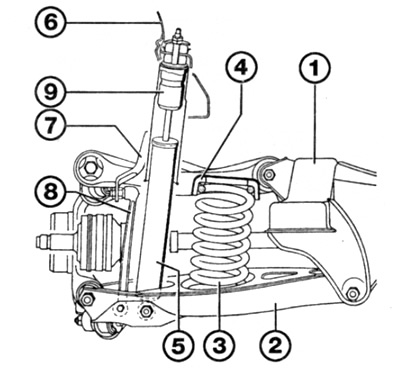
Fig. 1.2. Rear suspension view - late models shown (early models similar)
1 Subframe
2 Lower arm
3 Spring
4 Spring support cup
5 Shock absorber
6 Body
7 Anti-roll bar
8 Connecting link
9 Rubber travel limiter
The steering column is connected to the steering gear by an intermediate shaft and a rubber coupling. The steering gear is attached to the bulkhead of the engine compartment. It is connected to one of the steering knuckles by a transverse steering rod and to the other knuckle by a longitudinal steering rod, an intermediate lever and a transverse steering linkage. Ball joints are installed at each end of the longitudinal and transverse steering rods. The ball end of the steering rod is threaded for adjustment.
Power steering is standard equipment on all models. The hydraulic system includes a pump with a belt drive from the crankshaft pulley.
Note: Many suspension and steering components are secured with locknuts. If a locknut comes loose, it should be replaced with a new one.