



The measurement is made in the longitudinal and transverse directions along three belts located 10 mm below the upper surface of the cylinder, 10 mm above the lower surface of the cylinder and in the middle of the cylinder. Thus, 6 measurements are made on each cylinder, which are designated by numbers 1...3 and letters A and B and are shown in Fig. 28. The measurement results must be recorded and compared with the data in the tables. If deviations from the table data are noted in at least one cylinder, all cylinders of the block are bored. The permissible deviation from the nominal value is no more than 0.05 mm. Oversized pistons (0.5 mm and 1 mm), as already mentioned, are divided into size groups. The final size of the cylinder is determined after measuring the piston diameter, which is measured along the belt located 10 mm above the lower edge of the piston skirt, to this size it is necessary to add the value of 0.02... 0.03 mm of the gap between the cylinder and the piston. In addition, it is necessary to take into account an allowance of 0.05 mm for uneven processing along the height of the cylinder. As a result, the deviation of the cylinder diameter from the nominal value should not exceed 0.08 mm. To check the gap between the piston and the cylinder, it is necessary to take measurements as described above and calculate the difference in the sizes of the piston and the cylinder. If the result exceeds 0.08 mm, the cylinder must be bored, since its dimensions are at the limit of permissible wear.
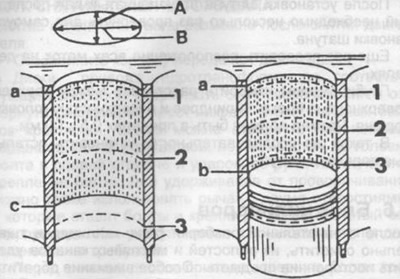
Fig. 28. Cylinder measurements. Measurement belts are marked 1, 2 and 3.
Directions of measurements: longitudinal "A", transverse "B",
a - TDC of the piston,
b - NMT,
c - lower position of the piston skirt.