



Contents: Repairing damage from minor impacts ↡ Repairing paintwork damage ↡ Repairing damage from rock strikes ↡ Polishing of small scratches ↡ Removal severe scratches ↡ How professionals varnish ↡ Removal paint and varnish ↡
When driving, fine dust and pebbles fly towards your car, which is why microcracks in the paintwork form on its front part. This happens most often in winter, when icy crumbs fly. In this case, you can use a protective paste and then polish the surface.
Repairing damage from minor impacts
Many suppliers recommend using it to remove small potholes (formed by impacts of small objects, the size of a pinhead) scratch varnish, which is rubbed in by hand. An alternative is varnish, which is applied with a brush and fills in potholes much more effectively. For regular paintwork, you can also use special wax pencils to match the color of the car. However, the layer of pencil wax only lasts a few washes, after which it must be reapplied. You will find the varnish designation and the car color code on the plate, which is located on the crossbar under the hood.
Repairing paintwork damage
Damage to the paintwork should not be ignored, as under unfavorable conditions such as moisture and heat, corrosion can begin within a few days. Therefore, repair damage to the paintwork as quickly as possible. If rust has been spreading unchecked for months or years, you will recognize this by swelling, which indicates the appearance of holes in the body metal. In this case, only restoration work on the body will help, which is not described in this Manual.
Basic tools needed to repair paint damage
To repair damage to the paintwork, you must have:
- sticky tape;
- newspapers or film;
- sanding block made of wood or cork for sanding on a flat surface;
- sandpaper of different numbers;
- spatula and putty; hardener; spray-on filler to smooth out uneven areas;
- primer;
- topcoat varnish in car color;
- varnish cleaner, preservative and polishing agent.
Repairing damage from rock strikes


1. If raised edges form around the dent in the paintwork, remove them with a thin needle. If rust has formed, carefully remove it with a pocket knife. Apply a drop of rust neutralizer to the area and wait about an hour.
2. Treat damaged areas with gasoline or solvent and dry thoroughly.
3. Apply a thin layer of primer with a brush or fingertip. Wait until the primer dries.
4. Using your fingertip or a small plastic knife, apply a small amount of filler into the dent, without touching the clear coat, and let it dry. Keep a rag and solvent handy to remove any filler stains from the clear coat immediately.
5. If you have applied too much filler, attach a piece of #0 sandpaper to the end of a pencil and, using a rotating pencil, carefully remove the excess filler.
6. Spray a little varnish into the lid of the varnish can and wait 1 minute. Apply the slightly dried varnish to the damaged area with a fingertip or a thin brush in a very thin layer.
7. When the varnish is completely dry (in summer after about 2 days, and in winter after 5 days), treat the restored areas with polishing agents, and the edges, if necessary, with varnish solvent.
Polishing of small scratches


1. Clean damaged areas with gasoline or solvent. If the damaged area has acquired a color different from the varnish coating, rub it with a polishing agent or varnish solvent. If possible, this polishing area should not extend much beyond the edges of the area with the discolored varnish.
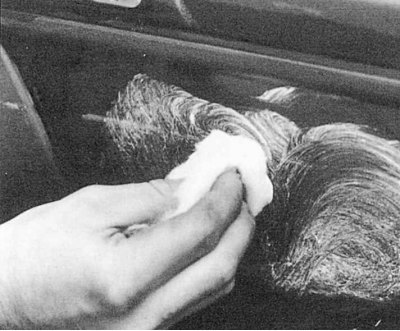
Fig. 3.23. Removing small scratches or streaks with sanding paste or varnish cleaner
2. If the edges of the scratch are rough, sand these areas with wet velvet sandpaper (grain size no more than 600) until smooth or remove with sanding paste (Fig. 3.23) or varnish cleaner if there is still a layer of topcoat varnish remaining. Do not forget to constantly moisten the sandpaper.
Caution! Do not remove the top coat.
3. Polish the damaged area with a soft polishing agent. This will distribute paint particles from the varnish coating surrounding the damaged area into the scratch.
4. Apply a preservative to the treated area.
5. If you are concerned about the shine of the coating, then after completing all the work, polish your entire car.
Removal severe scratches


1. If there are severe scratches on the bumpers, fenders or doors, remove these parts from the body before restoring the varnish coating - this will make it easier to treat the damaged areas.
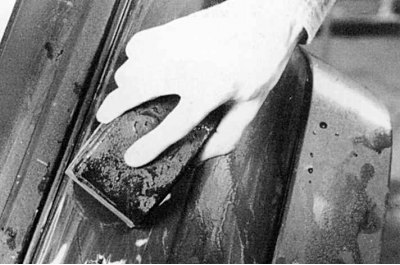
Fig. 3.24. Attaching sandpaper to a sanding block
2. Sand the damaged surface evenly with sandpaper (grit 80 or 100). You can also attach sandpaper to a sanding block (Fig. 3.24). Sand the scratched surface with even movements in one direction. Constantly dip the block in water to clean it from paint residue. If rust has formed, sand the area down to the metal, apply a rust converter and leave for an hour.
3. Clean and degrease the area with gasoline or solvent and let dry.
4. Mix the filler and hardener. The filler binds the damaged area to the adjacent varnish.
Caution! Work quickly with the filler, as it hardens within a few minutes. Therefore, prepare small amounts of filler for work. Treat uneven areas with spray filler.
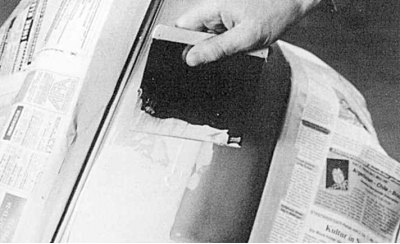
Fig. 3.25. Application of putty mass in uniform thin layers
5. Apply the putty (Fig. 3.25) evenly in several thin layers. (If you are using a putty knife for the first time, practice applying putty on an old piece of metal before you begin the main process). After about an hour the layer will harden.
6. Sand any uneven areas dry with 240 grit sandpaper. For fine sanding, use wet velvet sandpaper (grain size 400) and sand without applying pressure.
7. If nicks are visible, spray on filler, allow to cure and finish sanding with wet sandpaper (600 grit).
8. Remove sanding dust before applying varnish.
How professionals varnish
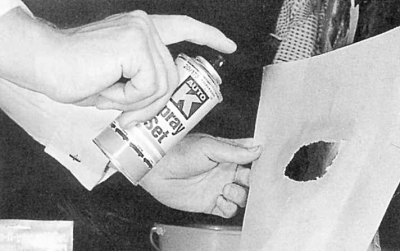
Fig. 3.26. Method of isolating the unpainted surface when applying varnish from a spray can
Cover the area around the area to be treated with tape (waterproof and stretchable), film or newspaper. You can also cut a hole in a large sheet of paper the size of the area to be treated (Fig. 3.26), then you will not paint over the excess.
Warning! When applying varnish, toxic fumes are formed, so make sure your work area is well ventilated.
Apply a primer as a fine-pored base for the top coat (filler), which is sold as a spray. Work carefully - unevenness is not eliminated by applying subsequent layers, but on the contrary - increases. Let the primer dry and sand until the coating is uniform with wet sandpaper (grain - 600). Wash off the sanded residue.
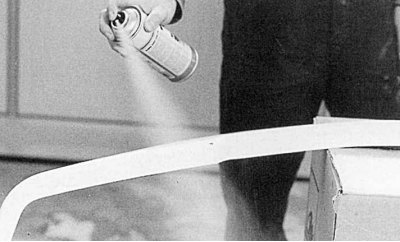
Fig. 3.27. Method of applying top coat varnish from a spray can
Apply top coat evenly from a spray can (sold as a spray) (Fig. 3.27) in several layers. The distance from the can to the surface being treated should be 20–30 cm. Run the varnish stream over the surface being treated evenly, without interrupting it or making ovals — this will reduce the formation of drips. Before applying the varnish, hold the can in hot water for a while (without heating it to a temperature of more than 40°C). This will increase the internal pressure in the can and the outgoing stream of varnish will be thinner, stronger, and the applied layer will be smoother.
Edges of sticky tape (newspapers or films), adjacent to the surface being treated, bend back and also carefully treat with a top coat varnish. This will make the color transition invisible.
When the varnish is completely dry (in summer after 2 days, in winter after 5), treat the restored area with a polishing agent, and the edges with varnish solvent.
If you are concerned about the shine of the coating, polish your entire car after completing all work.
Removal paint and varnish
Paint, varnish and solvent residues are special waste that must be removed in special ways, as well as dirty brushes, rags and spray cans. It is advisable not to throw them away with regular household waste.