



Contents: Basic information ↡ Replacement of parts ↡
Basic information
1. Before disassembling the carburetor, make sure that the ignition timing is correct. The spark plugs must be clean and their spark gap correctly adjusted. The throttle actuators must be correctly adjusted and the air filter must be clean. If necessary, refer to the relevant paragraphs Chapters 1A and this chapter. If the engine runs very rough, first check the valve clearances as described in Chapter 1A, and then check the compression as described in Chapter 2A.
2. If after eliminating all other possibilities the carburetor is found to be faulty, before deciding what to do, check the price and availability of replacement parts and carburetor repair kits. Replacing the entire carburetor may be a better solution than trying to repair it.
3. A carburetor repair kit usually contains parts that either wear out during operation or are damaged during disassembly. For example, gaskets, washers, seals, diaphragm jets, etc. Before purchasing individual parts, check with the supplier to see if the kit required for your carburetor is available. Note that in most cases it will be sufficient to disassemble the carburetor and clean the jets and channels with carburetor cleaning fluid.
4. The remainder of this paragraph describes the repair and replacement of the main components of the carburetor.
Replacement of parts
Air damper actuator
5. Remove the air cleaner as described in paragraph 2.
6. Disconnect the plug on the actuator connector.
7. Loosen the screw and remove the mounting ring (see fig. 9.7).
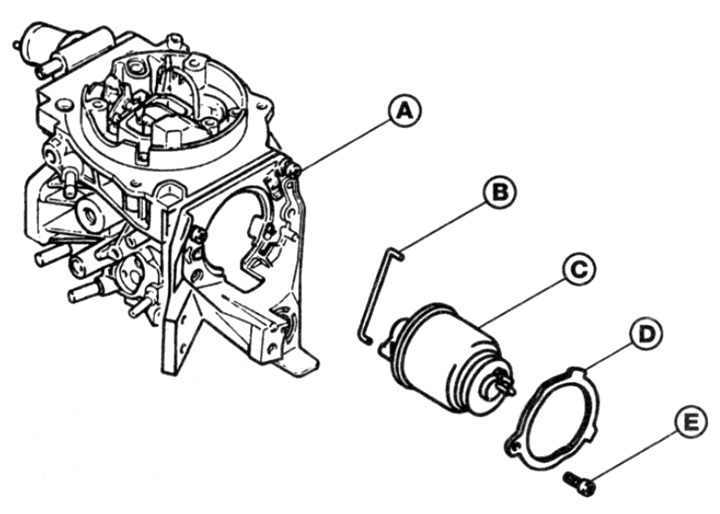
Fig. 9.7. Air damper actuator - Pierburg carburetor
A Carburetor body
In the Bar
C Mechanism body
D Fastening ring
E Screw
8. Disconnect the rod from the choke lever, then rotate the mechanism housing to disengage the locking pin and remove the mechanism from the carburetor.
[Article was borrowed from the website: mercedesman.ru]
9. Installation is carried out in reverse order.
Throttle mechanism
10. Remove the air cleaner as described in paragraph 2.
11. Disconnect the wire plug from the mechanism block. Disconnect the vacuum hose from the branch pipe on the side of the mechanism.
12. Unscrew the three mounting nuts and remove the washers (see fig. 9.12).
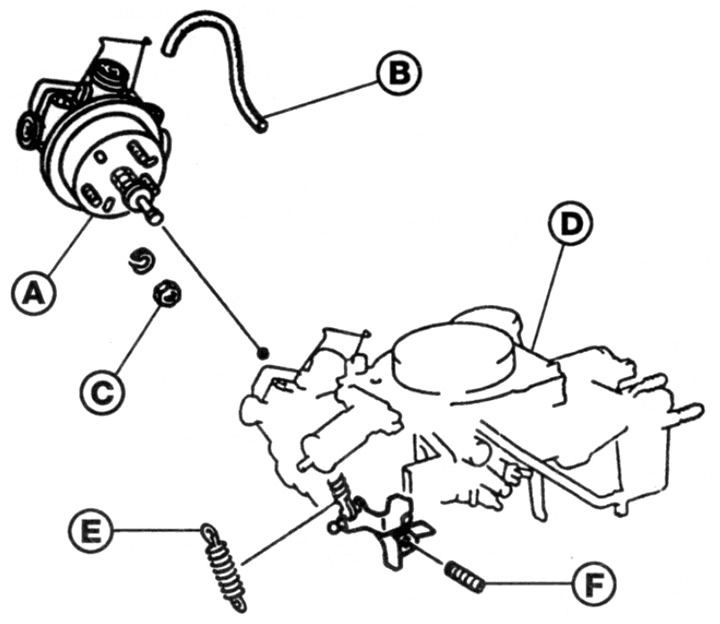
Fig. 9.12. Throttle control mechanism - Pierburg carburetor
A Body
B Vacuum hose
C Fastening nuts
D Carburetor body
E Return spring
F Adjusting screw
13. Remove the mechanism from the carburetor.
14. Installation is carried out in the reverse order. Note that the gap between the actuator pushrod and the limit screw on the throttle lever should be between 1.5 and 2.5 mm.
Cooling system sensor
15. The coolant sensor is located on the cylinder head at the front end of the engine (from the accessory drive belt side) (see fig. 9.15).
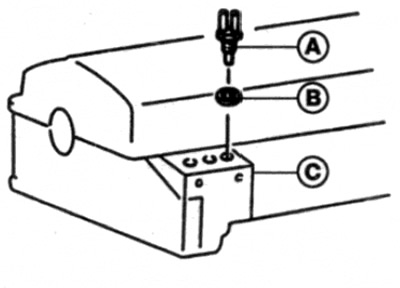
Fig. 9.15. Coolant sensor location
A Sensor
In Seal
With Cylinder Head Protrusion
16. Disconnect the wire plug from the sensor block.
17. Make sure the engine is cool. Then briefly open the expansion tank cap to relieve pressure in the cooling system.
18. Unscrew the sensor from the cylinder head and remove the sealing ring. Be prepared for some coolant to spill - spread rags on the surrounding surfaces to collect the liquid.
19. The coolant sensor can be tested by heating it in a glass of water with a thermometer. Using an ohmmeter, measure the resistance of the sensor at various temperatures as it heats up and compare these results with the data given in the Technical Data section
20. Install the sensor in the reverse order. When finished, start the engine and check that there are no leaks from under the sensor.
Electronic control unit
Caution: The Electronic Control Unit (ECU) contains components that are sensitive to the level of static electricity generated by humans during normal operation. When the harness connector is disconnected, the exposed contacts can easily conduct static electricity to these components, causing them to fail or even be damaged. The damage may not be noticeable and may not be immediately apparent. Costly repairs can be avoided by following these basic rules:
- a) Hold the ECU only by the housing; do not touch the unit contacts with your fingers or tools.
- b) When working on the ECU, ground yourself from time to time by touching metal objects, such as unpainted water pipes. This will allow static electricity to drain from your body.
- c) Do not leave the ECU disconnected longer than necessary for operation.
21. The electronic control unit is located at the rear of the engine compartment on the right side of the partition under the cover.
22. Disconnect the negative battery terminal.
23. Unfasten the latches and remove the cover.
24. Press the metal holders on the electronic unit, then disconnect the connector. Pull the unit perpendicularly to avoid bending the contact pins inside the connector.
25. Remove the screws and remove the control unit.
26. Installation is carried out in reverse order.