



Contents: Basic information ↡ Replacement of parts ↡
Basic information
1. Before disassembling the carburetor, make sure that the ignition timing is correct. The spark plugs must be clean and their gap correctly adjusted. The throttle actuators must be correctly adjusted and the air cleaner clean. If necessary, refer to the relevant paragraphs in Chapter 1A and this chapter. If the engine runs very rough, first check the valve clearances as described in Chapter 1A, and then check the compression as described in Chapter 2A.
2. If after eliminating all other possibilities the carburetor is found to be faulty, before deciding what to do, check the price and availability of replacement parts and repair kits for the carburetor. Replacing the entire carburetor may be a better solution than trying to repair it.
3. A carburetor repair kit usually contains parts that either wear out during operation or are damaged during disassembly. For example, gaskets, washers, seals, diaphragm jets, etc. Before purchasing individual parts, check with the supplier to see if the kit required for your carburetor is available. Note that in most cases it will be sufficient to disassemble the carburetor and clean the jets and channels with carburetor cleaning fluid.
4. The remainder of this paragraph describes the repair and replacement of the main components of the carburetor.
Replacement of parts
Air piston diaphragm
5. Remove the screws and lift up the carburetor damper cover together with the piston (see fig. 8.5). Remove the gasket and destroy it - a new one must be installed during assembly.
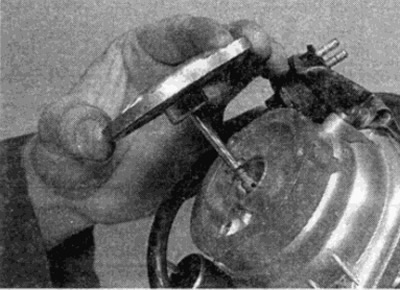
Fig. 8.5. Unscrew the screws and lift up the carburetor damper cover together with the piston
6. Loosen and remove the screws, then lift the damper up out of the carburetor body. Note that the thermal delay valve is secured with one of these screws (see Fig. 8.6, a, b).
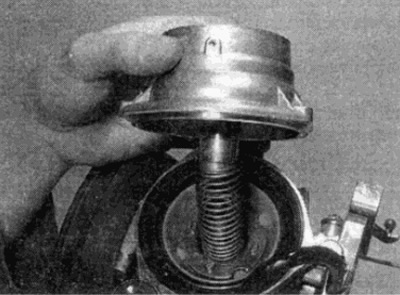
Fig. 8.6, a. Loosen and remove the screws, then remove the damper from the carburetor body
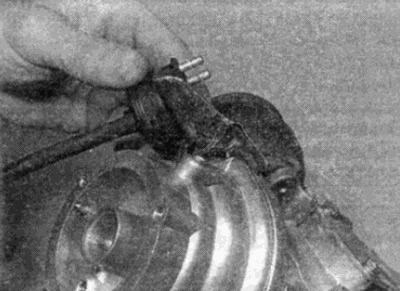
Fig. 8.6, b. Note that the thermal delay valve is secured with one of the damper screws
7. Remove the piston return spring, then remove the piston, diaphragm and jet needle from the carburetor - these parts are removed together as a single unit (see Fig. 8.7, a, b).
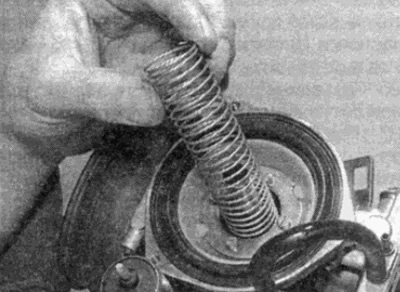
Fig. 8.7, a. Removing the piston return spring...
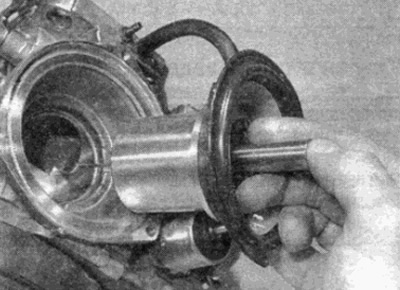
Fig. 8.7, b.... piston, diaphragm and jet needle from the carburetor body
8. Check the piston diaphragm carefully - hold it in front of a light source to illuminate the finger holes. If it is damaged, punctured or perforated, the carburetor operation will be seriously impaired. Replace the diaphragm as follows: firmly grasp the piston and unscrew the diaphragm mounting screws (see fig. 8.8).
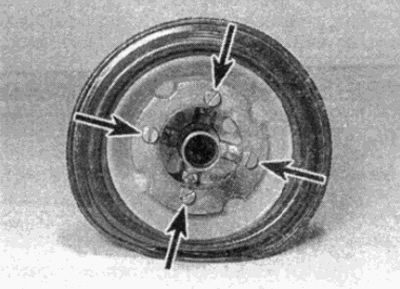
Fig. 8.8. Piston diaphragm mounting screws [shown by arrows)
9. Install the new diaphragm into place on the piston, making sure the notch on the underside of the diaphragm hub aligns with the recess on the top surface of the piston.
10. Place the washer on top of the diaphragm, then insert and tighten the mounting screws.
11. Install the piston assembly onto the carburetor body so that the tab on the outer rim of the diaphragm fits into the recess on the carburetor body (see fig. 8.11). When installed correctly, the air holes on the base of the piston should face towards the engine.
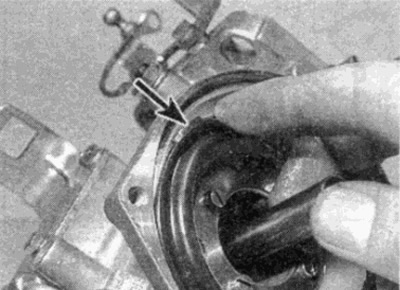
Fig. 8.11. Make sure that the tab on the outer rim of the diaphragm (shown by arrow) matches the recess on the carburetor body
12. Install the piston return spring, then lower the damper into place, insert and tighten the screws. Remember that one of the screws secures the thermal delay valve. Note: To avoid moving the diaphragm, do not rotate the damper when installing it on top of the piston.
13. Install the damper cover and piston. Use a new gasket. Insert and tighten the mounting screws.
14. Unscrew the damper filler plug, then fill the shock absorber with the required oil in the required quantity so that the level is slightly below the lower edge of the filler hole. Install and tighten the plug.
Jet needle
15. Remove the piston assembly from the carburetor as described in the previous section.
16. Loosen the countersunk screw on the side of the piston and remove the jet needle (see fig. 8.16).
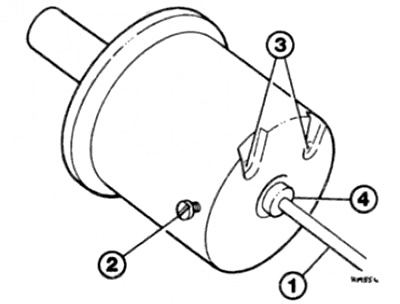
Fig. 8.16. Piston and jet needle
1 Jet needle
2 Countersunk screw
3 Air ports
4 Plastic cuff
17. Carefully inspect the needle. If it is covered with dirt or gum, clean it thoroughly in carburetor cleaner. Be careful not to damage the needle. If significant wear is found on the side of the needle, it should be replaced, as this will adversely affect idle and partial throttle operation.
18. Insert the needle into the hole until the plastic sleeve is flush with the base of the piston. Tighten the countersunk screw.
19. Install the piston into the carburetor body as described in the previous section.
Valve with thermal delay
20. Check the operation of the thermal delay valve as follows - make sure the engine has cooled down, then turn on the ignition (do not start the engine). Disconnect the longer vacuum hose from the carburetor body and suck air through it. The valve should initially let air through, then 5-15 seconds after turning on the ignition, the valve should close. If the valve constantly lets air through or does not let air through at all, it is probably faulty and should be replaced.
21. Remove the short curved hose from the branch pipe at the base of the thermal delay valve; mark the branch pipe so that you can install the hose correctly later. Disconnect the plug on the valve block.
22. Loosen the screw and disconnect the valve from the carburetor.
23. Installation is carried out in reverse order.
Launcher diaphragm
24. Disconnect all electrical wires and vacuum hoses from the choke housing. Label each connector and hose to make reinstallation easier later.
25. Remove the screws and the bimetallic spring housing from the air damper housing. Do not remove the cooling hoses. Remove the gasket.
26. Disconnect the connecting rod from the ball socket on the air damper lever.
27. Remove the three screws and lift the choke housing out of the carburetor body, remove the gasket and place the choke housing on the workbench.
28. Remove the retaining ring and remove the choke lever, then the mud shield (see fig. 8.28).
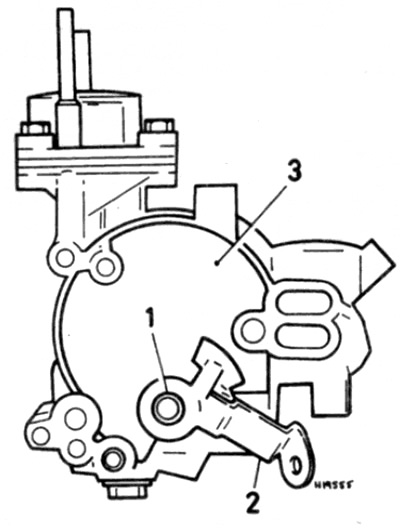
Fig. 8.28. Retaining ring (1), choke lever (2) and mud shield (3)
29. Remove the screws and the trigger diaphragm cover. Remove the gasket (see fig. 8.29).
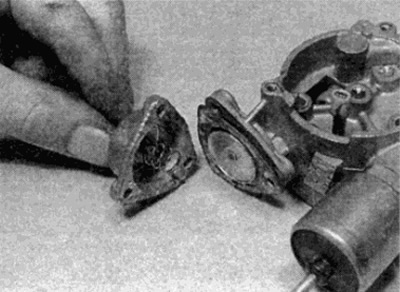
Fig. 8.29. Removing the diaphragm cover of the starting device
30. To separate the diaphragm pusher of the starting device, remove the retaining ring and move the control lever forward together with the high idle speed cam (see fig. 8.30).
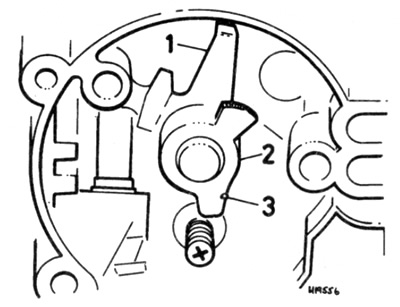
Fig. 8.30. Automatic air damper control lever (1), high idle speed cam (2) and spring (3)
31. Remove the diaphragm of the starting device and the pusher from the air damper housing.
32. Carefully check the diaphragm. If damage or holes are found, the diaphragm must be replaced.
33. Assemble the air damper housing as follows. Install the diaphragm and plunger into the housing, then install the spring and cover using a new gasket. Tighten the screws securely.
34. Connect the choke control lever to the end of the diaphragm push rod of the starting device and install the retaining ring.
35. To test the operation of the device, at this stage, install the choke lever without installing the mud screen.
36. Press the diaphragm plunger of the trigger device to the limiter and press the control lever to the left so that it rests against the plunger of the trigger device (i.e. to the high idle speed position). The choke lever should rest against the center of the second highest step of the high idle cam. If adjustment is necessary, gently bend the control lever tab.
37. After this, press the control lever to the left until it stops (those. to engine start position). The choke lever should now rest against the highest notch on the high idle cam at a distance of at least 0.5 mm (see fig. 8.37) Again, gently bend the lever tab to adjust.
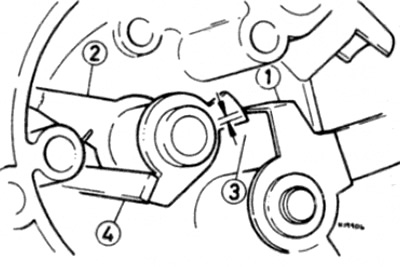
Fig. 8.37. Setting the choke lever to the cold engine start position
1 Air damper lever
2 Control lever
3 High idle speed cam
4 Control lever tongue. The arrows indicate the position of the air damper lever at the highest step of the high idle speed cam at a distance of 0.5 mm
38. Finally, check that with the lever fully pressed to the right (i.e. normal idle position), the choke lever no longer rests on the stepped segment of the high idle speed cam.
39. After finishing adjusting the choke, remove the choke lever, install the mudguard and reinstall the choke lever. Secure the lever with the locking ring.
40. Using a new gasket, install the choke housing onto the carburetor. Then insert and tighten the mounting screws.
41. Position the new gasket on the choke housing, then install the bimetallic spring housing, making sure the spring tab is aligned with the choke control lever (see fig. 8.41). Place the assembly marks on both housings in the same line.
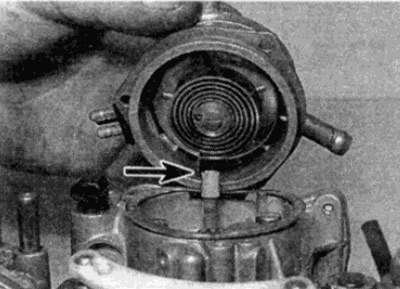
Fig. 8.41. Install the bimetallic spring housing with the spring end (shown by arrow) behind the control lever
42. Install the connecting rod into the spherical socket of the air damper lever.
43. Using the notes made during disassembly, connect the electrical wires and vacuum hoses.