



2. Loosen and remove one wheel bolt on each rear wheel, then place chocks under the front wheels and jack up the rear of the vehicle and support it on stands (see "Lifting the car and placing it on supports").
3. Locate the parking brake adjuster, which is located above the driveshaft on the pivot point where the rear cables connect. With the parking brake lever fully released, back off the cable adjuster to allow maximum cable play.
4. Starting with the left rear wheel, position the wheel/rim so that the free bolt hole is at a 45° angle back from vertical. After ensuring that the parking brake is fully released, insert a screwdriver through the bolt hole and fully spread the brake shoes by turning the adjusting ring. While looking through the hole, turn the ring upward. When the wheel can no longer be turned, turn the adjusting ring back 5-6 teeth (notches) until the wheel turns easily (see Fig. 13.4, a. b).
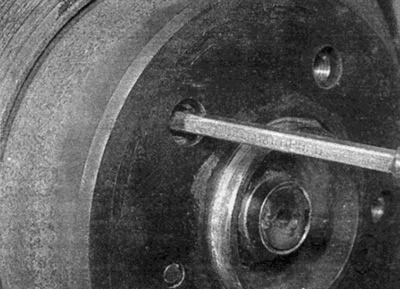
Fig. 13.4, a. Position the hole for the wheel bolt as described in the text and adjust the parking brake shoes...
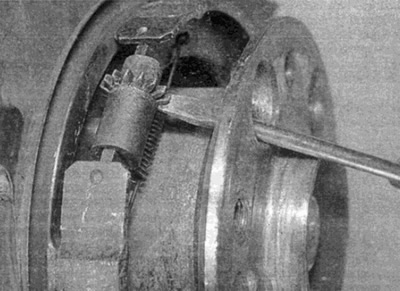
Fig. 13.4, b....by rotating the adjusting ring (shown by arrow) using a flat-blade screwdriver (shown with the disk removed)
5. Similarly, adjust the parking brake shoes on the right wheel, keeping in mind that the adjusting ring must be turned downwards to spread the shoes.
6. When both pairs of shoes are adjusted correctly, firmly tighten the parking brake lever several times to install the cable and brake components.
7. Adjust the parking brake cable using the cable adjuster so that the brake is fully applied after 7 clicks of the ratchet.
8. Once the cable is adjusted, lower the vehicle to the ground and install the wheel bolts. Tighten them to the required torque. Check the parking brake thoroughly before driving on the road.