



The connecting rods must match the cylinder number. The markings on the connecting rod and connecting rod cap must be located one under the other. The arrows on the piston heads must point to the front of the engine.
The piston ring locks must be evenly spaced around the piston circumference at an angle of 120°.
Place the mandrel on the piston and compress the piston rings in the grooves (see fig. 71).
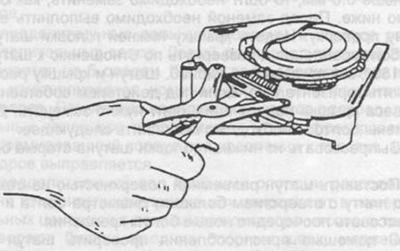
Fig. 71. Installing the piston with a mandrel for compressing the piston rings.
Place short pieces of rubber or plastic hose on the connecting rod cap mounting bolts to avoid damaging the cylinder bore.
Turn the crankshaft to the BDC position of both connecting rod journals.
Insert the connecting rod assembly into the cylinder, placing the cylinder block on its side so that the connecting rod is directed with the lower head towards the crankshaft journal and cannot damage the cylinder wall. The upper connecting rod bearing should already be installed in the connecting rod head.
Insert the piston into the cylinder and, using a mandrel, move it along the cylinder until the bearing seat is on the crankshaft connecting rod journal.
Insert the second connecting rod bearing into the connecting rod cap, lubricate with engine oil, put the cap on the mounting bolts, before this remove the hose sections and press the cap to the connecting rod. Finally check the location of all markings on the piston, connecting rod and connecting rod cap.
Lubricate the bearing surfaces under the mounting nuts on the connecting rod cover.
After installing the connecting rod on the crankshaft, the latter must be turned several times to ensure that the connecting rod is self-adjusting.
Check the location of all marks on the parts again.
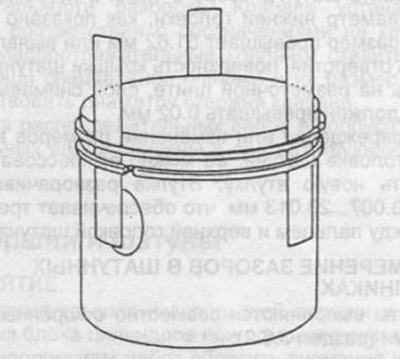
Fig. 72. Connecting rod assembly.
1 - connecting rod and connecting rod cap,
2 - oil supply hole,
3 - grooves for fastening liners.
Use a feeler gauge to determine the axial clearance between the lower head of the connecting rod and the connecting rod journal of the crankshaft.