
Engine oil circuit diagram
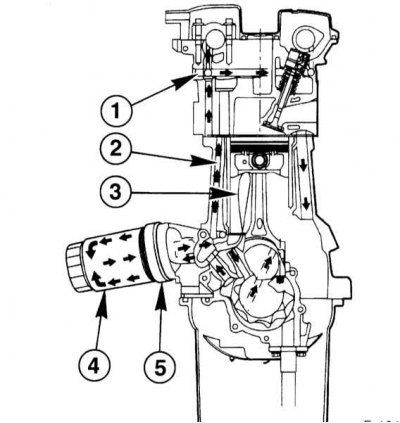
The illustration is informative and may not fully correspond to the model in question.
1 - Oil channel of the cylinder head; 2 - Main oil line; 3 - Oil injection for piston cooling; 4 - Oil filter of the main flow; 5 - Oil cooler
Oil filter. 4-cylinder petrol engine 111
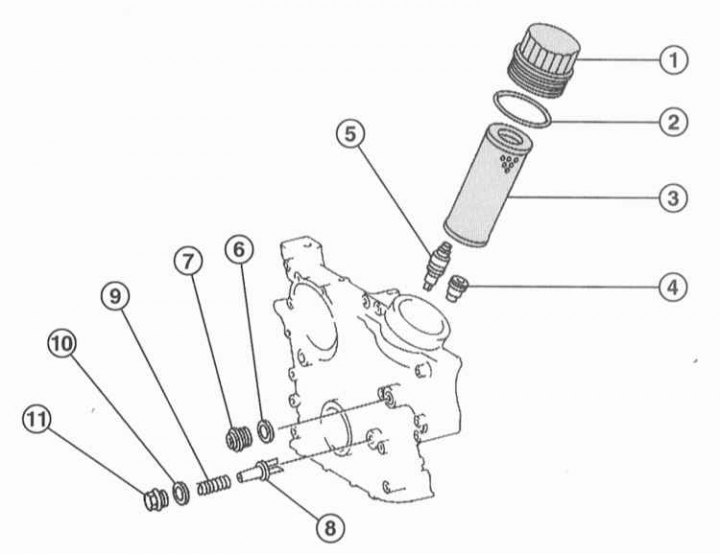
1 - Oil filter cover; 2 - O-ring; 3 - Filter element; 4 - bypass valve; 5 - Idling valve; 6 - O-ring; 7 - Threaded plug; 8 - Check valve; 9 - Spring; 10 - O-ring; 11 - Cork
Oil filter. 6-cylinder petrol engine 112
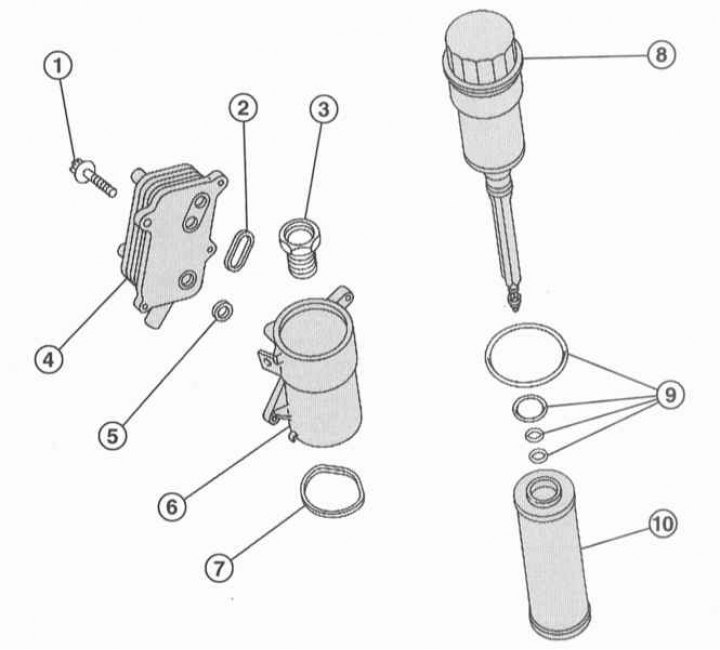
1 - Bolt, 11 Nm; 2 - O-ring; 3 - Fitting; 4 - Oil cooler; 5 - O-ring; 6 - Filter housing; 7 - O-ring; 8 - Oil filter cover; 9 - Set of sealing rings; 10 - Filter element
Oil consumption
For internal combustion engines, oil consumption refers to the amount of oil that is consumed as a result of the combustion process. Oil consumption should not be confused with oil loss due to leaks in the oil pan, cylinder head cover, etc.
Normal oil consumption occurs due to the combustion of a small amount of oil in the cylinders, due to removal with combustion products and wear products. In addition, oil is lost due to the high combustion temperatures and high pressures that occur during engine operation. Oil consumption is also affected by external operating conditions, such as driving style, as well as manufacturing tolerances of engine parts. Oil consumption should not exceed 0.8 l/1000 km.
Never fill oil above the Max. If an excess amount of oil has been poured, it must be removed. Otherwise, the catalytic converter may be damaged, as unburned oil enters the exhaust system.