



Contents: Disassembling system components ↡ Repair of electrical wiring harnesses ↡ Checking airbag modules ↡ Rules for handling airbags ↡ Rules for handling side airbags ↡ Rules for handling the destruction…↡
Disassembling system components
Disassembling and reassembling air bag system components may impair the system's performance, which could result in the system deploying unexpectedly and causing serious injury or death.
Do not disassemble any components of the airbag system!
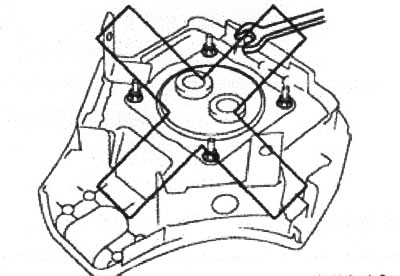
VN 10.003
Repair of electrical wiring harnesses
Improperly repairing the restraint system wiring harness may accidentally deploy the airbags or seat belt pretensioners, which can cause serious damage. If the fault is found in the connecting elements, replace the wiring harness.
Do not attempt to repair the wiring!
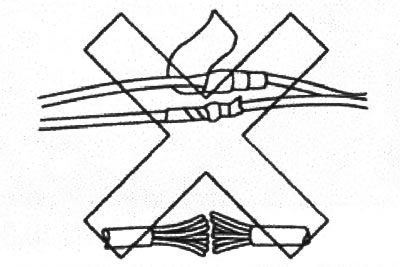
VN 10.004
Checking airbag modules
Using an ohmmeter to test the airbags may cause the airbag to deploy.
Do not use an ohmmeter to test airbags!
To do this, you need to use the on-board diagnostics system in a service station.
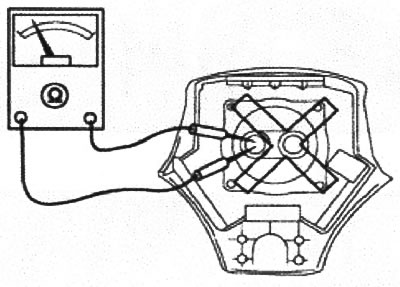
VN 10.005
Do not use an ohmmeter to test the seat belt pretensioner mechanism!
To do this, you need to use the on-board diagnostics system in a service station.
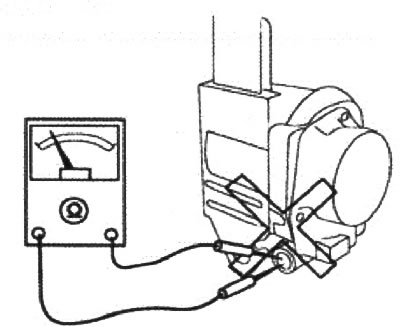
VN 10.006
Rules for handling airbags
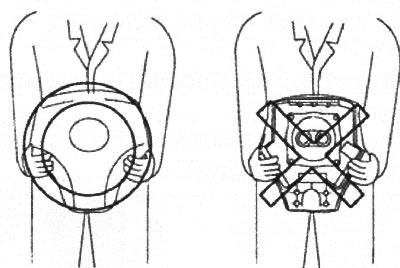
When carrying the airbag, hold it so that the operating side is not facing you.
VN 10.007
The pillow should not be placed face down, as if it is accidentally activated, the body of the pillow may be thrown away by the pillow unfolding in any direction and cause injury.
Rules for handling side airbags
If the side airbag has been deployed once, then when repairing the car, it is imperative to replace not only the airbag, but also the seat back. Reason: When the airbag is deployed, the seat back frame may become deformed.
Rules for handling the Passive Safety System Control Unit (SRS)
- Disconnecting the Supplemental Restraint System (SRS) control unit (hereinafter referred to as the "SRS unit") connector or moving the SRS unit with the ignition switch in the ON position may cause the air bag modules to deploy, which could seriously injure you.
- Before disconnecting the SRS unit connector, turn the ignition switch to the LOCK position, then remove the negative battery cable and wait at least 1 minute to allow the SRS unit backup power source to deplete the stored electrical energy.
Note: the creation of an electrical energy reserve is provided for by the design of the system. This is necessary so that if the power supply circuits are broken during an accident (eg the battery fell out) the system operated autonomously using the energy stored in the SRS unit.
Likewise, it is prohibited to remove or move the SRS control unit connected to the connector without performing the procedure for disconnecting the unit described in the previous paragraph.
- Connecting the SRS unit connector until the unit is securely installed and locked in place is dangerous. The impact sensor in the SRS unit may trigger the airbags to deploy. This could cause serious damage. Therefore, before connecting the connector, install the SRS control unit on the vehicle and secure it securely.
For vehicles with one impact sensor, if the system has ever been triggered, the SRS control unit must be replaced with a new one.
Note: The SRS control unit cannot be checked for internal damage after the system has been deployed.
Rules for handling the destruction zone sensor
- Disconnecting the crush zone sensor (hereinafter referred to as the "sensor") connector or moving the sensor with the ignition switch in the ON position may cause the air bag modules to deploy, which could seriously injure you.
- Before disconnecting the sensor connector, turn the ignition switch to the LOCK position, then remove the negative battery cable and wait at least 1 minute to allow the SRS unit backup power source to deplete the stored electrical energy.
- Also, if you try to remove the sensor or shake it, the system may be triggered. Therefore, before any manipulations with the sensor, perform the procedure for disconnecting the system power supply.
- After the system has been triggered during repairs, the sensor should be replaced with a new one for the same reasons as the SRS control unit.
- If oil products, lubricants, water, etc. get on the system components, the airbags or seat belt pre-tensioning mechanisms can accidentally activate, which can cause serious damage.
Do not allow oil products, lubricants, water, etc. to come into contact with system components!
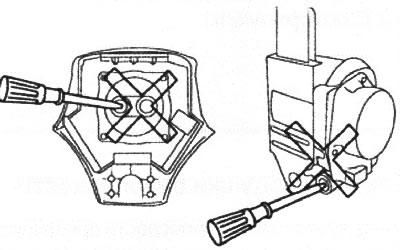
- Touching with any metal objects (screwdrivers, etc.), contact with the airbag connectors or seat belt pretensioner mechanisms may damage the connectors and activate the system.
[Original source of information: MERCEDESMAN.ru]
Do not allow any foreign objects to touch the connector contacts!
VN 10.008
Attention: all work on removing and installing vehicle components, assemblies and parts is recommended to be performed with the battery disconnected. Work related to the removal and installation of passive safety elements (airbags and seat belts), should be carried out only after reading the operating instructions and with the obligatory removal of the corresponding fuse and disconnection of the corresponding connectors.