



Contents: Steering pump of conventional type ↡ Tandem Power Steering Pump - Models…↡ Steering pump type "Tandem" - models…↡
Steering pump of conventional type
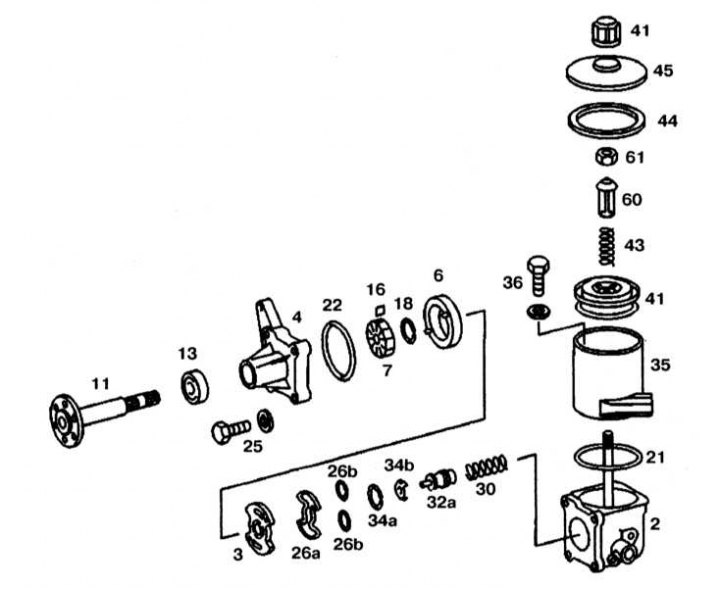
Construction of conventional type steering pump
2 - Pump body; 3 - Plate; 4 - Flange; 6 - Cam insert; 7 - Rotor; 11 - Drive shaft; 13 - Seal; 16 - Blade; 18, 34a, 34b - Retaining rings; 21, 22, 26a, 26b, 44 - Sealing rings; 30, 43 - Springs; 32 - Flow control valve; 35 - Reservoir; 36 - Bolt; 41 - Filter; 45 - Lid; 47 - Ventilation cover; 60 - Plastic bushing; 61 - Nut
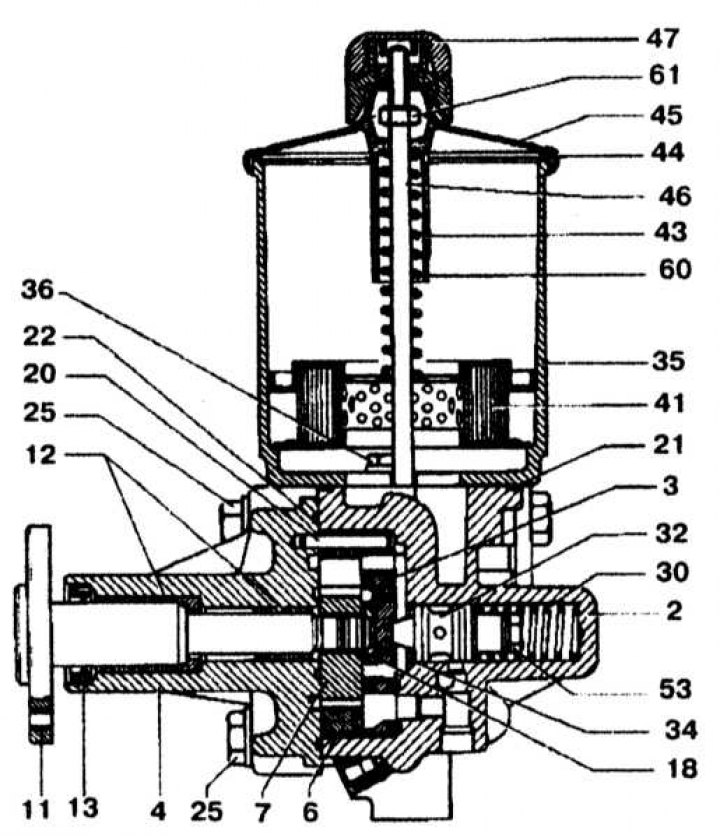
Construction of conventional type steering pump
Disassembly
1. Unscrew the ventilation cap (47) and remove the cover (45).
2. Unscrew the nut (61) from the support bolt, remove the plastic sleeve (60), spring (43) and filter (41).
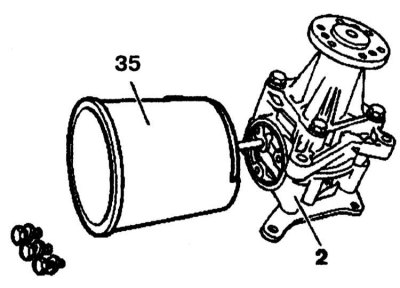
3. On Vickers/LUK pumps the reservoir (35) can be removed and the sealing ring replaced. On ZF pumps the reservoir is cast together with the housing (2).
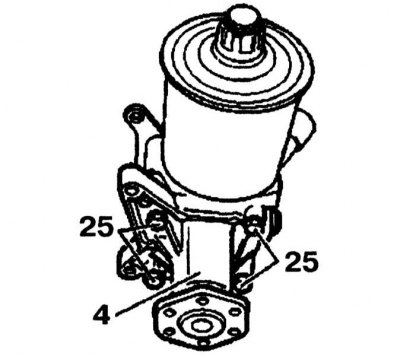
4. Loosen the bolts (25) and remove the flange (4). Check the bottom of the flange (4) for damage and wear.
5. Remove the pressure plate (3) and cam insert (6).
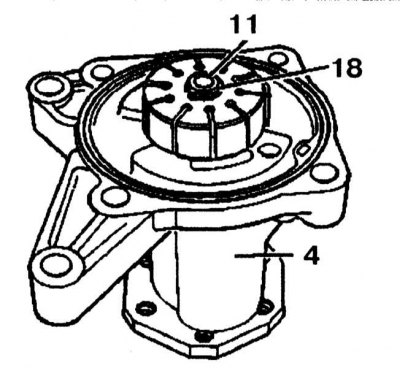
6. Remove the retaining ring (18) from the drive shaft (11). Replace the retaining ring.
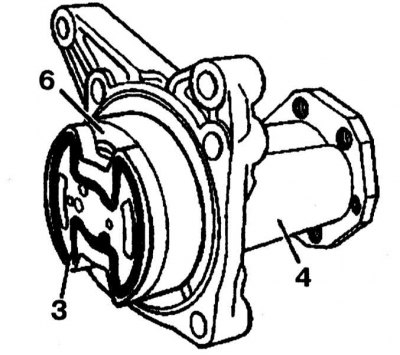
7. Remove the rotor (7) using a plastic hammer from the drive shaft (11) together with the blades (16) (10 pieces).
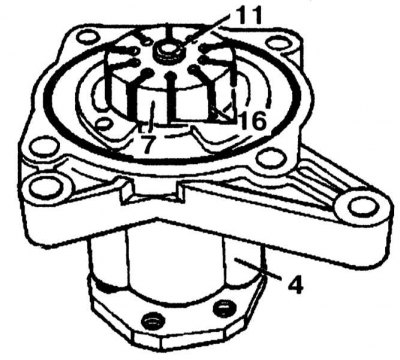
8. Remove the drive shaft (11) from the flange (4).
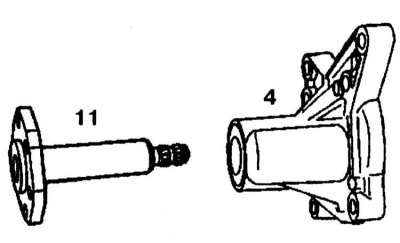
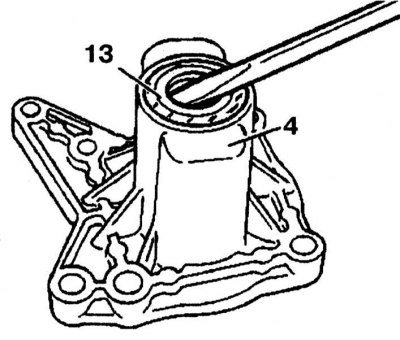
9. Using a screwdriver, press out the radial seal (13) from the flange (4).
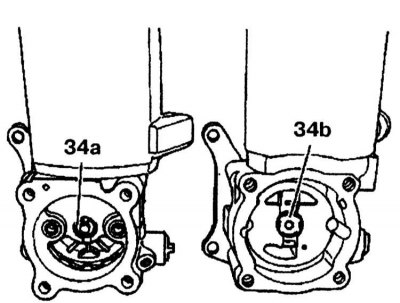
10. Remove the retaining ring (34a) or (34b).
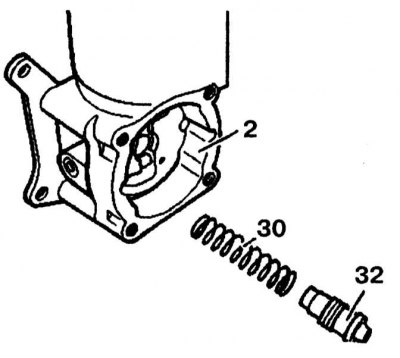
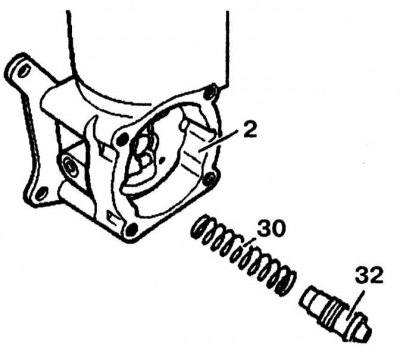
11. Remove the fluid flow control valve (32) and spring (30) from the pump body (2).
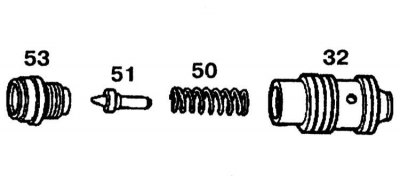
12. Secure the fluid flow control valve (32) in a vice and unscrew the valve (53) from the excess pressure valve.
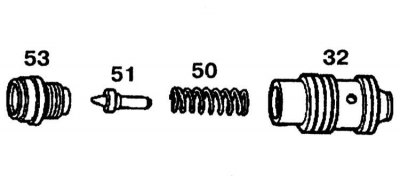
13. Remove the sealing cone (51) and spring (50), check the contact surfaces of the liquid flow control valve (32) and the hole in the pump body for wear or damage. If wear of the sealing surfaces is detected, the pump must be replaced.
14. Check both sealing cones. Replace the worn cone.
Assembly
1. Before assembly, lubricate all parts with oil. Replace all sealing rings. If a new fluid flow control valve (32) is installed, pay attention to the correct opening pressure of the excess pressure valve.
2. Assemble the fluid flow control valve (32) in a vice and tighten the valve (53).
3. Insert the spring (30) and the fluid flow control valve (32) into the pump body (2).
4. Install the retaining ring (34a) or (34b).
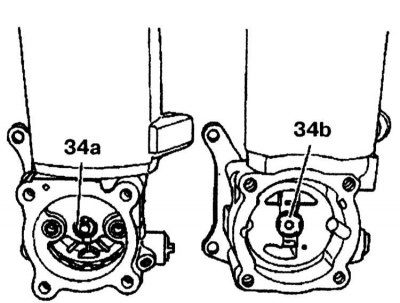
34a - Vickers/LUK pump
35b - ZF Pump
5. Install the new seal into the flange using a drift.
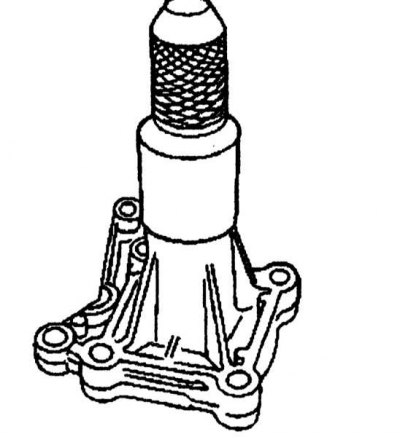
6. Further installation is carried out in the reverse order of removal.
7. After assembling the pump, check that the pump operates correctly and that there are no liquid leaks. If necessary, check the working pressure of the pump.
Tandem Power Steering Pump - Models 62, 162
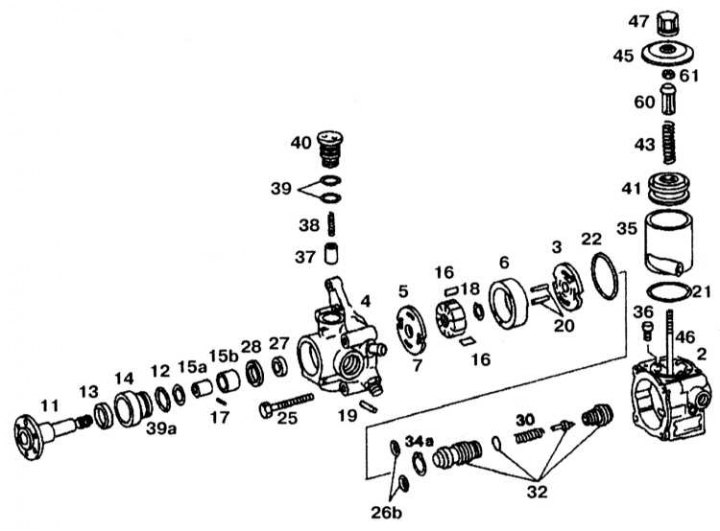
Design of the steering pump type "Tandem" (models 62, 162)
2 - Pump body; 3 - Pressure plate; 4, 14 - Flanges; 5, 12 - Thrust washers; 6 - Cam insert; 7 - Rotor; 11 - Drive shaft; 13, 27 - Radial seals; 15a - Eccentric; 15b - Bushing; 16 - Blade; 17, 19, 20 - Fingers; 18 - Retaining ring; 21, 22, 26b, 39, 39a - Sealing rings; 25, 36 - Bolts; 27 - Seal; 28 - Gasket; 30, 38, 43 - Springs; 32 - Liquid flow control valve; 35 - Reservoir; 37 - Piston; 40 - Screw cartridge; 41 - Filter; 45 - Lid; 46 - Support bolt; 47 - Ventilation cover; 60 - Plastic bushing; 61 - Nut
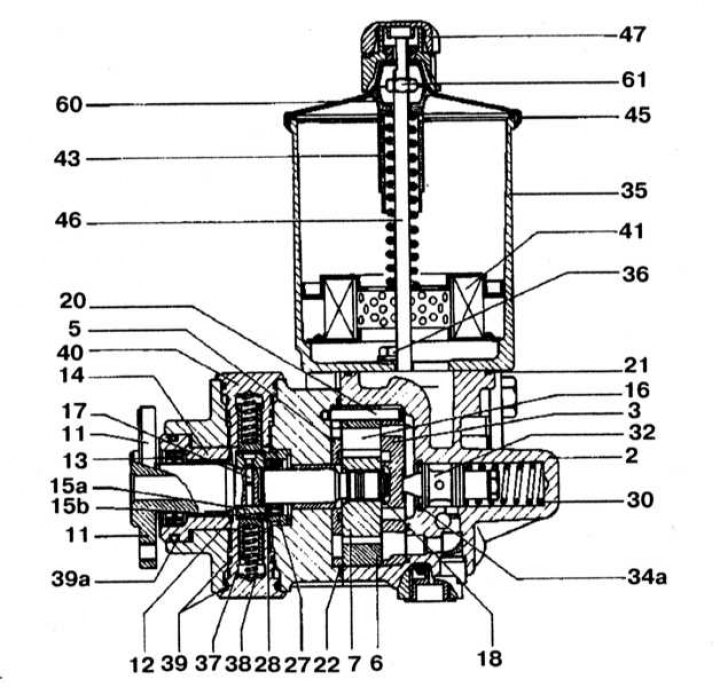
Design of the steering pump type "Tandem" (models 62, 162) (2 of 2)
Disassembly
1. Unscrew the ventilation cap (47) and remove the cover (45).
2. Unscrew the nut (61) of the support bolt (46). Remove the plastic bushing (60), spring (43) and filter (41).
3. Unscrew the bolts (36) of the pump body (2), remove the tank (35) and the sealing ring (21).
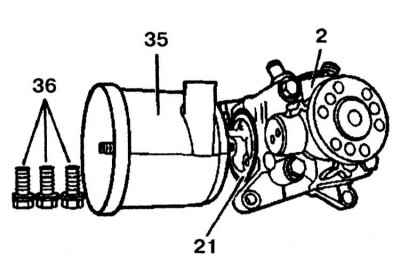
4. Loosen the bolts (25) and remove the flange. Check the flange mating surface for wear and damage.
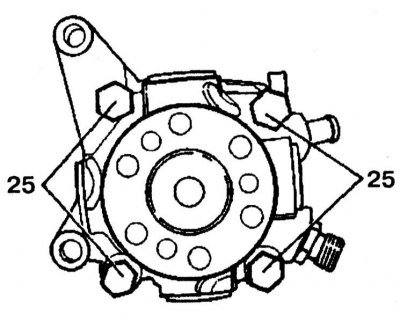
5. Remove the pressure plate (3).
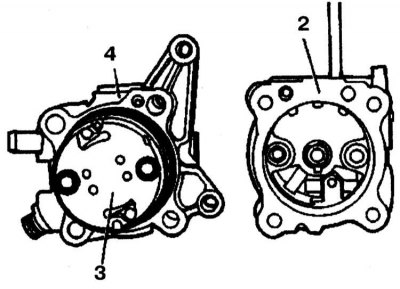
6. Remove the cam insert (6), check the contact surface of the pressure plate, as well as the sliding surfaces of the blades on the cam insert (6) for wear and tear.
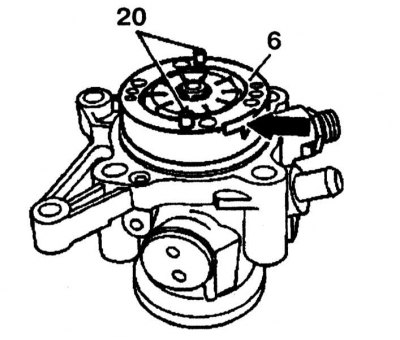
7. Remove the retaining ring (18) from the drive shaft. Replace the retaining ring.
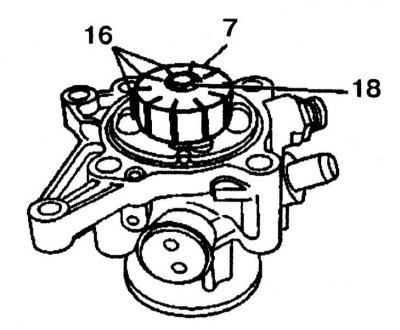
8. Remove the rotor (7) from the drive shaft (11) using a plastic hammer and remove the blades (16) (10 pieces), check the blades (16) in the grooves of the rotor (7) - they should slide in the rotor easily.
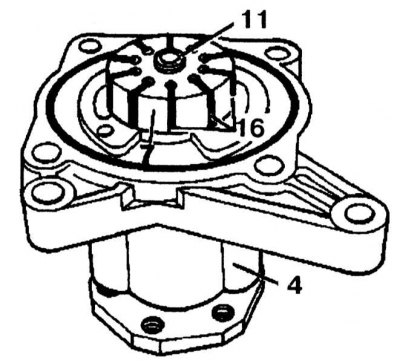
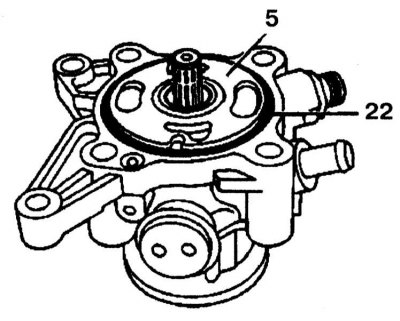
9. Remove the thrust washer (5). On the first version of the Tandem pumps, the gasket (5) was not installed. If the drive shaft on such a pump does not rotate easily, is jammed or cracked, such a pump must be replaced.
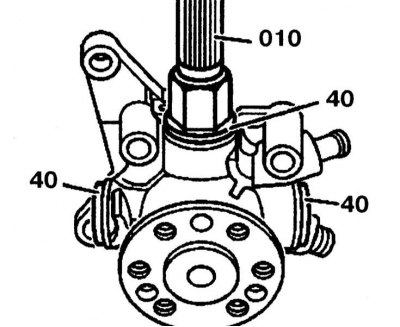
10. Unscrew all four cartridges (40) from the pump body using the key (010).
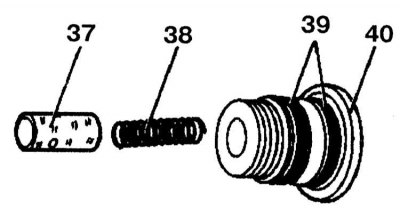
11. Check the seals (39) and replace them if necessary, remove the piston (37) and spring (38) from the cartridge (40). Check the piston and piston guide for signs of wear and damage. If the piston moves in the guide with noticeable difficulty, the cartridge must be replaced.
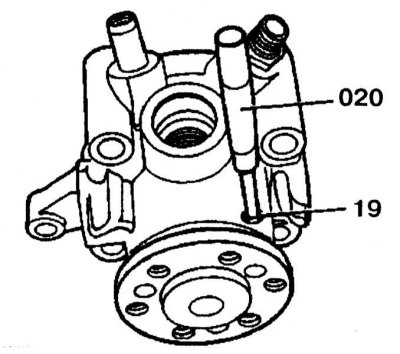
12. Knock out the pin (19) from the pump body using a punch.
13. Remove the drive shaft (11) together with the sleeve (15b) and flange (14) from the pump housing.
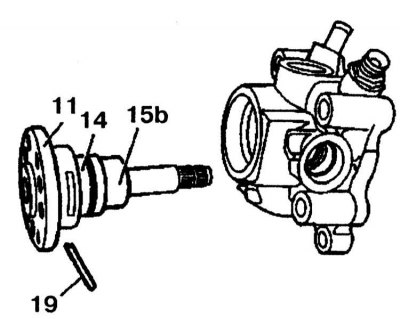
14. Remove the bushing (15b) and check it.
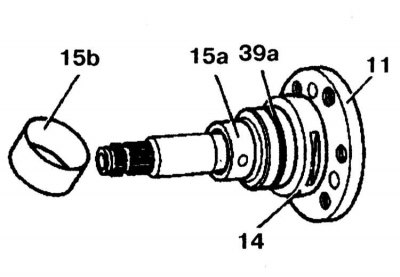
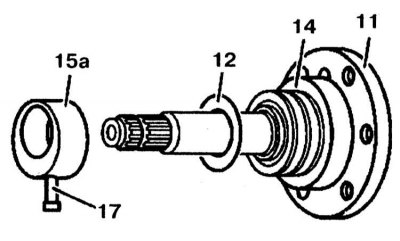
15. Knock out the pin (17) with a punch and remove the eccentric (15a), remove the thrust washer (12) and check its condition, remove the flange (14) from the drive shaft (11).
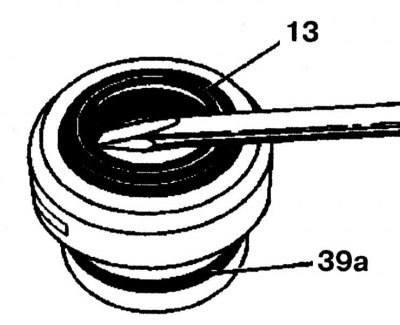
16. Using a screwdriver, remove the radial oil seal (13) from the flange, replace the sealing ring (39a).
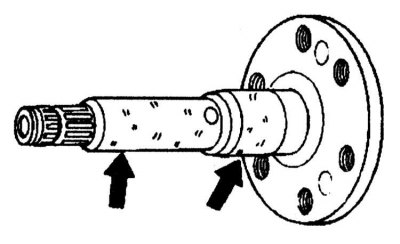
17. Check the bearing surfaces (arrows) on the drive shaft for wear or scoring.
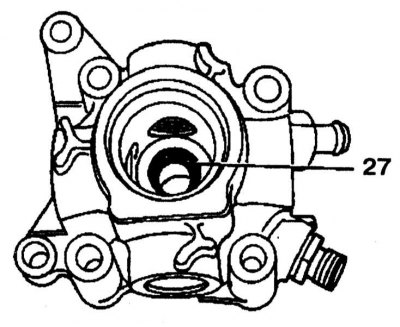
18. Check the radial seal (27) in the pump body, if liquid is found on the pump, the probable cause is a leaking seal (27).
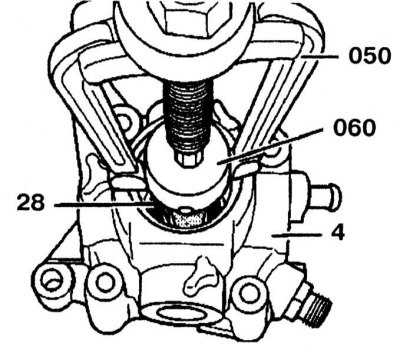
19. Remove the radial oil seal and gasket (28) using a puller, check the bronze bushing in the housing (4) for signs of wear and damage and, if necessary, replace it.
20. Remove the retaining ring (34a). When removing the retaining ring, make sure that the pump body is not damaged.
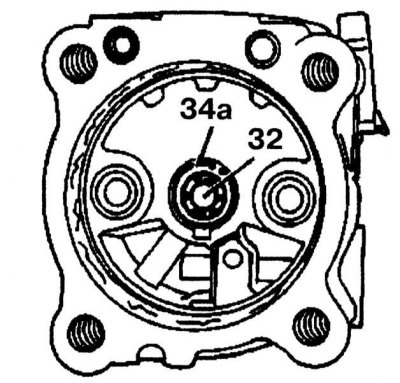
21. Remove the fluid flow control valve (32) and spring (30) from the pump body (2).
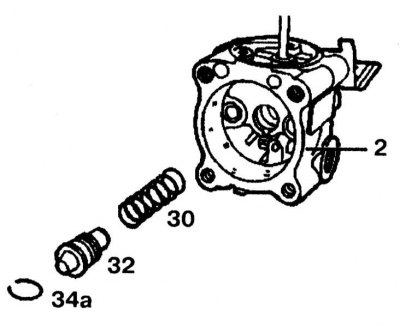
22. Secure the fluid flow control valve (32) in a vice and unscrew the valve (53) from the excess pressure valve.
23. Remove the sealing cone (51) and spring (50), check the contact surfaces of the liquid flow control valve (32) and the hole in the pump body for wear or damage. If wear of the sealing surfaces is detected, the pump must be replaced.
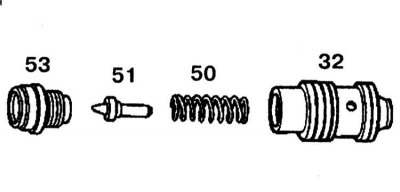
24. Check both sealing cones. Replace the worn cone.
Assembly
1. Assembly is carried out in the reverse order of removal.
2. After assembling the pump, check that the pump operates correctly and that there are no liquid leaks. If necessary, check the working pressure of the pump.
Steering pump type "Tandem" - models 67, 167
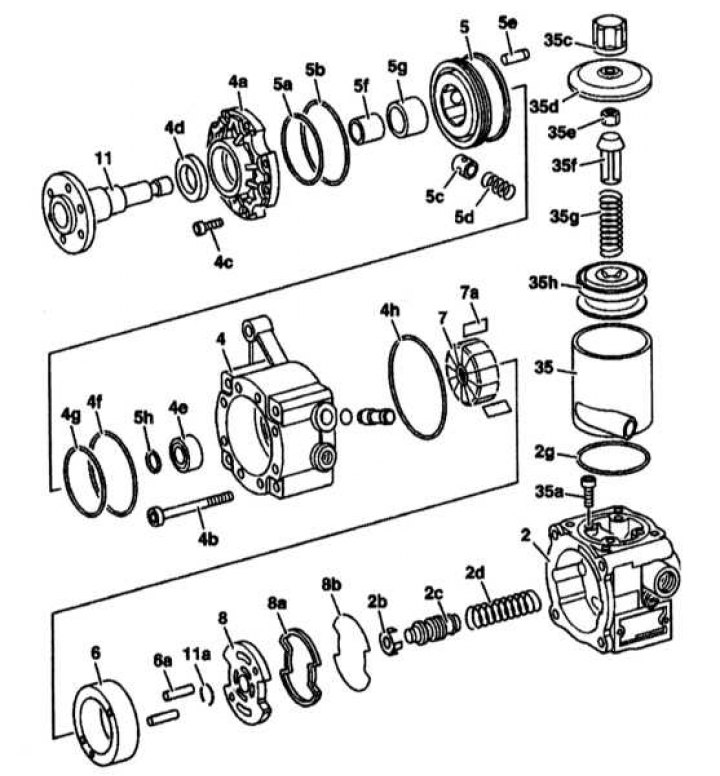
Tandem Power Steering Pump - Models 67, 167
2 - Pump body; 2b, 2c - Liquid flow control valve; 2d, 5d, 35g - Springs; 2g, 4f, 4h, 5a, 5b, 35a - Sealing rings; 4 - Pump body; 4a - Flange cover; 4b, 4c - Bolts; 4d, 4e - Radial oil seals; 5 - Piston support ring; 5c - Piston; 5f - Bushing; 5g - Bearing; 6 - Cam insert; 6a - Fingers; 7 - Rotor; 7a - Blades; 8 - Pressure plate; 8a - Seal; 8b - Gasket; 11 - Drive shaft; 11a - Retaining ring; 35 - Reservoir; 35c - Ventilation cover; 35d - Lid; 35e - Nut; 35f - Plastic bushing; 35g - Spring; 35h - Filter
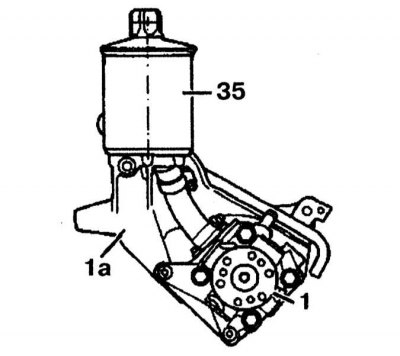
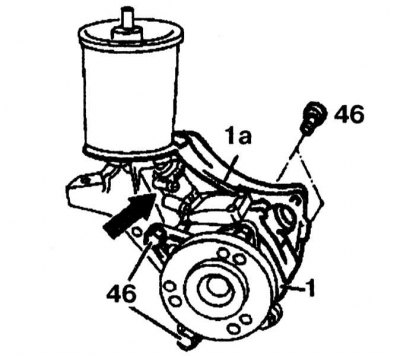
On models 140.04/050/051 the tank (35) is mounted on a bracket (1a), which in turn is screwed to the pump (1).
Remove the sealing cone (51) and spring (50). Note: On models 140.04/050/051 the reservoir (35) is secured to the bracket (1a), which in turn is screwed to the pump (1).
Disassembly
1. Loosen the clamp, disconnect the tube (arrow) and secure it to the side, unscrew the bolts (46) and remove the pump (1) from the bracket (1a).
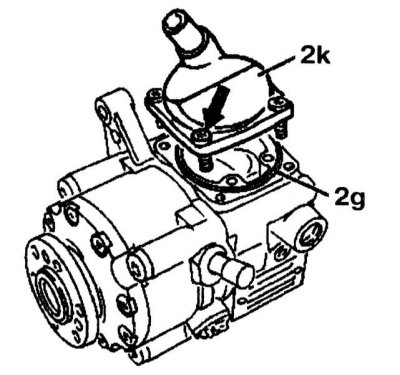
2. Loosen the bolts (4 pieces), remove the cover (2k), check the sealing ring (2g), replace it if necessary.
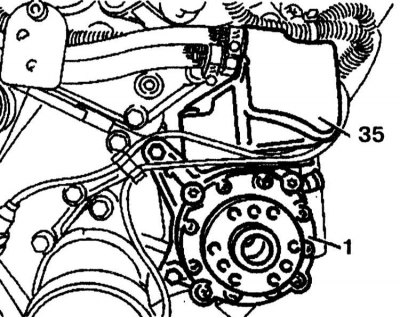
3. On models 140.056/057, on engine 120 the pump (1) has an expansion tank for regulating the oil in the tank (35), located between the thermostat and the intake manifold.
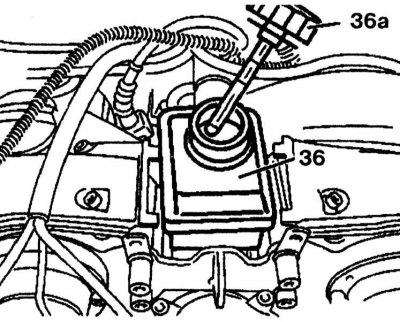
4. The oil level indicator (36a) with the "MIN" and "MAX" marks for checking the oil level is located on the expansion tank cover (36).
5. Unscrew the four bolts (35a) securing the reservoir (35) and remove it, check the sealing ring (2g), replace it if necessary.
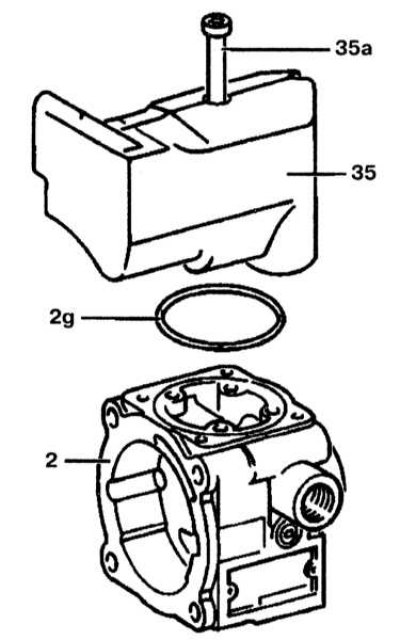
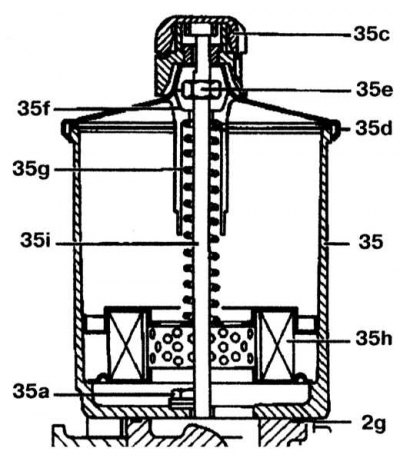
6. Unscrew the ventilation cap (35c) and remove the cover (35d).
7. Unscrew the nut (35e) from the support bolt (35i). Remove the plastic bushing (35f), spring (35g) and filter (35h).
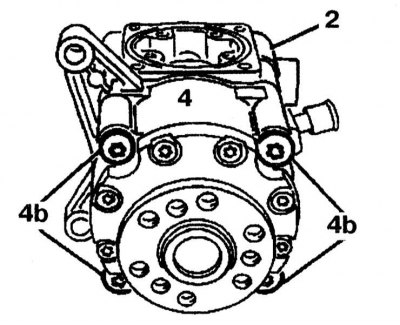
8. Loosen the bolts (4b) on the flange (4) and remove the pump housing (2).
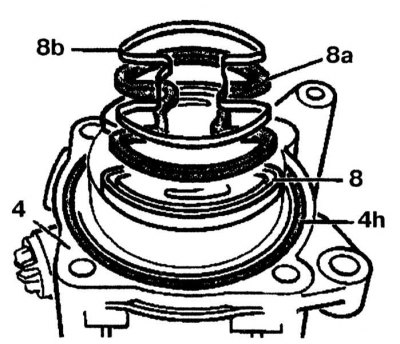
9. Remove the sealing ring (4h) from the flange (4), check and replace it if necessary, remove the pressure plate (8), check the oil seal (8a) and conical gasket (8b) and replace the oil seal if necessary.
10. Remove the cam insert (6) and pins (6a). Check the surface of the pressure plate and the sliding surface of the blades on the cam insert for wear or damage.
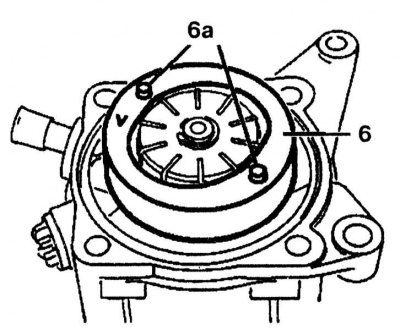
11. Remove the retaining ring (11a) from the drive shaft (11). Replace the retaining ring.
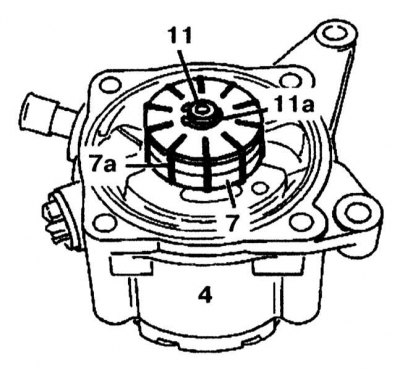
12. Remove the rotor (7) from the drive shaft (11) using a plastic hammer and remove all the blades (7a) (10 pieces).
13. On ZF pump, remove drive shaft (11) from flange (4). On Vickers/LUK pumps: first remove 10 vanes, then remove drive shaft with flange cover.
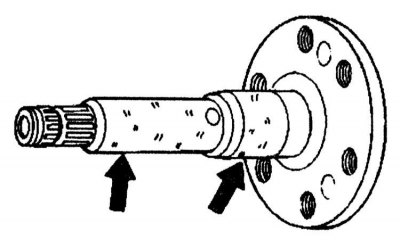
14. Check the drive shaft for scoring and wear on the bearing surfaces. Replace it if necessary.
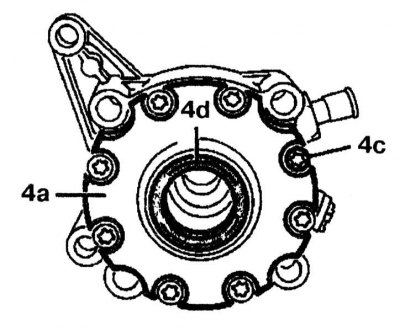
15. Loosen the bolts (4c) (8 pieces) and remove the flange cover (4a), check the radial oil seal (4d) and replace it if necessary.
16. Replace the sealing ring (5a). On a ZF pump, remove the sleeve (5f) and bearing (5g). On Vickers/LUK pumps: remove the retaining ring from the drive shaft, remove the gasket and sleeve (5f) from the bearing (5g).
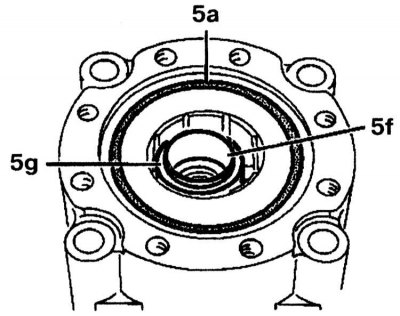
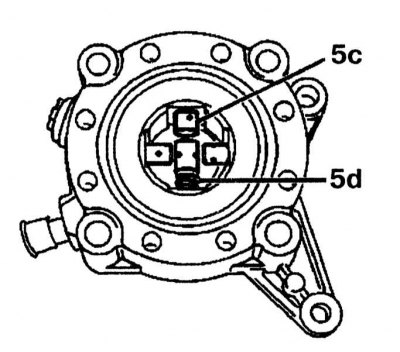
17. Remove the piston (5c) and spring (5d). Check the piston and spring for wear and damage.
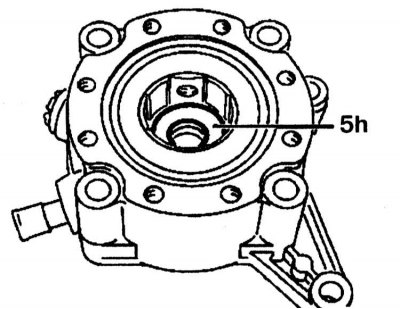
18. Remove the gasket (5h) from the ZF pump housing.
19. Fix the flange (4) between two wooden blocks so that the ring (5) can be removed.
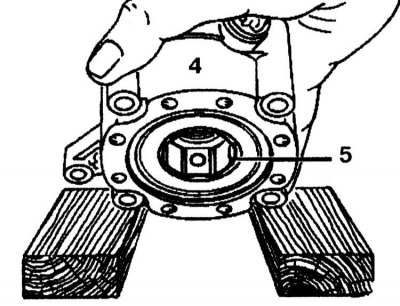
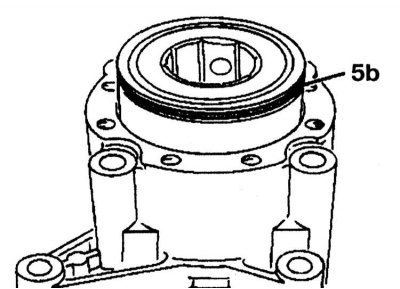
20. Replace the sealing ring (5b).
21. Replace the sealing ring (4f) and the cone ring (4g) in the pump housing, check the radial seal (4e) and replace it if necessary.
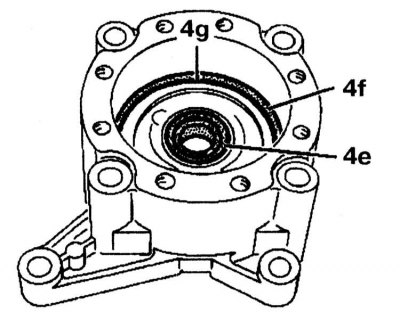
22. Remove the radial oil seal (4e) using a puller, check the bronze bushing in the housing (4) for damage and wear and replace it if necessary.
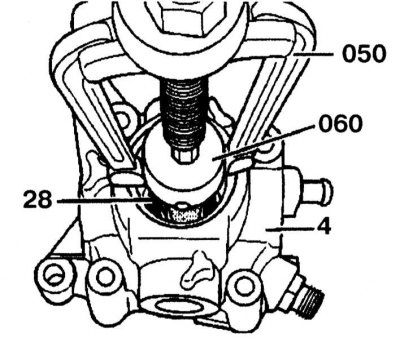
23. Remove the fluid flow control valve (2c) and spring (2j) from the pump body (2).
24. Secure the fluid flow control valve (2c) in a vice and unscrew the valve (2e) from the excess pressure valve.
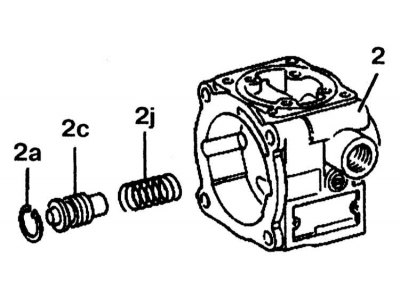
25. Remove the sealing cone (2f) and spring (2d). Check the contact surfaces of the fluid flow control valve (2c) and the bore in the pump body for wear or damage. If wear of the sealing surfaces is detected, the pump must be replaced.
26. Check both sealing cones. Replace the worn cone.
Assembly
Assembly is carried out in the reverse order of removal.
After assembling the pump, check that it is working properly and that there is no fluid leakage. If necessary, check the pump operating pressure.