



Adjusting the front wheel alignment
Front wheel toe is defined as the difference in distances between the inner edges of the wheel discs, measured on the front and rear sides at the height of the wheel hub axis.
Excessive wheel alignment causes wear on the outside of the tires. Insufficient alignment causes wear on the inside of the tires. For an accurate check, it is necessary to install a tie rod on the front of both wheels. This compensates for the change in wheel alignment during movement due to the elasticity of the steering rods. We assume that there is no tie rod available, the work can be done without it, but in this case we recommend that you additionally check the alignment at a service station. Checking the front wheel alignment is performed in the following sequence:
Set the steering to the center position for driving straight ahead. To do this, turn the steering wheel until the clamping bolt on the shaft is horizontal, which corresponds to the horizontal position of the steering wheel pad. Mercedes-Benz service stations use a special bolt to adjust the center position; its use is not described in this manual.
Measure the distance between the edges of the front wheel discs on the front side at the height of the hub axle and mark the measurement locations with chalk.
Roll the car half a wheel turn and measure the distance between the edges of the discs on the rear side at the height of the hub axis in the places marked with chalk. Compare the measurement results. When measuring without using a wheel stretcher, the toe-in value should be 5 mm±1 mm, using a stretcher, the toe-in value should be 2.5 mm±1 mm.
If necessary, the toe-in adjustment is performed by simultaneously changing the length of the steering rods. On the outside, the ball end of the steering rod is secured with a conical ring and a lock nut: on the inside, with a clamp with a bolt and nut. After loosening the fastening, the rod pipe is rotated in the required direction simultaneously on the left and right sides, the steering wheel should be in the middle position.
Measure the toe-in after adjustment as described above and tighten the fasteners on the steering rods. Tighten the clamp fastener on the inside of the steering rod, then hold the cone ring from turning and tighten the lock nut. Before final tightening of the fasteners, check that the ball joints of the tips are in the middle position to avoid damage when driving.
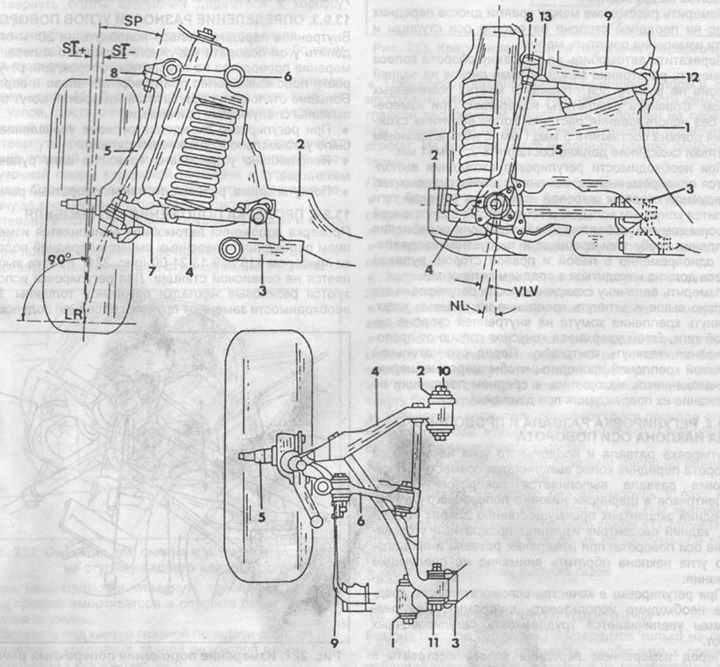
Fig. 220. Adjusting the front wheel alignment angles.
1 - longitudinal body reinforcement,
2 - body cross member,
3 - traverse,
4 - lower wishbone,
5 - steering knuckle,
6 - upper wishbone,
7 - lower ball joint,
8 - upper ball joint,
9 - anti-roll bar,
10 - eccentric bolt (camber adjustment),
11 - eccentric bolt (adjustment of the longitudinal angle of inclination of the axis of rotation),
12 - support of the anti-roll bar on the upper wishbone of the suspension,
ST - camber,
NL - longitudinal angle of inclination of the axis of rotation,
SP - longitudinal angle of inclination of the axis of rotation,
LR - wheel rolling radius,
VLV - offset of the wheel axis from the steering axis.