



- 4- and 6-cylinder in-line HFM engines;
- engines V6 Motronic ME 2.0;
- v8 engines 4.2 l Motronic ME 1.0;
- v8 5.0L HFM engines.
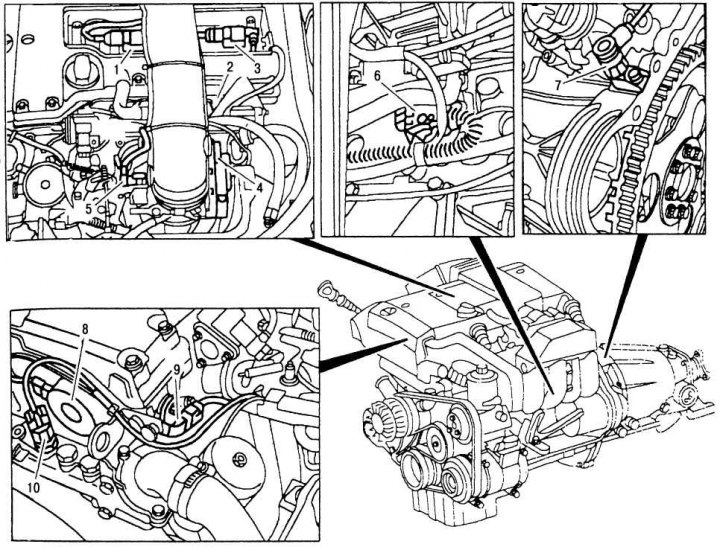
Fig. 5.36. Elements of the HFM electronic control system: 1 – ignition coil of 2nd and 3rd cylinders; 2 – nozzle; 3 – ignition coil of 1st and 4th cylinders; 4 – idle speed control actuator; 5 – intake air temperature sensor; 6 – knock sensor; 7 – crankshaft position sensor; 8 – camshaft position sensor; 9 – Hall sensor; 10 – coolant temperature sensor
In gasoline engines equipped with an injection system, the fuel-air mixture entering the combustion chamber has a precise dosage depending on the operating conditions, which ensures low fuel consumption, unlike carburetor engines. Due to the fuel dosage and the use of an adjustable catalytic converter, the content of harmful substances in the exhaust gases is reduced. Self-diagnostics of the control system, which has a memory, ensures quick troubleshooting by reading the error codes. The electronic control unit (ECU) of the engine determines the optimal moment of fuel injection and its amount. The ECU is in constant interaction with other electronic devices of the car, for example, with the control unit of the automatic transmission. The elements of the engine control system, shown in Fig. 5.36, retain their operability throughout the entire service life of the car and do not require additional maintenance.
Diagnostics and repair work on the engine management system requires special equipment, so it should be carried out in auto repair shops.