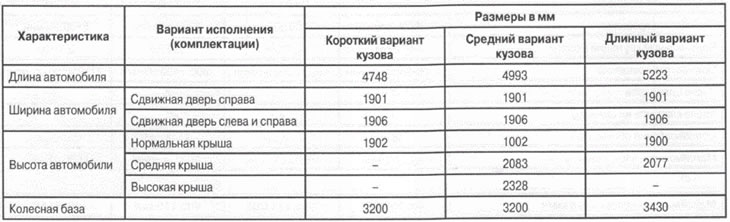
Overall dimensions of the car
Vehicle weight (manual transmission)
The mass of the vehicle, including the mass of the driver (75 kg) and all liquids used (fuel tank 90% full).
Special equipment elements increase the vehicle's unladen weight and reduce the payload.
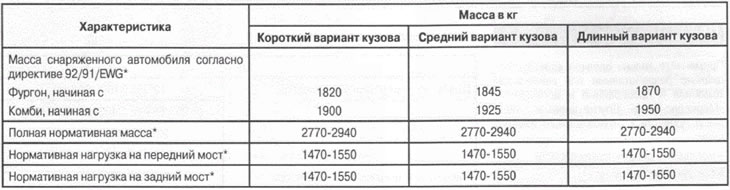
* Value (kg) for engine OM 646 DE 22 1_A
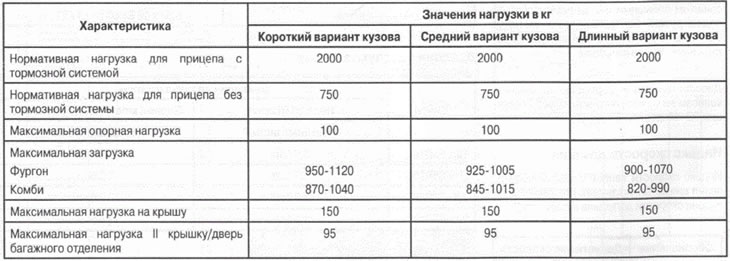
Mass of the cargo being transported (manual transmission)
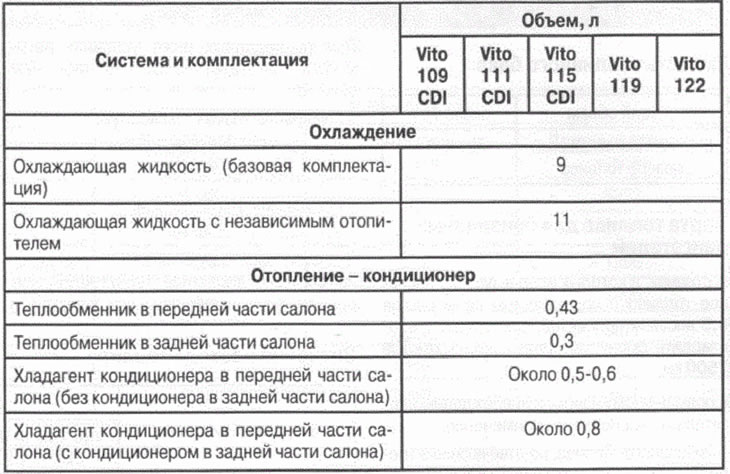
Operating materials and filling volumes
Operating fluids include fuel, lubricants such as engine oil, transmission oil, grease, coolant and brake fluid.
Use only operating materials tested and approved by Mercedes-Benz, as they:
- are an integral part of the right to a guarantee;
- are consistent with the design of your vehicle.
For more information, please contact your Mercedes-Benz service station.
Fuel
Fuel tank capacity
| Total volume | about 75 l |
| Including minimum fuel reserve | about 9 l |
Fuel grades for gasoline engines
In countries where diesel fuel with a sulfur content greater than 0.5% by weight is used, we recommend changing the engine oil every 7,500 km.
Increased wear and damage to the engine may result from the use of:
- diesel fuel that does not meet the requirements of the European standard EN 590;
- marine fuel (Marine Diesel Fuel);
- boiler fuel;
- biodiesel fuel (vegetable oil-based methyl ester (VME)).
The influence of low outside air temperature
To avoid engine problems during the winter months, diesel fuel with improved low temperature fluidity is offered. Winter grades of fuel can be used without problems down to temperatures of approximately -2°C.
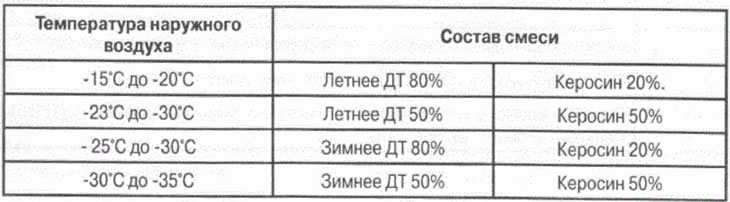
To improve flowability, you can mix diesel fuel with kerosene and/or flow improver. The mixture ratio depends on the type of diesel fuel and the outside air temperature.
Add as little kerosene or flow improver to diesel fuel as possible.
Caution: Do not mix diesel fuel with gasoline. Otherwise, the fuel system will be damaged.
- Mix no more than 50% kerosene or flow improver into diesel fuel.
- Mix diesel fuel with kerosene only in a container approved for fuel, but not in the vehicle's fuel tank.
- First pour kerosene into the container, then diesel fuel.
Modification of diesel fuel depending on the outside air temperature
Fuel consumption
Under the following conditions, the vehicle uses more fuel than usual:
- at extremely low temperatures;
- when driving around the city;
- at short distances;
- when driving with a trailer;
- in mountainous areas.
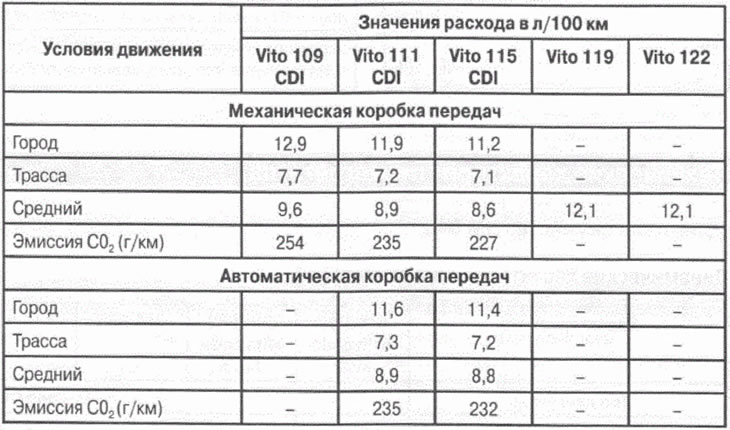
The fuel consumption values were determined in accordance with Directive 1999/100/EC (directive on carbon dioxide emissions and fuel consumption of motor vehicles) under the following test conditions:
[Text republished from the website MercedesMAN.ru]
- the intra-city cycle simulates normal city traffic with frequent processes of starting and stopping the car;
- the off-urban cycle simulates normal driving conditions with accelerations in all gears from 0 to 120 km/h;
- - when calculating the average consumption, the intra-city cycle is taken as approximately 37%, the extra-city cycle - as approximately 63%.
Fuel consumption values
Your vehicle's actual fuel consumption figures may vary from the stated values depending on:
- driving style;
- road, conditions and traffic conditions;
- environmental impacts;
- condition of the car.
Do not use special additives as they may cause increased wear and damage to the engine.
Motor oil
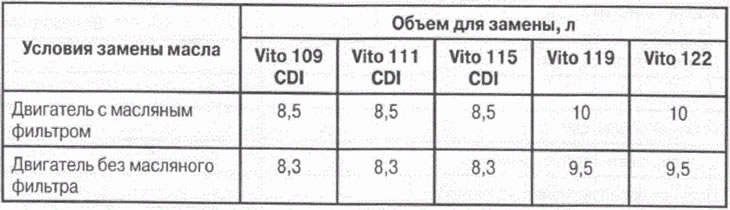
The values below indicate the total filling volume for the engine respectively.
Do not use special additives as they may cause increased wear and damage to the engine.
Viscosity of motor oil
Select the prescribed SAE grades (viscosity) of motor oil depending on the season.
The table below shows you at what average air temperature you should use which SAE grade.
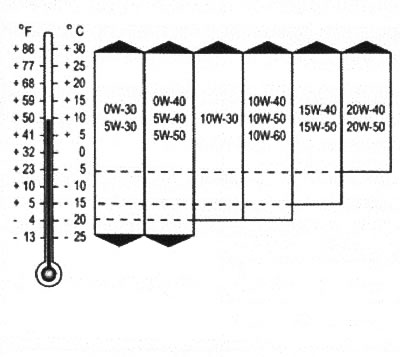
Figure 105
Technical characteristics of the units
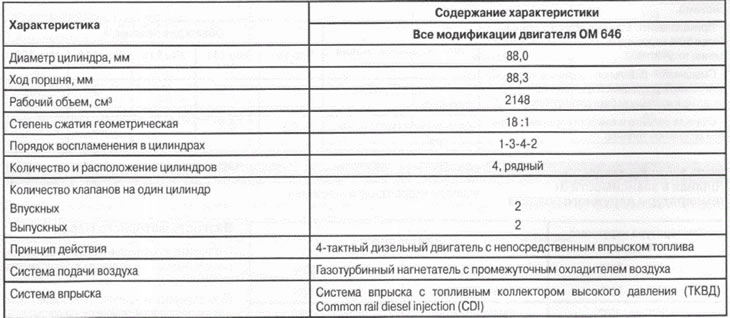
Engines of the OM 646 family
Dynamic characteristics of engines
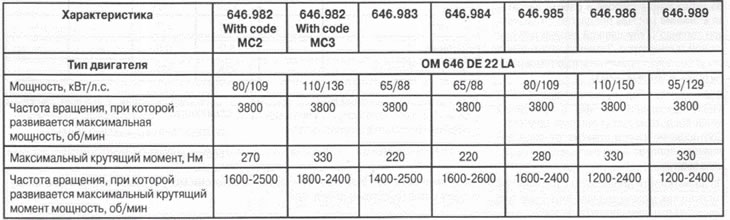
Design features and characteristics of engines