



Removal
Unscrewing the screw securing the plastic radiator shroud
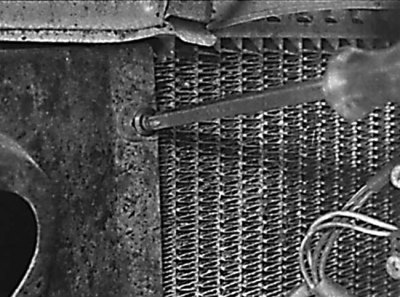
Removal the mounting pin for the plastic radiator casing
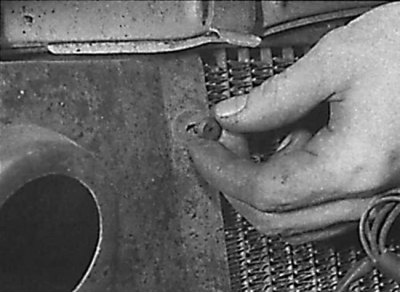
Placing the fastening elements of the plastic radiator shroud
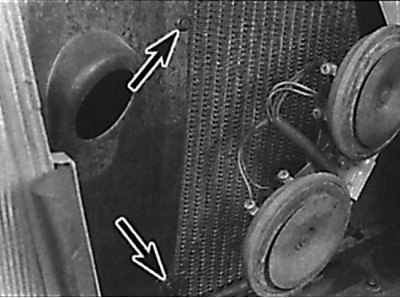
Removal the hose from the upper radiator hose on a 6-cylinder petrol engine
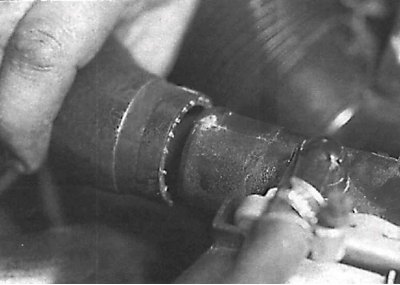
Removal the hose from the lower radiator hose on a 6-cylinder petrol engine
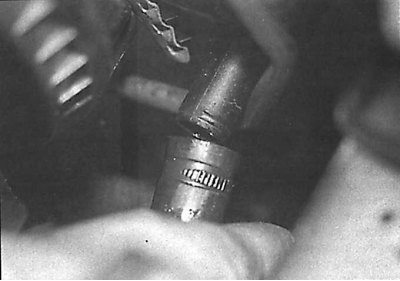
Removal the hose from the upper radiator hose on a 4-cylinder gasoline engine
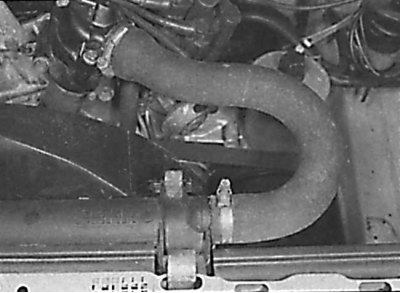
Removal the overflow hose from the top of the radiator
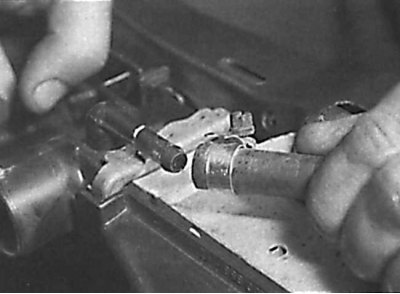
Removal the clamps securing the upper part of the radiator fan shroud
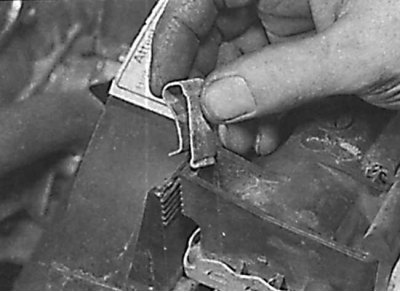
Removal the radiator fan shroud and placing it over the fan impeller
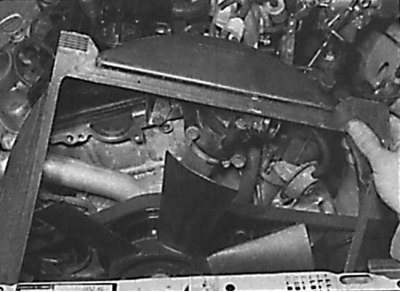
Removal the guide casing retainer
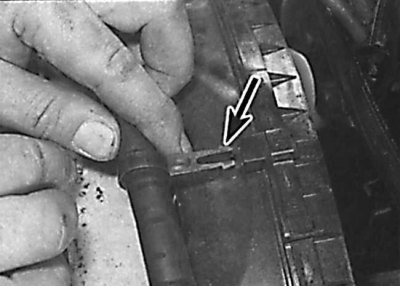
Disconnecting the guide casing
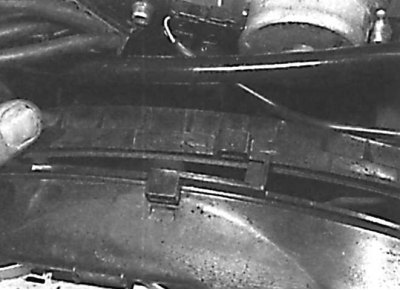
Removal the guide casing clamp
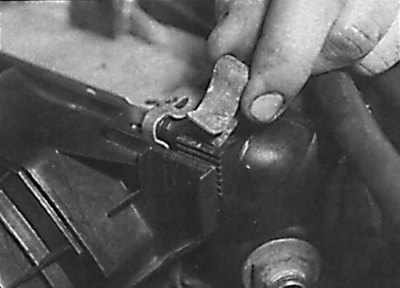
Removal the guide housing from the engine compartment
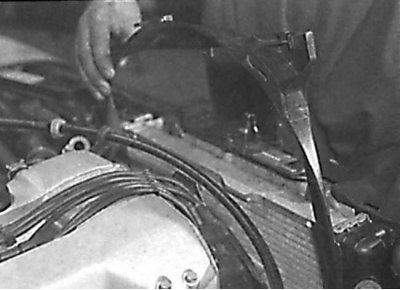
Disconnecting the hose from the transmission fluid heat exchanger on models with a 6-cylinder gasoline engine
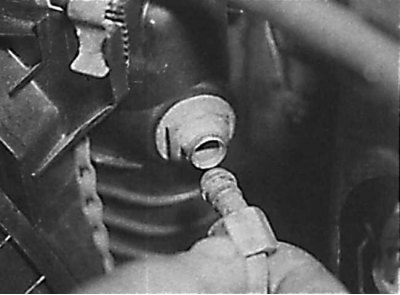
Coolant supply hose connections to heat exchanger on 4-cylinder petrol engine models
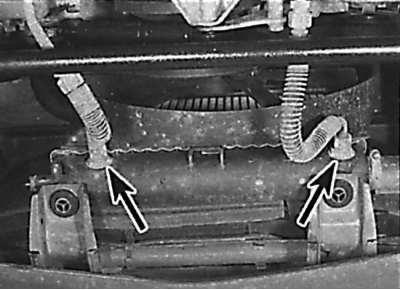
Removal the metal clamp holding the radiator
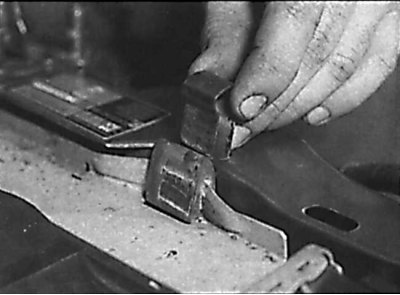
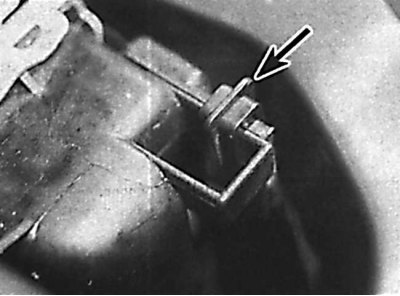
Location of the plastic radiator mounting clip
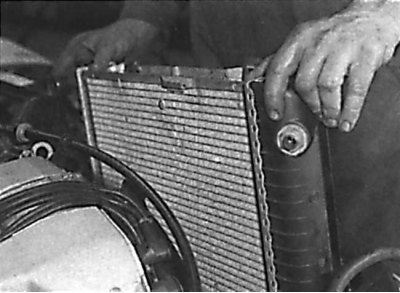
Removal the radiator from the engine compartment on models with 6-cylinder petrol engines
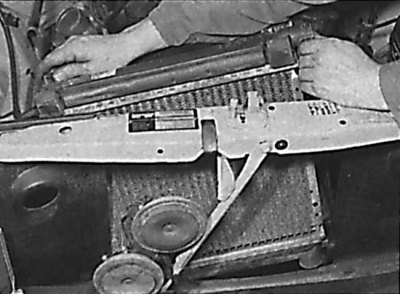
Removal the radiator on models with 4-cylinder petrol engines
1. Remove the ground cable from the battery and drain the coolant from the cooling system.
2. Unscrew the screws, remove the mounting pins and remove the plastic covers from both sides of the radiator (see fig. Unscrewing the screw for fastening the plastic radiator casing, Removing the mounting pin for fastening the plastic radiator casing, Placing the fastening elements of the plastic radiator casing).
3. On petrol engine models, remove the screws and air intake duct system from the front crossmember.
4. Loosen the clamps and remove the upper and lower hoses from the radiator hoses. If present, remove the overflow hose from the top of the radiator (see fig. Removing the hose from the upper radiator hose on a 6-cylinder petrol engine, Removing the hose from the lower radiator hose on a 6-cylinder petrol engine, Removing the hose from the upper radiator hose on a 4-cylinder petrol engine, Removing the overflow hose from the top of the radiator).
5. Remove the clips securing the top of the radiator fan shroud to the radiator. Lift the shroud and position it over the radiator fan impeller. Remove the retainer, detach the guide shroud, move it to the left and remove it from the engine compartment (see fig. Removing the clips securing the upper part of the radiator fan shroud, Removing the radiator fan shroud and placing it over the fan impeller, Removing the guide shroud retainer, Disconnecting the guide shroud, Removing the guide shroud clamp, Removing the guide shroud from the engine compartment).
6. On automatic transmission models, pinch the hoses going to the transmission fluid cooler, then disconnect the connections and remove the hoses from the cooler (see Fig. Disconnecting the hose from the transmission fluid heat exchanger on models with a 6-cylinder gasoline engine, Connection points for coolant supply hoses to the heat exchanger on models with 4-cylinder gasoline engines). Close the open ends of the tubes with stoppers.
7. Remove the metal or plastic clips that secure the radiator to the body. Remove the radiator by lifting it up from the rubber pads at the bottom (see fig. Removing the metal radiator mounting clip, Location of the plastic radiator mounting clip, Removing the radiator from the engine compartment on models with 6-cylinder gasoline engines, Removing the radiator on models with 4-cylinder gasoline engines). Remove the radiator fan shroud from the fan impeller.
Text republished from the website [MercedesMAN.ru]
Examination
1. If the radiator was removed due to reduced flow capacity, flush it with a stream of water in both directions.
2. Blow out the radiator from the outside with compressed air.
3. If the radiator is leaking, do not try to weld or solder the leak, as this will damage the plastic parts of the radiator.
4. Minor radiator leaks can be repaired using radiator sealant.
5. Check the condition of the lower radiator rubber mounts and replace them if necessary.
Installation
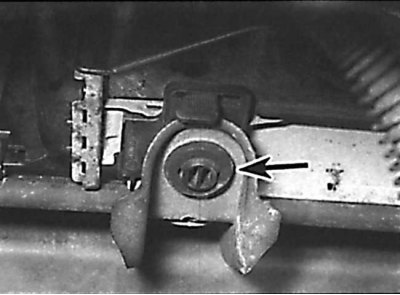
The lower radiator mounts should fit into the rubber sealing rings.
1. Installation is carried out in the reverse order of removal, taking into account the following points:
- check that the lower tabs on the radiator are installed in the rubber supports;
- check that all hoses are properly connected and securely fastened with clamps;
- finally, fill the cooling system with coolant.