



Check the springs of the driven disk damper and the condition of the splines on the driven disk hub. If the friction linings are oily, replace the driven disk.
Check the condition of the friction linings. Measure the distance from the working surfaces of the linings to the rivet heads; if the size is less than 0.3 mm, the disc must be replaced.
Check the runout of the friction lining working surfaces. Place the driven disk on a mandrel or on the gearbox drive shaft, install it in measuring centers and secure the indicator so that its tip rests against the outer side of the lining working surface (see fig. 160). Slowly turn the driven disk and read the indicator readings. If the runout exceeds 0.5 mm, the disk can be carefully straightened with pliers. In case of other faults, the disk must be replaced.
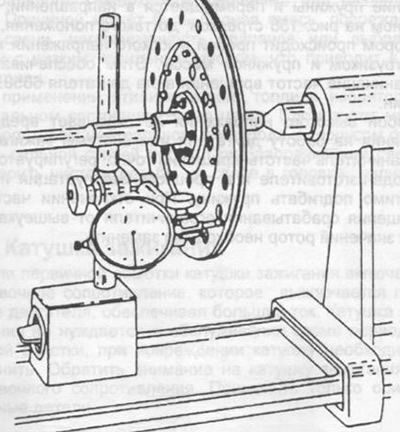
Fig. 160. Measuring the runout of the driven clutch disc.
Check the splined connection of the driven clutch disc and the drive shaft of the gearbox. Put the driven disc on the splines of the shaft and, holding the outer edge of the disc with your thumb and forefinger, rock the disc in both directions. The gap should not exceed 0.4 mm. The cause of an increased gap is usually wear of the splines on the driven disc bushing. When replacing a disc, be sure to include an indicator of which engine the disc is intended for when purchasing.
Check the wear of the inner ends of the diaphragm spring. If the wear is deep, the clutch assembly must be replaced.
The height variation of the ends of the diaphragm spring should not exceed 0.5 mm. Straightening by bending individual ends of the spring is allowed. If the wear of the spring support surfaces exceeds 0.3 mm, the clutch must be replaced.
Check the non-flatness of the working surface of the pressure plate, as shown in Fig. 161, and use a feeler gauge to determine the gap size. If the gap is more than 0.3 mm, the clutch must be replaced.
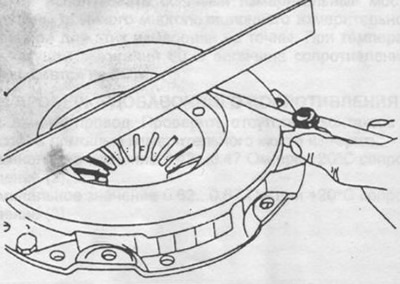
Fig. 161. Checking the wear of the working surface of the clutch pressure plate.