



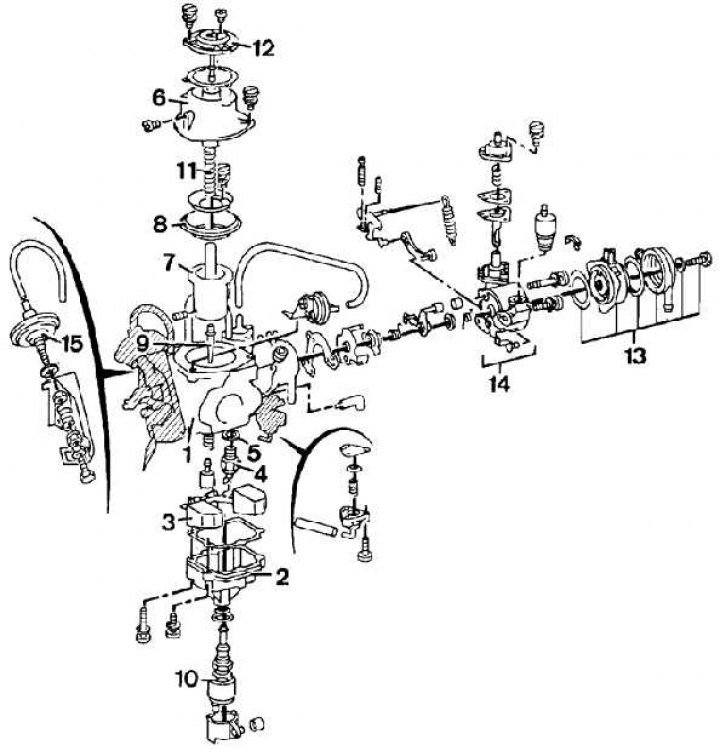
1 – carburetor body; 2 – float chamber; 3 – float; 4 – needle valve; 5 – needle valve; 6 – carburetor cover; 7 – piston; 8 – diaphragm; 9 – needle; 10 – electromagnetic valve; 11 – spring; 12 – lid; 13 – starting device thermostat; 14 – starting device; 15 – shock absorber
Before diagnosing the carburetor, check the ignition timing, the serviceability of the spark plugs and the interelectrode gap in the spark plugs. Check that the accelerator cable and the choke control mechanism are adjusted correctly and the air filter element is clean. If the engine is noisy, check the valve clearances and the compression pressure in the engine cylinders.
If there are any faults in the carburetor, determine that it may be more economical to replace the entire carburetor rather than its individual components.
Before disassembling the carburetor, purchase gaskets, jets and diaphragms. It should be noted that often to restore the normal functionality of the carburetor it is enough to disassemble it and clean the jets and air channels.