



2. To reduce fuel loss, place a small container (tank) under the filter housing and cover adjacent parts with fuel-absorbing rags.
3. Support the filter with your hand, then loosen and remove the banjo bolt on the top of the filter housing. Remove both O-rings and discard them - new ones will be required for installation (see fig. 27.3).
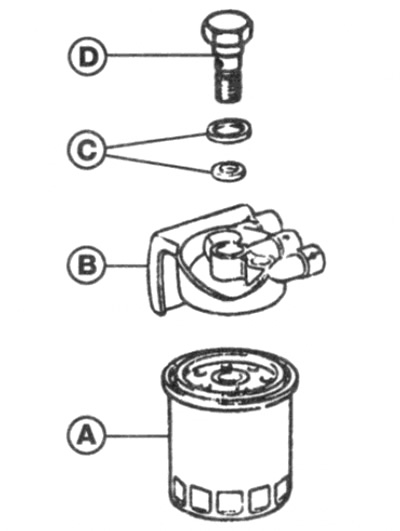
Fig. 27.3. Fuel filter parts
A Filter
In Filter housing
With Sealing Washers
D Banjo type bolt
4. Remove the filter from the engine compartment with the mating surface facing up to reduce fuel spillage.
5. With the filter removed, check that the restriction hole in the return fuel line on the mating surface of the filter housing is clean and not clogged.
6. Take a new filter and lubricate the rubber seal with a small amount of clean fuel.
7. Position the filter against the housing, then insert the new bolt (using new sealing rings) and tighten securely.
8. The pre-filter is located to the left of the fuel injection pump. Disconnect the fuel supply hose from the fuel tank in front of the pre-filter, then loosen the clamps and disconnect the fuel hoses on each side of the filter. Install the new assembly in place and tighten the hose clamps securely.
9. Reconnect the battery, then start the engine and let it idle. Check for fuel leaks.
Note: The fuel pump is self-priming, but it may take a few seconds of cranking before the engine starts.
10. Rev the engine up to 2000 rpm a few times, then let the engine idle again. This should force any air bubbles out of the filter, but if the engine idle is erratic, repeat the steps until the system is completely clear.