



Contents: Checking the radiator cap and…↡ Removal and installation the radiator ↡ Adjusting the fan shroud ↡
Checking the radiator cap and radiator
The cooling system operates under excess pressure. There is a valve with a spring in the radiator cap that closes the cooling system. When the pressure increases to 1.0 bar, the valve opens and the cooling system communicates with the environment. The cap is marked 100 (1.0 bar). Excess pressure in the cooling system increases the boiling point of the coolant.
A special pump is required to check the valve opening pressure in the plug. The plug is attached to the pump and, by increasing the pressure with the pump, the value of the valve opening pressure is determined. This value must be within the above data. If it deviates from the specified value, the plug must be replaced. The tightness of the cooling system is also checked with this device. The pump is attached to the radiator neck and an excess pressure of 1.5 bar is created in the system, and the pressure drop is checked using a pressure gauge. In a serviceable cooling system, the pressure of 1.5 bar should be maintained for at least 5 minutes. If the system is not tight, check all connections and determine the leak points by traces of coolant.
Removal and installation the radiator
To remove the radiator, perform the following operations:
Drain the coolant as described in section 5.1.1.
Loosen the clamps and disconnect the upper and lower hoses.
In vehicles with an oil cooler and a gearbox radiator, also close the inlet and outlet hoses and remove them. In 8-cylinder engines, close the gearbox radiator hoses and close the pipeline from the oil cooler.
Remove the spring clips on the top of the radiator, lift the fan shroud up and hang it on the fan.
On the 280, remove the oil cooler mounting bolt, pull the radiator up out of the radiator guide and set it aside.
Remove the two spring clips located near the hood hinge and lift the radiator. Check the cooling system hoses and replace if necessary.
Installation is carried out in the reverse order. The mounting pins must fit freely into the rubber supports on the cross member. Adjust the position of the fan shroud as described below. Screw in and tighten the drain plugs on the cylinder block for a six-cylinder engine to 30 Nm, and for an eight-cylinder engine - 25 Nm. Tighten the oil cooler hoses to 25 Nm, tighten the union nuts of the gearbox radiator hoses to 15 Nm, and tighten the fan shroud to 2.5 Nm.
Fill the cooling system with coolant as described in section 5.1.
Adjusting the fan shroud
Fan casings with a small gap with the fans are installed on the vehicles as standard. Therefore, when installing the casing, precise adjustment is required to avoid its contact with the fan when the engine is moving, which can lead to the casing breaking. The holes in the fan casing allow you to adjust its position both in height (dimension A) and in width (dimension B) (see fig. 110). For a six-cylinder engine, dimension "A" is 25 mm and dimension "B" is 15 mm; for an eight-cylinder engine, dimension "A" is 20 mm and dimension "B" is 15 mm. The distance between the radiator surface and the fan (dimension "a") should be 31 mm. After adjusting the position of the fan casing, tighten the mounting bolts.
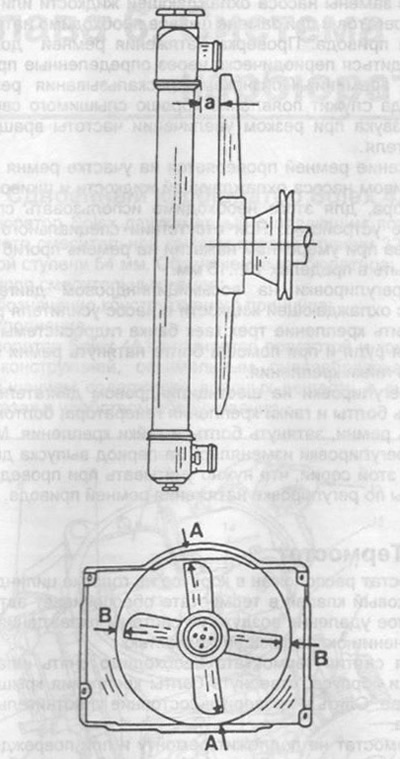
Fig. 110. Table of adjustment dimensions.
a=31 mm, A=25 mm 280 S/SE, 20 mm 350 SE/450 SE, B=15