



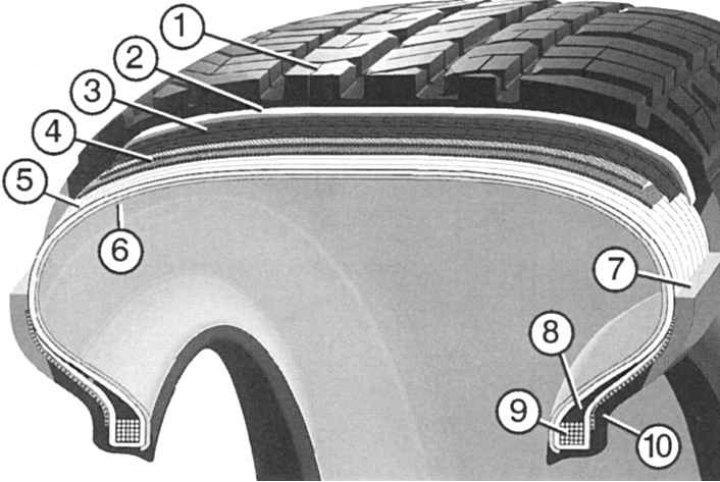
Fig. 7.20. Structure of a multilayer tire: 1 – protector; 2 – breaker (substrate): reduces rolling resistance; 3 – Nylon cord: improves the speed characteristics of the tire; 4 – layer of metal cord: increases directional stability when driving; 5 – carcass: gives the tires their shape and strength; 6 – Air-tight inner layer (core): replaces the camera; 7 – sidewall: protects the frame from damage; 8 – side profile: ensures stability during movement and control; 9 – Bead ring: ensures a tight fit on the wheel; 10 – rim shelf: serves for good controllability and high directional stability
The structure of the carcass, the composition of the rubber and the complex tread pattern allow us to classify modern tires (Fig. 7.20) as genuine high-tech products that make a significant contribution to the passive safety of your car. Tires take the weight of the car, absorb shock when driving over uneven road surfaces and serve to transmit force when driving, braking and maneuvering.
The average mileage of tires installed on the front wheels is 15,000–35,000 km, on the rear wheels – 30,000–50,000 km. At the latest, after seven to eight years, tires become unusable, since the rubber composition loses its properties over time.