



Contents: Gasoline engine ↡ Diesel engine ↡
Gasoline engine
After a relatively long period of operation of the car, the thin channels in the radiator can become clogged with residual coolant and lime deposits. Because of this, the cooling capacity decreases and the engine overheats. In this case, only a new radiator can help.
Removal
1. Disconnect the ground (–) cable from the battery.
Attention! This will erase the radio's anti-theft code.
2. Drain the coolant.
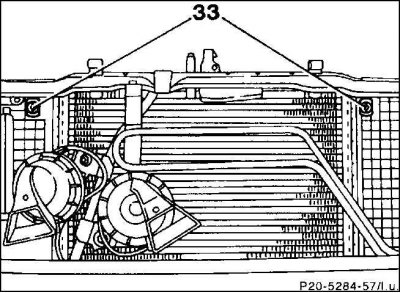
3. Pull up the fan shroud retaining springs (33).
4. Pull the fan shroud up slightly and place it on top of the fan.
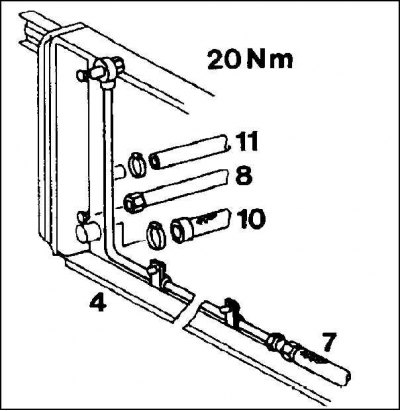
5. For cars with an automatic transmission, disconnect the oil lines (7/8) from and to the gearbox from the terminals using suitable clamps and unscrew them on the radiator (4). Pay attention to perfect cleanliness. Before removing them, clean the connections from the outside with alcohol. Immediately after this, close the oil lines with plastic caps with rubber rings so that dirt cannot get on them.
6. Remove the coolant hoses from the radiator by first loosening the clamps and sliding them all the way back.
7. Pull the retaining springs upwards. Remove the radiator upwards.
Installation
1. Check all coolant supply hoses for cuts, cracks, or other damage, and replace the damaged hoses if necessary. Check the rubber caps of the radiator mount and make sure that they are in good condition.
2. Insert the radiator from above so that the radiator mounting pins are captured in the rubber caps.
3. Insert the retaining springs at the top to secure the radiator.
4. Attach the coolant supply hoses and secure them with clamps.
5. If the radiator hoses are still disassembled, then tighten the union nuts firmly onto them with a torque of 20 Nm, remove the clamps.
6. Install the fan shroud, press it down and secure it into the side retaining plates on the radiator.
7. Insert the upper spring clip of the fan shroud.
8. Fill with coolant.
9. Connect the ground wire to the battery terminal.
10. Warm up the engine and check the hose connections for leaks.
11. Check the coolant level and top up if necessary.
12. For vehicles with automatic transmission, check the gearbox oil level.
13. Set the time on the clock.
14. Enter the anti-theft code for the radio.
Diesel engine
Removal
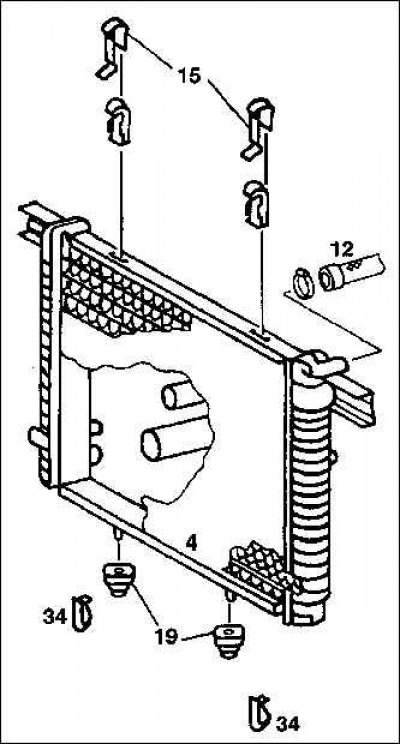
1. Disconnect the ground cable from the battery.
Attention! This will erase the radio's anti-theft code.
2. Drain the coolant.
3. 2.0L Engine: Lift the latch springs (15) up on the fan shroud.
4. 2.0L Engine: Pull the fan shroud up slightly and place it on the fan.
5. 2.2/2.5L engine: Remove the cooling fan hydraulic clutch.
6. 2.2/2.5L engine: Remove the fan shroud.
7. For cars with automatic transmission, use suitable clamps to disconnect the clamps of the oil lines going from and to the gearbox and unscrew them on the radiator. Pay attention to cleanliness, clean the connections from the outside with alcohol before removing. Then put small plastic bags with rubber rings on the oil lines to prevent dirt from getting into them.
8. Remove the coolant hoses from the radiator (4), first loosening the clamps and sliding them all the way back.
9. Pull up the retaining springs (15).
10. Remove the hood control cable.
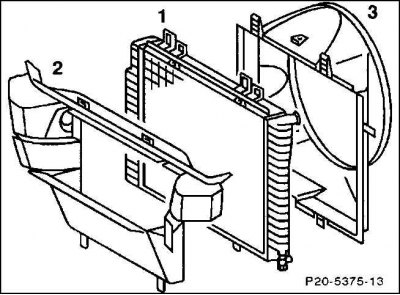
11. Remove the radiator (1) together with the air duct upwards.
Installation
1. Check all coolant supply hoses for cuts, cracks or other damage and replace damaged hoses if necessary. Check the rubber caps (19) of the radiator mount and make sure they are in good condition.
2. Insert the radiator from above so that the radiator mounting pins are captured in the rubber caps (19).
3. Insert the retaining springs at the top to secure the radiator.
4. Attach the coolant supply hoses and secure them with clamps.
5. Secure the hood control cable.
6. If the radiator hoses are still disassembled, then tighten the union nuts firmly onto them with a torque of 20 Nm, remove the clamps.
7. Install the fan shroud.
8. 2.2/2.5L engine: Install the hydraulic fan clutch.
9. Insert the upper spring clip of the fan shroud.
10. Fill with coolant.
11. Connect the ground wire to the battery terminal.
12. Warm up the engine and check the hose connections for leaks.
13. Check the coolant level and top up if necessary.
14. For vehicles with automatic transmission, check the gearbox oil level.
15. Set the time on the clock.
16. Enter the anti-theft code for the radio.