
Cars BMW Cars Volkswagen Cars Chevrolet Cars Land Rover Cars Lada Cars Honda Cars Peugeot
English Русский
Български
Беларускі
Український
Српски
Hrvatski
Română
Polski
Slovenský
Magyar
Bookmark News and articles Sitemap Feedback Site search
MercedesMan.ru


A-Class C-Class E-Class G-Class M-Class S-Class Others
W123 (1976-1985) W124 (1984-1995) W210 (1996-2002)
  • Main
  • E-Class
  • W210 (1996-2002)
  • General information
  • Working conditions and tools
  • Special tool for car repair

Special tool for car repair (Mercedes-Benz E-Class W210)

0
With the right selection of tools, you can do many maintenance and repair jobs yourself. However, for certain jobs, you will definitely need a special tool. There are a number of special tools and devices available for sale. Below are the special tools that are desirable to have in your car.

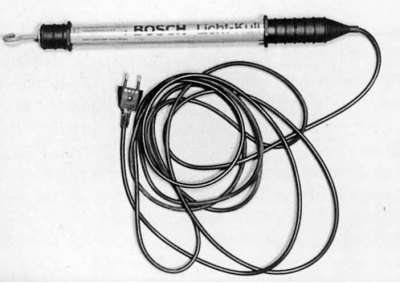
Fig. 2.12. Portable lamp

Fig. 2.12. Portable lamp


1. A portable hanging lamp (Fig. 2.12) is of great help when working under a car or in the engine compartment, as well as when working in the passenger compartment and, as often happens, in a poorly lit garage.

The advantages of such a lamp include its anti-glare protection, oil-resistant connecting wire. The lamp shade is covered with a synthetic shockproof material. In addition, the lamp is waterproof.
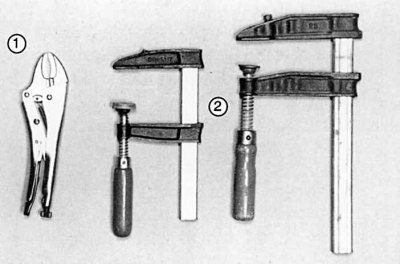
Fig. 2.13. Adjustable pliers and clamps

Fig. 2.13. Adjustable pliers and clamps


2. Adjustable pliers 1 (Fig. 2.13), with which you can set the nut size needed for unscrewing, and clamps 2 of different sizes will help you in a number of jobs, for example, when fixing large parts or when there is no "third" hand.
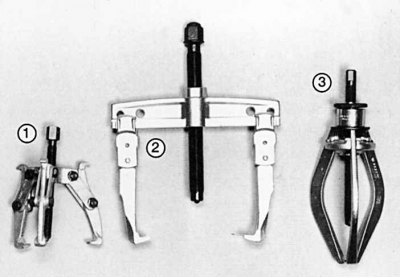
Fig. 2.14. Set of pullers: 1 – three-lever puller; 2 – double lever puller; 3 – internal puller

Fig. 2.14. Set of pullers: 1 – three-lever puller; 2 – double lever puller; 3 – internal puller


3. A small set of pullers consisting of a three-lever puller 1 (Fig. 2.14), a two-lever puller 2 (most frequently used) and an internal puller 3. Pullers are a must-have for any auto repair shop. It is advisable to have this tool in your garage, for example, if you want to remove a wheel hub or axle bearing.
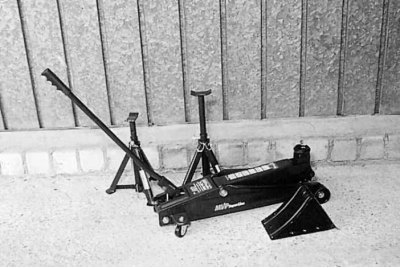
Fig. 2.15. Universal jack

Fig. 2.15. Universal jack


4. The universal jack (Fig. 2.15) is better suited for repairs than the jack that comes with the car. The support stands shown in the background will prevent your car from falling, and the wedges are placed under the wheels of the car to secure it.


Attention! When purchasing, do not choose a low-power jack.
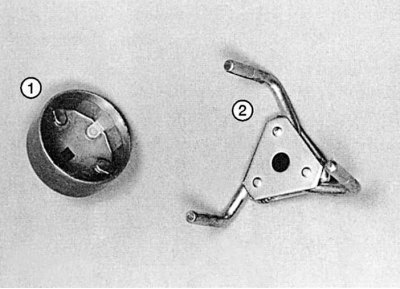

Fig. 2.16. Keys for replacing the oil filter: 1 – special key; 2 – universal key

Fig. 2.16. Keys for replacing the oil filter: 1 – special key; 2 – universal key


5. Special key 1 (Fig. 2.16) and universal key 2 for replacing the oil filter.
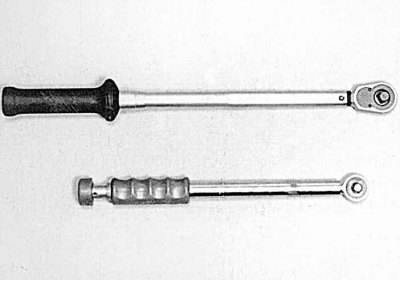
Fig. 2.17. Torque wrenches

Fig. 2.17. Torque wrenches


6. Torque wrenches (Fig. 2.17), which automatically begin to slip when the specified tightening torque is exceeded.

(Article text obtained from the website MercedesMAN)
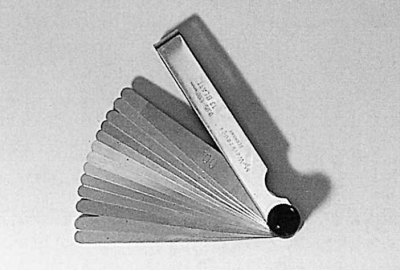
Fig. 2.18. Set of feeler gauges

Fig. 2.18. Set of feeler gauges


7. A set of feeler gauges (Fig. 2.18) for measuring gaps. When purchasing, make sure that the set contains feeler gauges of the thickness you need.
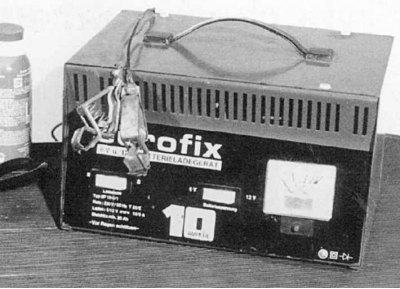
Fig. 2.19. Charger

Fig. 2.19. Charger


8. A charger (Fig. 2.19) with automatic current correction is especially necessary in winter, when your car is not used for a long time and the battery is not recharged by the generator.
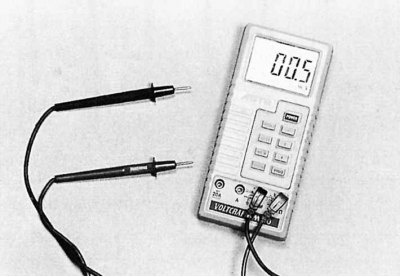
Fig. 2.20. Universal tester

Fig. 2.20. Universal tester


9. Universal tester (Fig. 2.20), designed to measure control values of voltage, current or resistance in the electrical circuits of a car. Experienced auto electricians do not work without it.
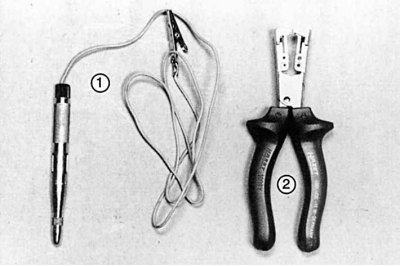
Fig. 2.21. Special tool: 1 – electrical tester with clamp and contact tip; 2 – wire stripping pliers

Fig. 2.21. Special tool: 1 – electrical tester with clamp and contact tip; 2 – wire stripping pliers


10. Electrical tester 1 (Fig. 2.21) with a clamp and contact tip and pliers 2 with insulated handles, with which you can remove cable insulation without damaging the wire.
This article is available at: russian, bulgarian, belarusian, ukrainian, serbian, croatian, romanian, polish, slovak, hungarian
The article has been verified: Polyakov Zakhar Grigorievich
Share with friends:
◀ Previous
E-Class W210 / Working conditions and tools
Next ▶

Essential tool for car repair
Purchase of spare parts
Auto mechanic's workplace
Safety precautions when repairing a car
Lifting a car with a jack
Techniques of a mechanic
Submitting a car for repair
More similar articles for repairing other models

☛ Scheme 14. Special signals Mercedes W168 (1997-2004)
☛ Repair work without engine dismantling Mercedes W202 (1993-2000)
☛ Fixed type caliper repair Mercedes W463 (1999-2019)
☛ Remote control and special functions Mercedes W140 (1991-1998)
☛ General rules for carrying out repair work Mercedes Sprinter (1995-2000, diesel)
Link in different formats to this article
Comments and feedback from visitors
No comments yet


How much will 48 + 50 ?


W210 (1996-2002) 
  • General information
  • Vehicle description
  • Working conditions and tools
  • Car care
  • Diesel engines
  • Engine repair
  • Lubrication system
  • Cooling system
  • Injection system
  • Supply system
  • Exhaust system
  • Gasoline engines
  • Engine repair
  • Lubrication system
  • Cooling system
  • Control system
  • Power and exhaust system
  • Transmission
  • Clutch
  • Mechanical gearbox
  • Automatic gearbox
  • Drive shafts
  • Chassis
  • Car suspension
  • Steering
  • Tires and wheels
  • Brake system
  • Body
  • Exterior (external elements)
  • Interior (internal elements)
  • Doors and windows
  • Heating and ventilation
  • Electrical equipment
  • Equipment and devices
  • Power devices
  • Lighting and signaling
  • Electrical circuits
W124 (1984-1995) 
  • General information
  • Governing bodies
  • Driving and operation
  • Weekly care
  • Maintenance (gasoline)
  • Maintenance (diesel)
  • Troubleshooting
  • Power unit
  • I4 petrol engine
  • V6 petrol engine (SOHC)
  • V6 petrol engine (DOHC)
  • Diesel engines
  • Engine overhaul
  • Cooling system
  • Heating and ventilation
  • Fuel system (carburetor)
  • Injection system «Bosch CIS-E»
  • Injection system «Bosch HFM»
  • Diesel fuel system
  • Supply system
  • Starting and charging system
  • Ignition system (I4)
  • Ignition system (V6)
  • Preheating
  • Transmission
  • Clutch
  • Mechanical gearbox
  • Automatic gearbox
  • Drive shafts
  • Chassis
  • Brake system
  • Car suspension
  • Steering
  • Body
  • Exterior (external elements)
  • Interior (internal elements)
  • Doors, locks and windows
  • Electrical equipment
  • Equipment and devices
  • Switches
  • Headlights and lighting
  • Electrical circuits
W123 (1976-1985) 
  • General information
  • Introduction to the guide
  • Power unit
  • Engine device
  • Repair M102 engines
  • Repair M110 and M123 engines
  • Cooling and lubrication (M102)
  • Cooling (M110 and M123)
  • Ignition system
  • Power system «Stromberg»
  • Power system «Solex 4A1»
  • Fuel injection «K-Jetronic»
  • Fuel injection «L-Jetronic»
  • Transmission
  • Clutch
  • Mechanical gearbox
  • Automatic gearbox
  • Cardan and rear axle
  • Chassis
  • Front suspension
  • Rear suspension
  • Steering
  • Brake system
  • Body
  • Exterior (external elements)
  • Interior (internal elements)
  • Doors, locks and windows
  • Electrical equipment
  • Equipment and devices
  • Power devices
  • Electrical circuits
 
MercedesMan.ru © 2017–2026 · Mobile version · Read about Mercedes · Sitemap: EN BG BY UA RS HR RO PL SK HU · Feedback · Site search · Bookmark A-Class (W168) · C-Class (W201) · C-Class (W202) · C-Class (W203) · E-Class (W123) · E-Class (W124) · E-Class (W210) · G-Class (W463) · M-Class (W163) · S-Class (W116, petrol) · S-Class (W126, petrol) · S-Class (W140) · S-Class (W220) · Sprinter · Vito 1 · Vito 2 · Vario 814D ·
 
We only use cookies without which some of the site's features may not be available.