
Cars BMW Cars Volkswagen Cars Chevrolet Cars Land Rover Cars Lada Cars Honda Cars Peugeot
English Русский
Български
Беларускі
Український
Српски
Hrvatski
Română
Polski
Slovenský
Magyar
Bookmark News and articles Sitemap Feedback Site search
MercedesMan.ru


A-Class C-Class E-Class G-Class M-Class S-Class Others
190 (W201) (1982-1993) W202 (1993-2000) W203 (2000-2007)
  • Main
  • C-Class
  • W202 (1993-2000)
  • General information
  • Maintenance
  • Checking the coolant level

Checking the coolant level (Mercedes-Benz C-Class W202)

0
Contents: Antifreeze check ↡ Adding coolant concentrate (Mercedes…↡ Checking the tightness of the…↡
The coolant level outside of maintenance should also be checked before each relatively long trip. For topping up, even in warm weather, use only a mixture of antifreeze and lime-free, clean water.

Attention! In order to continue the trip, you can also, especially in summer, add clean water. In this case, it is necessary to make adjustments to the composition of the radiator coolant as soon as possible.
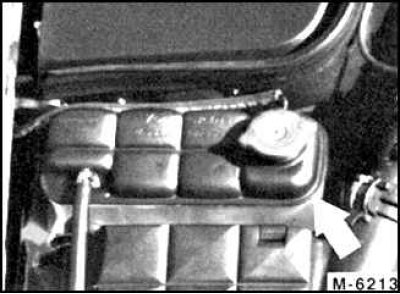

Attention! In order to continue the trip, you can also, especially in summer, add clean water. In…


6-cylinder or 4-cylinder engine with air conditioning: The coolant level in a cold engine (coolant temperature approx. +20°C) must reach the interface between the black top part and the transparent bottom part of the expansion tank.

4-cylinder engine without air conditioning: the coolant level in a cold engine (coolant temperature around +20°C) should reach the mark in the radiator filler pipe.

Add coolant if the level is too low.

To avoid engine damage, add coolant when the engine is cold.

Caution! Open the locking cap carefully when the engine is hot. There is a risk of scalding! When opening, place a rag over the locking cap. If possible, open the locking cap only when the coolant temperature has dropped below 90°C.
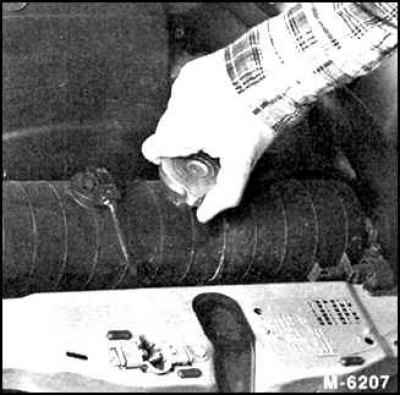


Caution! Open the locking cap carefully when the engine is hot. There is a risk of scalding! When…


When opening, first lift the locking cap slightly to release excess pressure. Then turn the cap further and remove it.

Perform a visual inspection if the coolant level drops over a short period of time.

Antifreeze check


The following testing tool is required: Test hydrometer.

Article based on data from the website (MercedesMan.ru)

To avoid any risk, the concentration of antifreeze should be checked regularly before the start of winter, especially if clean water has been added occasionally.

1. Warm up the vehicle until the upper coolant hose leading to the radiator is warm.

2. Carefully open the sealing cap on the expansion tank.

Caution: Do not open the cap when the engine is hot.
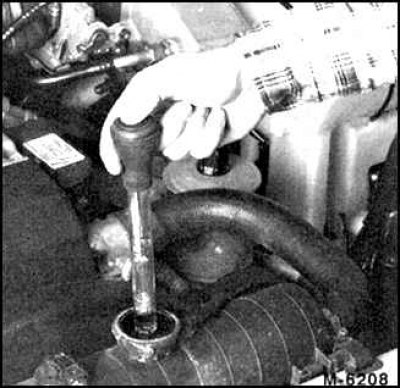

Caution: Do not open the cap when the engine is hot.


3. Use a measuring hydrometer to collect some coolant and read its density using the float.


In our latitudes, engine protection against freezing must be guaranteed down to –30°C, and in very cold climates – down to –45°C.

Adding coolant concentrate (Mercedes Benz)


Attention! Since some parts of the cooling system are made of aluminum, only suitable antifreeze and anticorrosion agent approved for use by Mercedes-Benz should be used for these purposes.


Example: Measuring the freeze protection of a 4-cylinder engine (without air conditioning) using a hydrometer guarantees this protection down to a temperature of -20°C. In this case, drain 1.3 liters of coolant from the cooling system and then add 1.3 liters of pure antifreeze concentrate. This guarantees engine protection against freezing down to a temperature of -37°C. If you want to guarantee engine protection against freezing down to -45°C, replace 1.7 liters of fluid.

Measured value,°C
0
–10
–20
–30
Quantitative difference, l
Petrol engines
4-cylinder -37° / no air conditioning -45° 4,0 / 4,4 2,4 / 2,8 1,3 / 1,7 0,5 / 0,9
4-cyl. -37°/ with air conditioning -45° 4,5 / 5,0 2,7 / 3,2 1,4 / 1,9 0,5 / 1,0
6-cylinder –37°/ –45° 5,0 / 5,5 3,0 / 3,5 1,6 / 2,1 0,6 / 1,1
Diesel engines
Engine 2.0L –37° / –45° 4,0 / 4,4 2,4 / 2,8 1,3 / 1,7 0,5 / 0,9
Engine 2.0 l –37° / –45° with air conditioning 4,5 / 5,0 2,7 / 3,2 1,4 / 1,9 0,5 / 1,0
Engine 2.2L –37° / –45° 3,5 / 3,9 2,1 / 2,5 1,1 / 1,5 0,5 / 0,8
Engine 2.2 l –37° / –45° with air conditioning 3,8 / 4,1 2,3 / 2,6 1,2 / 1,6 0,5 / 0,8
Engine 2.5 l –37°/ –45° 3,8 / 4,1 2,3 / 2,6 1,2 / 1,6 0,5 / 0,8


Attention! The values given in the table are valid for a coolant temperature of approximately +20°C.


Close the radiator cap and check the antifreeze protection again after a test drive.

Checking the tightness of the cooling system


Check coolant hoses for porous areas by squeezing and bending, replace any hoses that have become stiff.

Hoses must not be placed too short on the connecting pipes.

Check the rubber hose clamps for tight fit and replace the clamps if necessary.

Check the radiator cap seal or expansion tank for damage.

Caution! Too low a coolant level can also be caused by an incorrectly tightened radiator cap (no tightness).


A clear coolant leak and/or oil in the coolant, as well as white exhaust clouds when the engine is hot, indicate a bad head gasket.

Warning! Sometimes it is difficult to detect the leak location. In this case, we recommend using a pressure test in a car repair shop (a special device is required). At the same time, you can also check the safety valve of the radiator cap.
This article is available at: russian, bulgarian, belarusian, ukrainian, serbian, croatian, romanian, polish, slovak, hungarian
The article has been verified: Khromov Roman Mikhailovich
Share with friends:
◀ Previous
C-Class W202 / Maintenance
Next ▶

Lubrication of the throttle control system
Checking electrical connections
Replacing spark plugs
Checking the condition of the V-belt
Engine oil change
Air Conditioner: Checking the Refrigerant Level
Replacing the fuel filter / coarse filter
Replacing the air filter element
Checking the exhaust system
Gearbox / final drive
More similar articles for repairing other models

☛ Coolant — Checking the Level Mercedes W168 (1997-2004)
☛ Checking the level and topping up the coolant Mercedes W210 (1996-2002)
☛ Checking the cooling system and coolant, replacing the liquid Mercedes W463 (1999-2019)
☛ Checking the cooling system and frost resistance of the coolant,… Mercedes W163 (1997-2005)
☛ Checking the coolant level Mercedes W126 (1979-1991, petrol)
☛ Checking the coolant level sensor Mercedes Sprinter (1995-2000, diesel)
Link in different formats to this article
Comments and feedback from visitors
No comments yet


How much will 26 + 23 ?


W203 (2000-2007) 
  • General information
  • Introduction to guide
  • User manual
  • Maintenance
  • Power unit
  • Gasoline engines
  • Diesel engines
  • Cooling system
  • Ventilation and heating
  • Supply system
  • Injection system (gasoline)
  • Injection system (diesel)
  • Exhaust system
  • Ignition and control system
  • Charge and launch systems
  • Transmission
  • Mechanical gearbox
  • Automatic gearbox
  • Clutch and drive shafts
  • Differential
  • Chassis
  • Brake system
  • Car suspension
  • Steering
  • Body
  • Exterior (external elements)
  • Interior (internal elements)
  • Electrical equipment
  • Equipment and devices
  • Lighting system
  • Electrical diagrams (2000)
  • Electrical diagrams (since 2001)
W202 (1993-2000) 
  • General information
  • User manual
  • Driving a car
  • Car care
  • Maintenance
  • Power unit
  • Gasoline engines
  • Diesel engines
  • Lubrication system
  • Cooling system
  • Heating and ventilation
  • Ignition system
  • Fuel system
  • Injection system (gasoline)
  • Injection system (diesel)
  • Exhaust system
  • Transmission
  • Clutch
  • Car gearbox
  • Chassis
  • Suspension, wheels and tires
  • Steering
  • Brake system
  • Body
  • Exterior (external elements)
  • Interior (internal elements)
  • Doors and windows
  • Electrical equipment
  • Equipment and devices
  • Power devices
  • Lighting system
  • Electrical circuits
190 (W201) (1982-1993) 
  • General information
  • Introduction to the guide
  • Operation and care
  • Maintenance (gasoline)
  • Maintenance (diesel)
  • Troubleshooting
  • Power unit
  • Petrol engine I4
  • Petrol engine V6
  • Diesel engines
  • Engine overhaul
  • Cooling and heating
  • Power system (carburetor)
  • Injection system (gasoline)
  • Injection system (diesel)
  • Exhaust system
  • Charge and start system
  • Ignition system (I4)
  • Ignition system (V6)
  • Diesel heating system
  • Transmission
  • Clutch
  • Mechanical gearbox
  • Automatic gearbox
  • Cardan shaft and axle shafts
  • Chassis
  • Brake system
  • Car suspension
  • Steering
  • Body
  • Exterior (external elements)
  • Interior (internal elements)
  • Doors, locks and windows
  • Electrical equipment
  • Equipment and devices
  • Electrical circuits
 
MercedesMan.ru © 2017–2026 · Mobile version · Read about Mercedes · Sitemap: EN BG BY UA RS HR RO PL SK HU · Feedback · Site search · Bookmark A-Class (W168) · C-Class (W201) · C-Class (W202) · C-Class (W203) · E-Class (W123) · E-Class (W124) · E-Class (W210) · G-Class (W463) · M-Class (W163) · S-Class (W116, petrol) · S-Class (W126, petrol) · S-Class (W140) · S-Class (W220) · Sprinter · Vito 1 · Vito 2 · Vario 814D ·
 
We only use cookies without which some of the site's features may not be available.