



After disassembly, the sealing rings must be replaced with new ones.
Do not use pistons and cylinders with worn, damaged or oxidized working surfaces. Install only new cylinder assemblies.
Use only the prescribed brake fluid; it is not permissible to use brake fluid with a long production period.
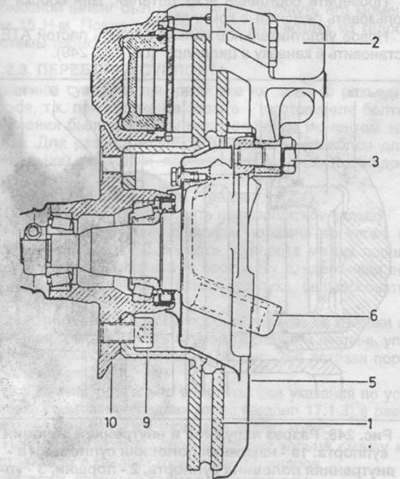
Fig. 247. Section of brake disc, pistons and caliper.
1 - brake disc,
2 - support,
3 - mounting bolt,
5 - protective cover,
6 - steering knuckle,
9 - Allen bolt,
10 - front wheel hub.
Lubricate pistons and sealing rings (cuffs) with either clean brake fluid or brake grease. The most suitable grease is the one recommended by the manufacturer of the brake equipment.
The caliper halves should not separate during disassembly, since the mounting bolts were tightened to a specific torque during assembly at the manufacturer.
Remove the brake pads as described above.
Using a screwdriver, remove the dust ring.
Using pliers, hold the piston in the caliper and press out the opposite piston using compressed air (see fig. 248).
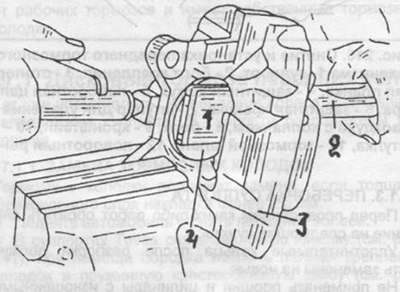
Fig. 248. Removing pistons from the caliper.
1 - rubber pad on splines,
2 - splines,
3 - support,
4 - pistons.
Remove the piston sealing ring from the groove in the cylinder. Press out the second piston.
Check the condition of all parts. Use repair kits for assembly.
Lubricate the new sealing ring with ATE paste and install it in the groove in the cylinder (see fig. 249).
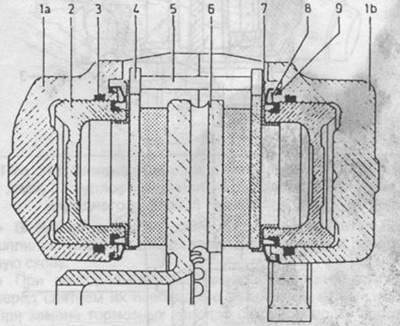
Fig. 249. Section of the outer and inner halves of the support.
1a - outer half of the support,
1v - inner half of the caliper,
2 - pistons,
3 - piston sealing ring,
4 - brake shoe,
5 - brake shoe mounting pin,
6 - brake disc,
7 - heat-insulating screen,
8 - clamping ring,
9 - dust protection ring.
Insert pistons into the cylinders.
Using a template, check the position of the piston in the caliper, as shown in Fig. 250. If necessary, turn the piston.
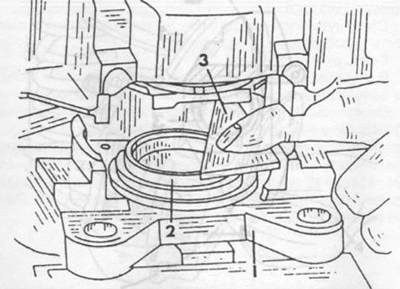
Fig. 250. Template for checking piston position.
1 - support,
2 - piston,
3 - template.
Place the dust cap on the caliper flange and press it onto the caliper using a hand press with a force of 300 N.
Install the heat-insulating screen on the piston so that the screen cutout aligns with the piston protrusion.
Using tool 000 589 496 300 installed in the caliper, press the heat-insulating screen into the piston. The piston protrusion must be at least 0.1 mm above the surface of the screen. The screens for the outer and inner pistons are different.
Install the brake pads as described in the relevant section.
(Article obtained from this portal: MERCEDESMAN)