



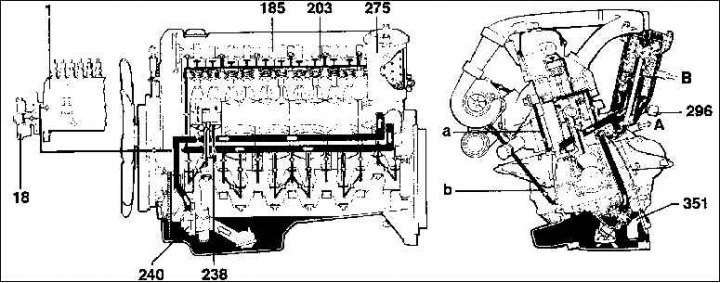
The oil pump (240) sucks engine oil from the oil pan and pumps it into the main circuit oil filter (275). Between the pump and suction area of the oil pump is the oil pressure relief valve (from about 5 bar). Due to this, some of the oil is poured into the suction space. On the side of the oil pan is the oil level sensor (351).
Engine oil is forced past the recirculation shutoff valve into the oil filter. The recirculation shutoff valve prevents oil from entering the oil pan when the engine is stopped.
From the oil filter, purified oil enters the main oil channel. If the oil filter is clogged, the bypass valve directs uncleaned oil directly into the main oil channel.
From the main oil channel there are branches for lubrication of the crankshaft bearings. Through inclined holes in the crankshaft, oil gets into the connecting rod bearings, and inside the connecting rod body - to the piston pins. Through the oil injection nozzles (238), oil is injected onto the base of the pistons for cooling.
At the same time, engine oil enters the cylinder head through the injection pipes and there provides lubrication for the chain tensioner, camshaft bearings (185) and plate tappets (203). The fuel pump (1) and fuel injection advance clutch (18) are additionally lubricated through the transverse holes, as well as the turbocharger, if present.
- A - Unrefined oil to air-to-oil cooler
- B - crude oil from the air-oil cooler
Attention! In 2.2/2.5 L engines, instead of an air-to-oil cooler, an oil-to-coolant heat exchanger is installed, which is located next to the oil pan.