



1. Inspect pipes and pipe connections for signs of developing leaks, severe corrosion and mechanical damage. Check the condition and reliability of all brackets and hangers of the system.
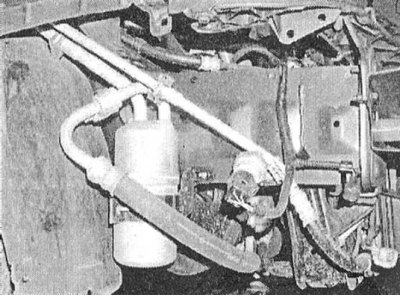
Note: Hangers located near the catalytic converter are usually made of heat-resistant rubber and are distinguished by their red color.
2. At the same time, inspect the underbody of the car for holes, corrosion, loose seams, and other defects that could allow exhaust gases to enter the car's interior. Seal all openings with a suitable sealant.
3. The exhaust system is often the source of rumbling and other unpleasant sounds. Shake and tug the pipes, mufflers and catalytic converter. If any of the components come into contact with body elements or suspension parts, replace the exhaust system fasteners. The design of the exhaust system is discussed in more detail in Chapter Power and exhaust systems.
4. Inspect the electrical wiring connected to the lambda probe. If necessary, replace the lambda probe installed on the inlet pipe.
5. Inspection of the inside surface of the exhaust pipe allows you to determine the current operating condition of the engine. The composition of the deposits in the pipe indicates the quality of the engine settings. If the pipe is black and sooty on the inside, this may indicate that it is necessary to thoroughly check the fuel system.
(Article borrowed from the web portal: MercedesMan.ru)