
Cars BMW Cars Volkswagen Cars Chevrolet Cars Land Rover Cars Lada Cars Honda Cars Peugeot
English Русский
Български
Беларускі
Український
Српски
Hrvatski
Română
Polski
Slovenský
Magyar
Bookmark News and articles Sitemap Feedback Site search
MercedesMan.ru


A-Class C-Class E-Class G-Class M-Class S-Class Others
W123 (1976-1985) W124 (1984-1995) W210 (1996-2002)
  • Main
  • E-Class
  • W210 (1996-2002)
  • General information
  • Car care
  • Cleaning the car interior

Cleaning the car interior (Mercedes-Benz E-Class W210)

0
It is better to use special products for cleaning the interior. Forget about soap and universal household cleaners: glass, seats and upholstery materials are exposed to strong dust, dirt and moisture, which are easier to remove with specially designed products. These special cleaning products are not cheap, but in any case, their use will pay off your expenses.

Basic materials needed for interior cleaning:
  • lint-free cloths. Use them for wet and dry cleaning;
  • brushes for cleaning clothes (for cleaning seat cushions);
  • vacuum cleaner with various attachments;
  • suede for wiping glass;
  • fine-pored sponges for artificial leather parts.

Interior cleaning and care products


Plastic cleaners are designed for surfaces made of artificial materials. They clean and refresh the color of plastic, give it shine and remove static charge. They protect surfaces from dirt and dust for a long time.

Textile cleaning products are designed for pillows, rugs, door trims and interiors. They reliably remove dirt and dust. They refresh the color of the upholstery material. Many cleaners are able to remove even stubborn dirt.

Glass cleaners remove even the toughest stains, such as insect marks, nicotine, oil stains, etc. Suitable for all glass surfaces.

Rubber care products (silicone containing) are designed for door, glass and luggage compartment seals, as well as for mats. They keep rubber elastic, prevent it from hardening and keep the colour fresh.

Anti-limescale spray for glass preserves cleaned glass for several days or weeks (depending on the weather). The spray applied to the glass will form a layer of foam after a few minutes, which you can remove with a dry paper towel.


Sequence of works


1. Clean your car. Don't forget to clean the ashtrays.

2. Remove the rugs, beat them out, and vacuum them if necessary.

3. Wash rubber mats.

Caution! The underside of the mat must be dry. A damp underside of the mat may cause odor and stains on the floor covering.


4. Remove large dirt particles with a vacuum cleaner. For soft and hard textile upholstery, use the appropriate vacuum cleaner attachments. Wipe smooth rubber floor coverings with a damp cloth.

5. Clean the seat cushions with brushes or vacuum. Wipe the remaining surfaces made of artificial materials with a damp cloth. Use brushes to treat corners and hard-to-reach places.

6. Wipe the seat belts with a dry brush. If heavily soiled, use a soap solution.
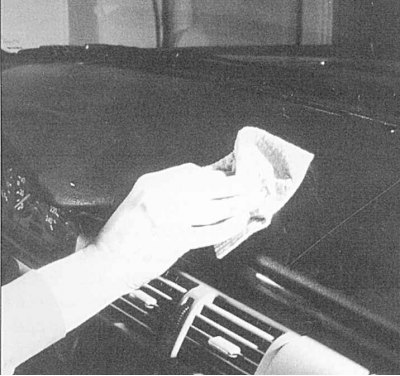
Fig. 3.1. Applying care product for artificial leather

Fig. 3.1. Applying care product for artificial leather


7. Apply the artificial leather care product to the leather and spread it with a damp, clean chamois cloth (Fig. 3.1). This will ensure that the product penetrates deep into the leather surface. If the product gets on the glass, steering wheel or dashboard, remove it immediately with a glass or artificial material cleaner.

Warning! Never use gasoline or solvents, as this may leave stains on artificial materials that cannot be removed.


8. Use a suitable product to clean surfaces made of artificial materials. Rinse the areas with the product applied with water and wipe with a dry cloth. In case of heavy contamination, a non-concentrated fat-dissolving product diluted in warm water will help.

9. Clean the ceiling, which is usually covered with textiles, only if it is very dirty. Spray it well with a textile cleaner and wipe it with a sponge or terry cloth mitten.

Repeat this operation only if necessary. Treat the entire ceiling, otherwise stains and streaks may form.
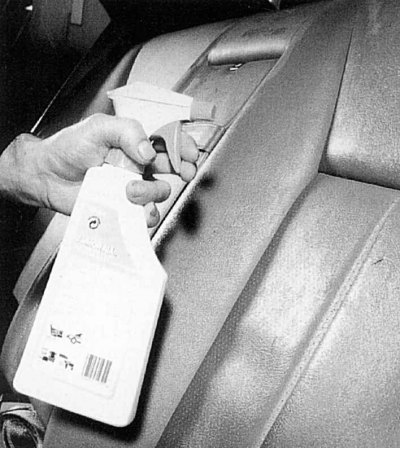
Fig. 3.2. Applying leather upholstery care product to seats

Fig. 3.2. Applying leather upholstery care product to seats


10. Treat the seat upholstery with a foaming upholstery cleaner. Clean leather upholstery only with a special leather cleaner (Fig. 3.2). Vacuum the cushions and upholstery thoroughly while they are damp, this is the best way to remove dirt.
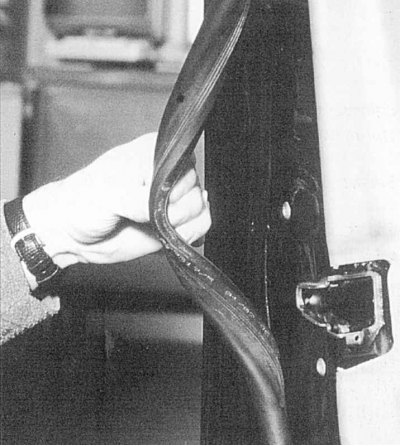


Fig. 3.3. Inspection of rubber door seals

Fig. 3.3. Inspection of rubber door seals


11. Rubber door seals must be regularly inspected (Fig. 3.3) and maintained by spraying with a silicone-containing agent.

This significantly extends the service life of rubber door seals.

Replacing them is quite an expensive undertaking.

12. Clean the inside of the glass with a damp chamois and glass cleaner. Then wipe with dry corrugated paper.

13. If you often smoke in your car, you may notice a grey film on the glass even after cleaning. A special polish will help in this case.

Attention! Do not allow drops of the product to come into contact with surfaces made of artificial materials - this may leave difficult to remove or permanent stains.
This article is available at: russian, bulgarian, belarusian, ukrainian, serbian, croatian, romanian, polish, slovak, hungarian
The article has been verified: Polyakov Zakhar Grigorievich
Share with friends:
◀ Previous
E-Class W210 / Car care
Next ▶

 
Car body wash
Checking the cleanliness of the car
Car wash area
If you wash your car yourself
Engine wash
More similar articles for repairing other models

☛ Interior Light Switches Mercedes W168 (1997-2004)
☛ Interior lighting of the salon Mercedes W202 (1993-2000)
☛ Interior controls and equipment Mercedes W463 (1999-2019)
☛ Interior controls and equipment Mercedes W163 (1997-2005)
☛ Interior controls and equipment Mercedes W140 (1991-1998)
☛ Repair and cleaning of injectors Mercedes Sprinter (1995-2000, diesel)
Link in different formats to this article
Comments and feedback from visitors
No comments yet


How much will 32 + 16 ?


W210 (1996-2002) 
  • General information
  • Vehicle description
  • Working conditions and tools
  • Car care
  • Diesel engines
  • Engine repair
  • Lubrication system
  • Cooling system
  • Injection system
  • Supply system
  • Exhaust system
  • Gasoline engines
  • Engine repair
  • Lubrication system
  • Cooling system
  • Control system
  • Power and exhaust system
  • Transmission
  • Clutch
  • Mechanical gearbox
  • Automatic gearbox
  • Drive shafts
  • Chassis
  • Car suspension
  • Steering
  • Tires and wheels
  • Brake system
  • Body
  • Exterior (external elements)
  • Interior (internal elements)
  • Doors and windows
  • Heating and ventilation
  • Electrical equipment
  • Equipment and devices
  • Power devices
  • Lighting and signaling
  • Electrical circuits
W124 (1984-1995) 
  • General information
  • Governing bodies
  • Driving and operation
  • Weekly care
  • Maintenance (gasoline)
  • Maintenance (diesel)
  • Troubleshooting
  • Power unit
  • I4 petrol engine
  • V6 petrol engine (SOHC)
  • V6 petrol engine (DOHC)
  • Diesel engines
  • Engine overhaul
  • Cooling system
  • Heating and ventilation
  • Fuel system (carburetor)
  • Injection system «Bosch CIS-E»
  • Injection system «Bosch HFM»
  • Diesel fuel system
  • Supply system
  • Starting and charging system
  • Ignition system (I4)
  • Ignition system (V6)
  • Preheating
  • Transmission
  • Clutch
  • Mechanical gearbox
  • Automatic gearbox
  • Drive shafts
  • Chassis
  • Brake system
  • Car suspension
  • Steering
  • Body
  • Exterior (external elements)
  • Interior (internal elements)
  • Doors, locks and windows
  • Electrical equipment
  • Equipment and devices
  • Switches
  • Headlights and lighting
  • Electrical circuits
W123 (1976-1985) 
  • General information
  • Introduction to the guide
  • Power unit
  • Engine device
  • Repair M102 engines
  • Repair M110 and M123 engines
  • Cooling and lubrication (M102)
  • Cooling (M110 and M123)
  • Ignition system
  • Power system «Stromberg»
  • Power system «Solex 4A1»
  • Fuel injection «K-Jetronic»
  • Fuel injection «L-Jetronic»
  • Transmission
  • Clutch
  • Mechanical gearbox
  • Automatic gearbox
  • Cardan and rear axle
  • Chassis
  • Front suspension
  • Rear suspension
  • Steering
  • Brake system
  • Body
  • Exterior (external elements)
  • Interior (internal elements)
  • Doors, locks and windows
  • Electrical equipment
  • Equipment and devices
  • Power devices
  • Electrical circuits
 
MercedesMan.ru © 2017–2026 · Mobile version · Read about Mercedes · Sitemap: EN BG BY UA RS HR RO PL SK HU · Feedback · Site search · Bookmark A-Class (W168) · C-Class (W201) · C-Class (W202) · C-Class (W203) · E-Class (W123) · E-Class (W124) · E-Class (W210) · G-Class (W463) · M-Class (W163) · S-Class (W116, petrol) · S-Class (W126, petrol) · S-Class (W140) · S-Class (W220) · Sprinter · Vito 1 · Vito 2 · Vario 814D ·
 
We only use cookies without which some of the site's features may not be available.