



Attachments for automated gearboxes "Sequentronic"
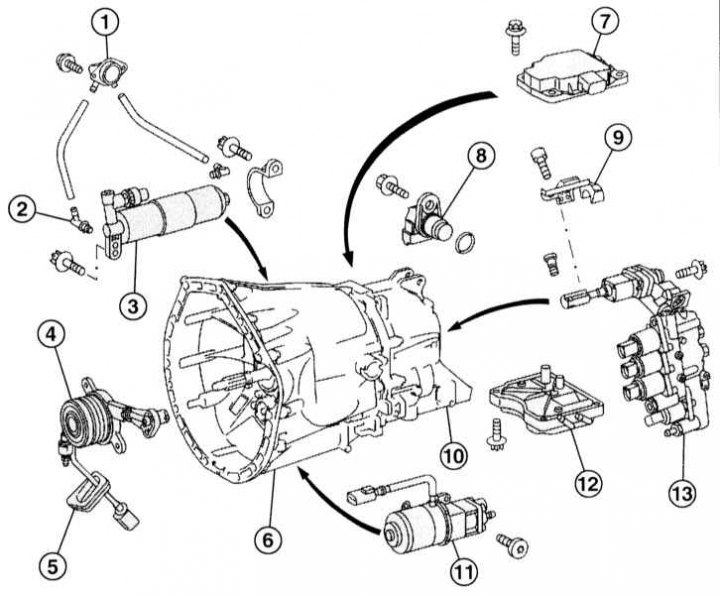
1 - Ventilation cover; 2 - Ventilation valve; 3 - Battery; 4 - Clutch release lever; 5 - Sealing plug; 6 - Front gearbox housing; 7 - Gear recognition switch; 8 - Speed sensor; 9 - Gear recognition sensor holder; 10 - Gearbox housing; 11 - Pump; 12 - Reservoir; 13 - Hydraulic block
Hydraulic control elements for clutch and gear shifting of automated gearbox "Sequentronic"
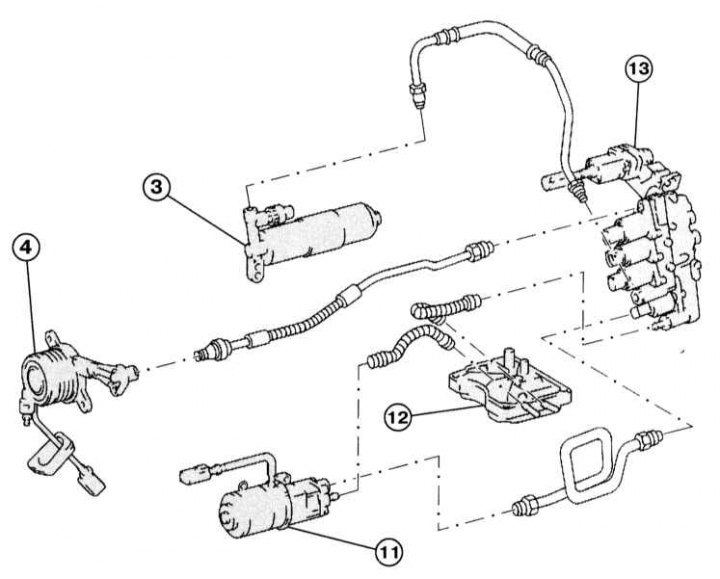
Hydraulic control unit of automated gearbox (Sequentronic)
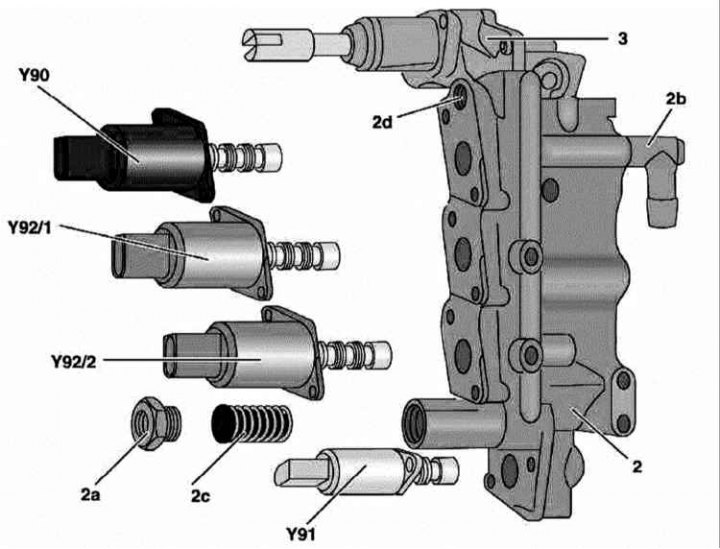
2 - Valve assembly; 2a - Pressure line connector; 2b - Return line connector; 2c - Oil filter; 2d - Clutch release pressure line connector; 3 - Executive cylinder; Y90 - Automatic transmission clutch solenoid valve; Y91 - Automatic transmission brake solenoid valve with built-in pressure reducing valve; Y92/1 - Solenoid valve for switching 1, 3, 5; Y92/2 - Solenoid valve for switching R, 2, 4, 6
Hydraulic pump for automated transmission Sequentronic
Article based on data from the website (MercedesMAN)
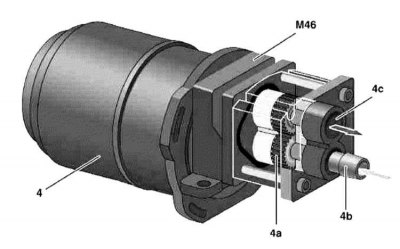
4 - Electric motor; 4a - Gear pump; 4b - Oil intake connector; 4c - Pressure line connector; M46 - Sequentronic Hydraulic Pump [ASG]
Sequentronic hydraulic clutch
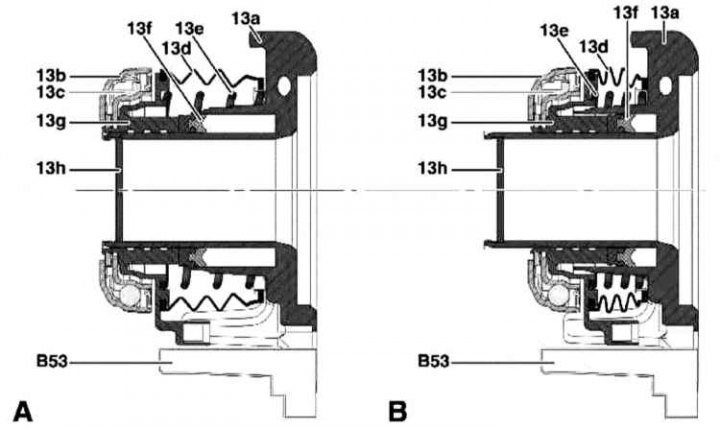
13a - Casing; 13b - Thrust ring; 13c - Balls; 13d - Protective case; 13e - Preload spring; 13f - Seal; 13g - Working piston; 13h - Coupling; A - Clutch disengaged position; B - Basic position. Clutch engaged; B53 - Clutch travel sensor
Functioning of the hydraulic clutch drive
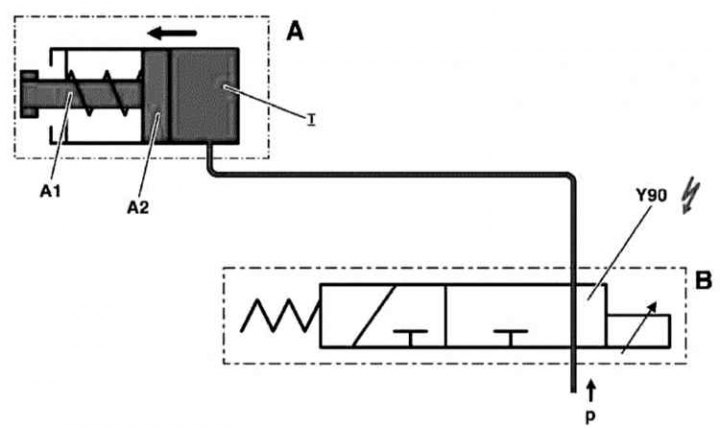
0 - Liquid return channel; A - Central hydraulic clutch release device; A1 - Spring; A2 - Working piston; B - Valve assembly; I - Pressure chamber I; p - Hydraulic pressure; Y90 - Clutch Solenoid Valve
Operating principle of the hydraulic control unit
Oil supply to electromagnetic valves
The oil (Pentosin) pumped by the hydraulic pump is fed through a steel line to the valve assembly (2), pumped through the oil filter (2c) and through the control valve goes to the electromagnetic clutch valves (Y90), switching (Y92/1 and Y92/2) and braking (Y91)
Clutch control
The electromagnetic clutch valve (Y90) is activated by a command from the transmission control unit (N15/6) and supplies oil via the pressure line connected to the connector (2d) to the clutch actuator.
Gear shift control
Depending on the current driving conditions, the control unit (N15/6) activates the corresponding electromagnetic shift valve (Y92/1 or Y92/2) valve assembly. The activated valve provides hydraulic pressure to the shift cylinder, which acts on the central shift rod and ensures the selection of the required gear via the appropriate connecting elements in the transmission.
The operating principle of a hydraulic pump
The electric motor (4) is activated by a command from the control unit (N15/6) and provides drive to the gear pump (4a) connected to the clutch.
The rotation of the gears ensures the suction of the working fluid (oil) through the inlet connector (4b), its compression and supply under pressure through the connector (4c).
The pump also provides oil injection into the system pressure receiver.
The operating principle of the hydraulic clutch drive
The working piston (13g) is pushed forward in the clutch (13h) by hydraulic pressure. The thrust ring (13b) presses the disc spring and activates the clutch.
Internal sealing is ensured by a seal (13f).
The protective cover (13d) provides protection of the moving surface of the clutch release device from dirt. The preload spring (13e) ensures the minimization of the initial load of the release bearing drive in order to reduce the noise level.
With the clutch disengaged
The control unit (N15/6) activates the electromagnetic valve (Y90) in the valve assembly (B), which supplies hydraulic pressure (p) to the release device (A). The working piston (A2) moves forward, towards the disc spring. The thrust ring is pressed against the disc spring, causing it to open.
With the clutch engaged
The valve (Y90) in the valve assembly (B) is not activated and the return spring holds it in the base position. As a result, the pressure chamber I in the hydraulic release device (A) is unloaded, which ensures that there is a connection with the outlet port of the oil reservoir (0).