



Checking the drive belt - the basics
1. Due to their application and design, belts have a limited service life and to avoid problems, belts should be checked periodically.
2. The number of belts is determined by the number of additional systems (units) installed. The water pump, alternator, hydraulic pump of the power steering/suspension system, air conditioning compressor and air injection pump have a belt drive.
3. To improve access for belt inspection, if desired, remove the viscous cooling fan and shroud as described in Chapter 3.
4. With the engine off, use your fingers (and, if necessary, a flashlight) move along the belts, checking for cracks and delamination of the belt. Also check for belt fraying and glaze, which gives the belt a shiny appearance. Both sides of the belts should be checked, which can be done by turning the belt. If necessary, turn the crankshaft with a wrench on the crankshaft pulley hub bolt so that the entire belt can be checked.
Replacing the drive belt
5. Remove the cooling fan blades and shroud as described in Chapter 3. On models equipped with a non-detachable fan casing, it is necessary to remove the fan together with the casing.
6. Loosen the nuts on the end of the tensioner lever bolt (see fig. 7.6).
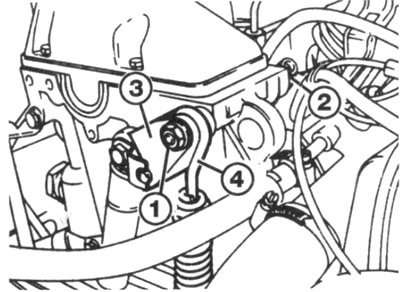
Fig. 7.6. Parts of the auxiliary drive belt tensioner.
1 Tensioner Lever Nut
2 Tensioner Lever Bolt
3 Tensioner lever
4 Tensioner spring
7. Insert a suitable lever (approximately 12.0 mm in diameter and 300 mm long - for example, a wheel lever from a car tool kit) into the hole in the tensioner lever and press the lever counterclockwise so that the lever bolt can be moved towards the intake manifold.
8. Loosen the tensioner spring by turning the lever clockwise.
9. Move the tension pulley back and remove the belt from the pulleys.
10. Install the new belt as follows.
11. Raise the tension pulley slightly and hold it in this position while tensioning.
12. Form a loop in the belt with the leading ribs facing outward, then pass the belt between the water pump and crankshaft pulleys (see fig. 7.12).
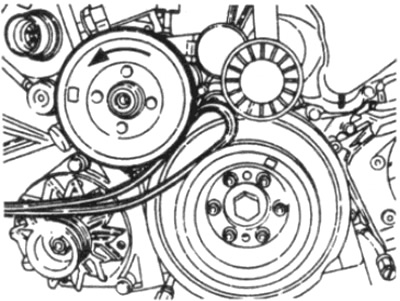
Fig. 7.12. Form a loop in the belt and pass it between the water pump and crankshaft pulleys
13. Using your left hand, press the belt firmly onto the water pump pulley, then turn the water pump pulley counterclockwise until the belt reaches the tension pulley (see fig. 7.13).
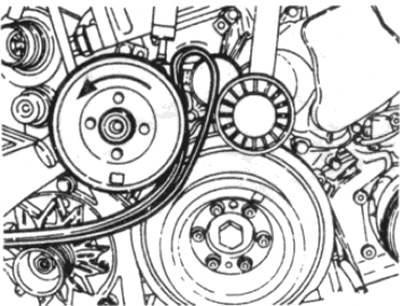
Fig. 7.13. Turn the water pump counterclockwise until the belt reaches the tension pulley
14. Place the belt over the tensioner pulley and water pump pulley, then open the rest of the belt, install it around the remaining pulleys in the order shown (see Fig. 7.14, a-g).
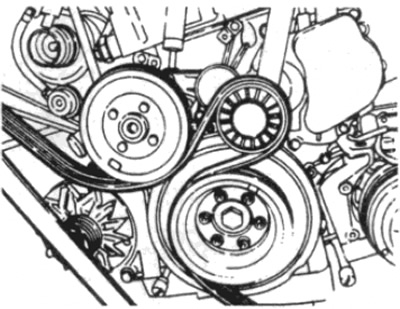
Fig. 7.14, a. Pass the belt over the tension pulley, then pass it around the remaining pulleys
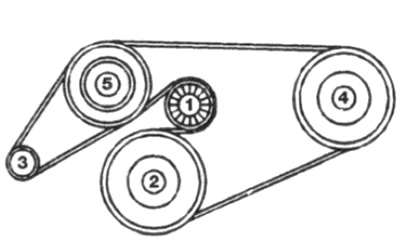
Fig. 7.14,b. Auxiliary drive belt - models without air conditioning
Install the belt around the pulleys in the order shown
1 Tensioner pulley
2 Crankshaft pulley
3 Generator pulley
4 Power steering pump pulley
5 Water pump pulley
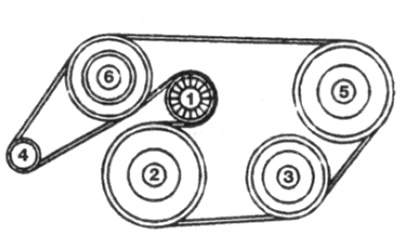
Fig. 7.14, c. Auxiliary drive belt - models with air conditioning but without intermediate tension pulley
Install the belt around the pulleys in the order shown
1 Tensioner pulley
2 Crankshaft pulley
3 Air conditioning compressor pulley
4 Generator pulley
5 Power steering pump pulley
6 Water pump pulley
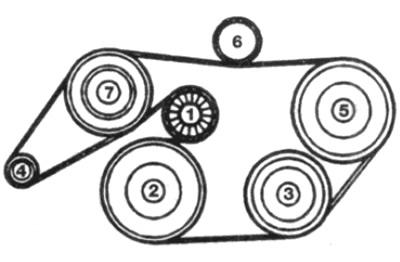
Fig. 7.14, d. Accessory drive belt - models with air conditioning and intermediate tension pulley
Install the belt around the pulleys in the order shown
1 Tensioner pulley
2 Crankshaft pulley
3 Air conditioning compressor pulley
4 Generator pulley
5 Power steering pump pulley
6 Intermediate tension pulley
7 Water pump pulley
15. Loosen the intermediate tension pulley.
Article based on data from the website (mercedesman)
16. Press down on the tensioner lever so that the lever bolt can be inserted into place.
17. Push the bolt back through the lever, making sure the lever spring is positioned correctly.
18. Install a nut on the tensioner lever bolt and, while holding the bolt from turning, tighten the nut to the required torque.
19. Install the radiator fan blades and shroud, and where necessary, the radiator, as described in Chapter 3.