



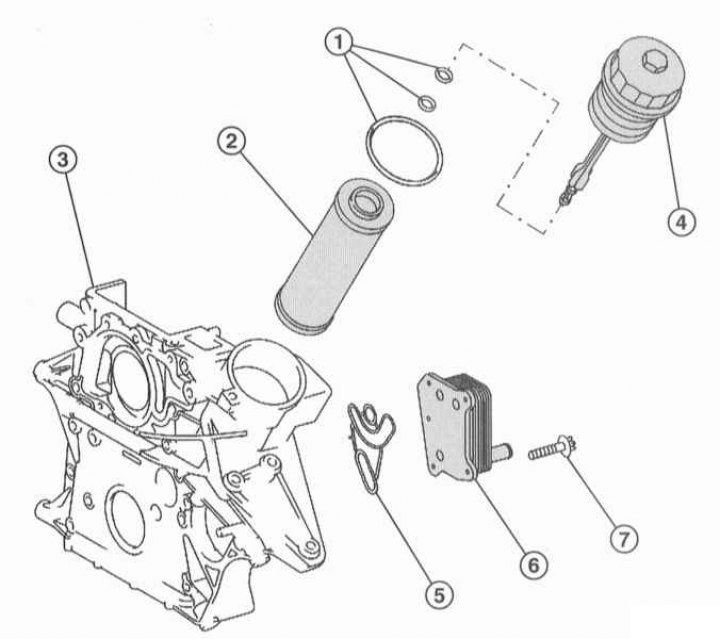
1 - Set of sealing rings; 2 - Filter element; 3 - Distribution mechanism casing; 4 - Oil filter cover; 5 - Oil cooler sealing gasket; 6 - Oil cooler; 7 - Bolt
The engines are equipped with a pressure circulating lubrication system.
The oil pump sucks oil through a mesh from the oil pan and supplies it under pressure to the system through the oil filter. At the outlet of the oil pump there is a pressure reducing valve. When the pressure increases above the set value, the valve opens and some of the oil drains back into the oil pan.
The oil filter's central opening allows oil to flow directly into the main channel. If the oil filter becomes clogged, the bypass valve directs unfiltered oil into the system.
The main oil line branches off into channels for lubricating the crankshaft bearings. Oil is supplied to the connecting rod bearings through inclined holes in the crankshaft. To cool the pistons, oil is injected onto them from below through nozzles.
At the same time, oil reaches the cylinder heads through vertical galleries and is used to lubricate the camshaft bearings and valve train components of the gas distribution system.
Depending on the engine power, the oil can be cooled in an additional oil cooler located on the side, near the oil filter housing and included in the engine cooling system circuit.
Oil consumption
In internal combustion engines, oil consumption is understood to be the amount of oil consumed as a result of the combustion process. Oil consumption should not be confused with oil loss due to leaks in the oil pan, cylinder head cover, etc.
Normal oil consumption occurs due to the combustion of a small amount of oil in the cylinders, due to removal with combustion products and wear products. In addition, oil is lost due to high combustion temperatures and high pressures that occur during engine operation. Oil consumption is also affected by external operating conditions, such as driving style, as well as manufacturing tolerances of engine parts. Oil consumption should not exceed 0.8 l/1000 km.
Caution! Never fill oil above the Max mark. If an excess amount of oil has been poured, it must be removed. Otherwise, the catalytic converter may be damaged, since unburned oil gets into the exhaust system.