



In petrol models, the low pressure required for this is taken from the intake manifold.
In vehicles with diesel engines, low pressure is generated by a vacuum pump mounted on the engine.
Checking the performance of the brake booster is necessary in cases where the driver needs to apply too much force to the brake pedal to ensure the required braking effect.
1. Press the brake pedal down hard to the stop at least five times with the engine off, then start the engine with the brake pedal pressed. Now the pedal should move down noticeably under your foot.
2. Disconnect the low pressure supply hose 2 from the brake booster 1 and start the engine (see illustration).
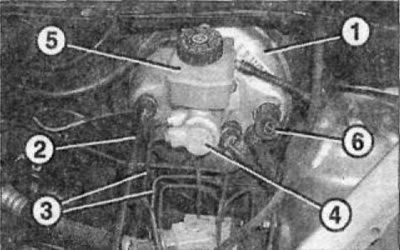
14.2 Brake drive vacuum booster
1 - brake actuator vacuum booster
2 - low pressure supply hose
3 - brake pipes
4 - master brake cylinder
5 - expansion tank with brake fluid
6 - brake booster sensor
Place your finger on the end of the hose to check for low pressure. If there is no vacuum, check the condition of the vacuum hose and make sure it is not damaged. If necessary, install a new hose and secure it with clamps.
If low pressure is supplied, measure it and, if necessary, replace the vacuum booster itself in the workshop.