
Cars BMW Cars Volkswagen Cars Chevrolet Cars Land Rover Cars Lada Cars Honda Cars Peugeot
English Русский
Български
Беларускі
Український
Српски
Hrvatski
Română
Polski
Slovenský
Magyar
Bookmark News and articles Sitemap Feedback Site search
MercedesMan.ru


A-Class C-Class E-Class G-Class M-Class S-Class Others
190 (W201) (1982-1993) W202 (1993-2000) W203 (2000-2007)
  • Main
  • C-Class
  • W201 (1982-1993)
  • General information
  • Introduction to the guide
  • Technical condition checks performed from the driver's seat

Technical condition checks performed from the driver's seat (Mercedes-Benz C-Class W201)

0
Contents: Handbrake ↡ Foot brake (pedal) ↡ Steering wheel and steering column ↡ Windshield and rear view mirrors ↡ Seat belts and seats ↡ Doors ↡

Handbrake


Check the operation of the handbrake.

Excessive movement (too many clicks) indicates a faulty brake or incorrect cable adjustment.

Make sure that the handbrake does not release when the lever is pressed from the side. Check that the lever is securely fastened.

Foot brake (pedal)


Press the brake pedal and make sure that the pedal does not "creep" to the floor, which would indicate a malfunction of the master brake cylinder. Release the pedal, wait a few seconds, and then press the pedal again. If the pedal has time to drop almost to the floor before strong resistance appears from the pedal, then the brakes need to be adjusted or repaired. If the pedal is "soft", then there is air in the hydraulic system that needs to be bled.
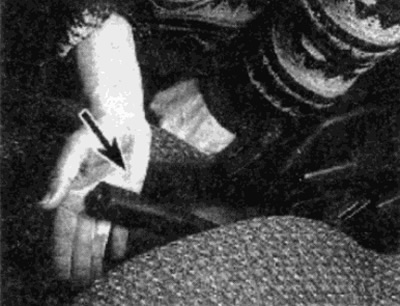
Press the brake pedal and make sure that the pedal does not «creep» to the floor, which would…


Make sure the pedal is securely fastened and in good condition. Also check for leaks on the pedal, floor or carpets, which, if present, would indicate faulty seals in the master cylinder.


Check the brake booster (if it is installed), for which, by pressing the pedal several times and then holding it down, start the engine. As soon as the engine starts, the pedal should drop down slightly. If this does not happen, then there may be a defect in the vacuum hose or in the booster itself.

Steering wheel and steering column


Inspect the steering wheel for cracks, loose hub, spokes or steering wheel rim.

Rock the steering wheel from side to side and then up and down. Make sure the steering wheel does not wobble on the column, which would indicate wear or a loose lug nut. Continue rocking the wheel in the same manner as before, but turn it slightly to the right and left.
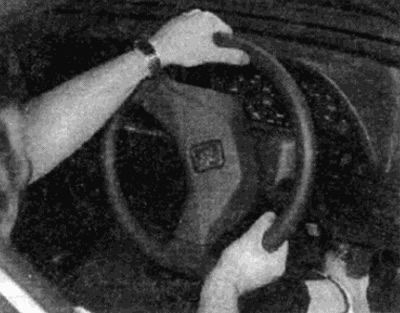
Rock the steering wheel from side to side and then up and down. Make sure the steering wheel does…


Make sure the steering wheel does not wobble on the steering column and there is no unusual movement of the steering wheel that would indicate wear in the column bearings or joints.

Windshield and rear view mirrors


There should be no cracks or other visible damage on the windshield in the driver's field of vision. Small chips caused by stone impacts are acceptable. Rearview mirrors should be securely fastened, undamaged, and easily adjustable.
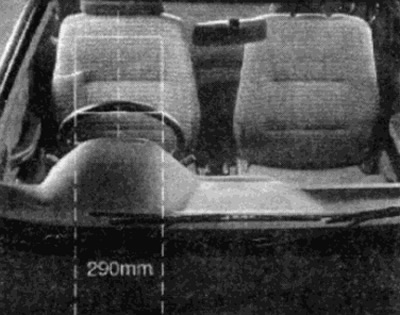


There should be no cracks or other visible damage on the windshield in the driver's field of…


Seat belts and seats


Note: The following checks apply to all seat belts, both front and rear.


Inspect the fabric of all seat belts (including rear seat belts if fitted) for cuts, severe wear or damage. Fasten and unfasten each belt several times to check the buckles. Check the self-retracting mechanism, if equipped. Check the security of all seat belt anchorages that are accessible from inside the vehicle.

The front seats themselves must also be securely fastened, and the seatbacks must be securely locked in the up position.

[Material borrowed from an online resource mercedesman]
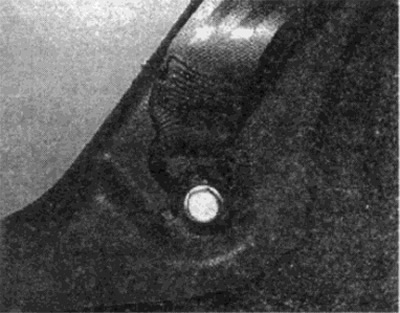
The front seats themselves must also be securely fastened, and the seatbacks must be securely…


Doors


Both front doors must open and close from the outside and from the inside and, when closed, must be securely locked.
This article is available at: russian, bulgarian, belarusian, ukrainian, serbian, croatian, romanian, polish, slovak, hungarian
The article has been verified: Lukyanov Nikita Ilyich
Share with friends:
◀ Previous
C-Class 190 (W201) / Introduction to the guide
Next ▶

Checking the technical condition of the car
Tools and accessories
Repair — general provisions
Vehicle identification
Purchase of spare parts
Technical condition checks performed on a vehicle standing on the ground
Technical condition checks performed on a raised vehicle with freely rotating wheels
Checking the exhaust system of a car
Lifting the car with a jack and placing it on supports
Car Radio Theft Prevention System
More similar articles for repairing other models

☛ Technical data of cars Mercedes W168 (1997-2004)
☛ Checking the technical condition and repairing the engine Mercedes W123 (1976-1985)
☛ Checking the condition of tires and their pressure, designating tires… Mercedes W463 (1999-2019)
☛ Heated driver's seat (ML 430) Mercedes W163 (1997-2005)
☛ Electric driver's seat adjustment Mercedes W140 (1991-1998)
☛ Checking the driven disk for wear (in installed condition) Mercedes Sprinter (1995-2000, diesel)
Link in different formats to this article
Comments and feedback from visitors
No comments yet


How much will 22 + 18 ?


W203 (2000-2007) 
  • General information
  • Introduction to guide
  • User manual
  • Maintenance
  • Power unit
  • Gasoline engines
  • Diesel engines
  • Cooling system
  • Ventilation and heating
  • Supply system
  • Injection system (gasoline)
  • Injection system (diesel)
  • Exhaust system
  • Ignition and control system
  • Charge and launch systems
  • Transmission
  • Mechanical gearbox
  • Automatic gearbox
  • Clutch and drive shafts
  • Differential
  • Chassis
  • Brake system
  • Car suspension
  • Steering
  • Body
  • Exterior (external elements)
  • Interior (internal elements)
  • Electrical equipment
  • Equipment and devices
  • Lighting system
  • Electrical diagrams (2000)
  • Electrical diagrams (since 2001)
W202 (1993-2000) 
  • General information
  • User manual
  • Driving a car
  • Car care
  • Maintenance
  • Power unit
  • Gasoline engines
  • Diesel engines
  • Lubrication system
  • Cooling system
  • Heating and ventilation
  • Ignition system
  • Fuel system
  • Injection system (gasoline)
  • Injection system (diesel)
  • Exhaust system
  • Transmission
  • Clutch
  • Car gearbox
  • Chassis
  • Suspension, wheels and tires
  • Steering
  • Brake system
  • Body
  • Exterior (external elements)
  • Interior (internal elements)
  • Doors and windows
  • Electrical equipment
  • Equipment and devices
  • Power devices
  • Lighting system
  • Electrical circuits
190 (W201) (1982-1993) 
  • General information
  • Introduction to the guide
  • Operation and care
  • Maintenance (gasoline)
  • Maintenance (diesel)
  • Troubleshooting
  • Power unit
  • Petrol engine I4
  • Petrol engine V6
  • Diesel engines
  • Engine overhaul
  • Cooling and heating
  • Power system (carburetor)
  • Injection system (gasoline)
  • Injection system (diesel)
  • Exhaust system
  • Charge and start system
  • Ignition system (I4)
  • Ignition system (V6)
  • Diesel heating system
  • Transmission
  • Clutch
  • Mechanical gearbox
  • Automatic gearbox
  • Cardan shaft and axle shafts
  • Chassis
  • Brake system
  • Car suspension
  • Steering
  • Body
  • Exterior (external elements)
  • Interior (internal elements)
  • Doors, locks and windows
  • Electrical equipment
  • Equipment and devices
  • Electrical circuits
 
MercedesMan.ru © 2017–2026 · Mobile version · Read about Mercedes · Sitemap: EN BG BY UA RS HR RO PL SK HU · Feedback · Site search · Bookmark A-Class (W168) · C-Class (W201) · C-Class (W202) · C-Class (W203) · E-Class (W123) · E-Class (W124) · E-Class (W210) · G-Class (W463) · M-Class (W163) · S-Class (W116, petrol) · S-Class (W126, petrol) · S-Class (W140) · S-Class (W220) · Sprinter · Vito 1 · Vito 2 · Vario 814D ·
 
We only use cookies without which some of the site's features may not be available.