



The C-class petrol engines have a high-voltage static ignition distributor, the so-called direct ignition. This ignition system has no moving parts and no traditional ignition distributor equipped with a runner. This eliminates wear on these parts and increases operational reliability.
The ignition sparks are activated by means of ignition coils directly by means of the engine control device, which also controls the petrol injection system. In the case of a 4-cylinder engine, the ignition coils are mounted on the engine cylinder block, and in the case of a 6-cylinder engine, they are mounted under the high-voltage wire cover of the cylinder head cover. Every two cylinders receive their ignition sparks from one common ignition coil. In this case, one ignites the combustible mixture in the intake stroke of the corresponding cylinder. For starting reliability, several ignition sparks are generated per working stroke of the piston when starting a cold engine (so-called multi-spark ignition).
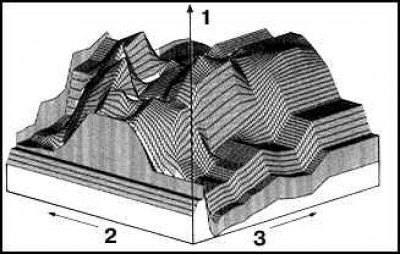
1. Ignition timing angle
2. Load
3. Rotation speed
To determine the correct ignition moment, a control device is used based on the ignition characteristic stored in memory by electronics. Thanks to this, it is comparatively easier to coordinate different operating conditions, such as different fuel quality.
The anti-knock control system in engines with a cylinder capacity of 2.2 liters and above facilitates the operation of vehicles with high compression and smooths out the use of fuel of different qualities. In a 4-cylinder engine, one knock sensor is installed on the engine block, and in a 6-cylinder engine, two knock sensors. They regulate the knock combustion in the engine and influence it with the help of appropriate pulses coming from the engine control device, changing the ignition timing towards late. Thanks to this, engine knocking and malfunctions are prevented.
If 1.8/2.0 l engines predominantly use only low-quality petrol, the ignition must be switched to another characteristic using the matching plug in the engine compartment.
When repairing the electronic ignition system, safety precautions must be followed to avoid injury to persons performing these works or damage to the ignition system.