



Contents: Preliminary actions ↡ Oil ↡
2.0L petrol engine
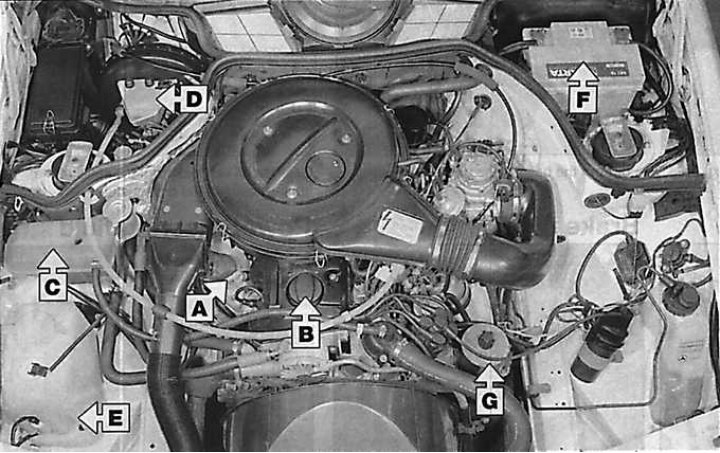
A – dipstick for measuring engine oil level; B – oil filler cap; C – expansion tank; D – brake fluid reservoir for brakes and clutch; E – windshield washer reservoir; F – battery; G – power steering fluid reservoir.
3.0L 24-valve petrol engine
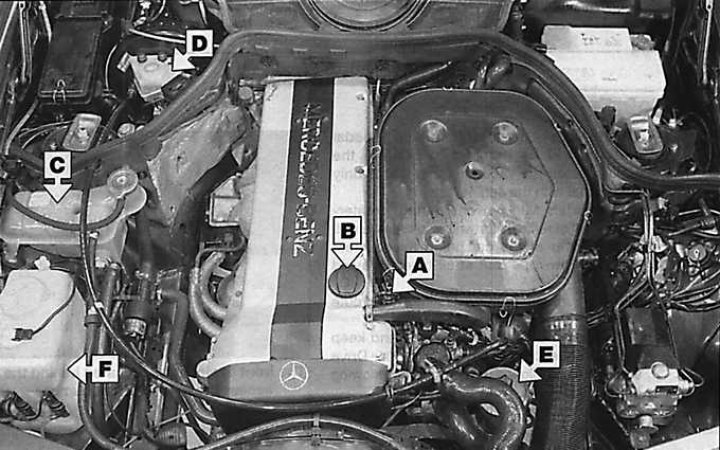
A – dipstick for measuring engine oil level; B – oil filler cap; C – expansion tank; D – brake fluid reservoir for brakes and clutch; E – Power steering fluid reservoir; F – windshield washer reservoir
Preliminary actions
Place the vehicle on a level, horizontal surface.
Check the engine oil level before starting the engine, but not earlier than 5 minutes after turning off the engine.
Oil
Fill the engine with only the engine oil specified by the manufacturer.
If the engine oil level is constantly decreasing and you often have to top up the engine with oil, check for engine oil leaks. To do this, spread a large sheet of paper under the engine when parking the car, and in the morning check for oil stains on the paper, which will help you determine the leak and its location in the engine. If there are no engine oil leaks, then the engine is worn out, and the oil, getting into the engine cylinders, burns along with the fuel.
The engine oil level should be between the two marks on the dipstick. If the oil level is low, the engine may not be lubricated properly, which can cause serious engine damage. If the oil level is too high, the crankshaft sealing ring may fail.
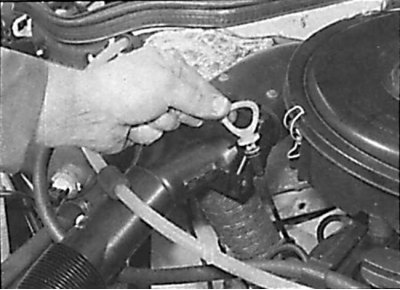
The handle of the oil dipstick is brightly colored. Remove the engine oil dipstick.
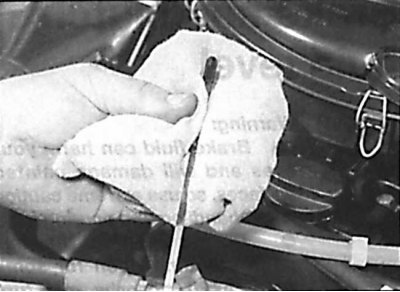
Using a clean rag, wipe off any remaining oil from the dipstick. Insert the dipstick into the engine and remove it again.
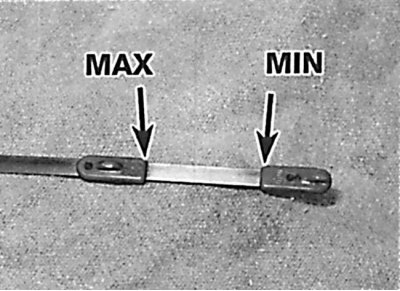
Determine the engine oil level, which should be between the MIN and MAX marks on the dipstick. The amount of oil between the MIN and MAX marks is 1 liter.
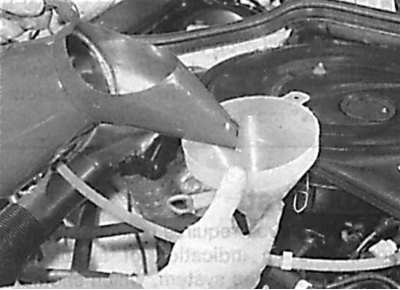
Remove the oil filler cap and pour the required amount of oil into the engine.