



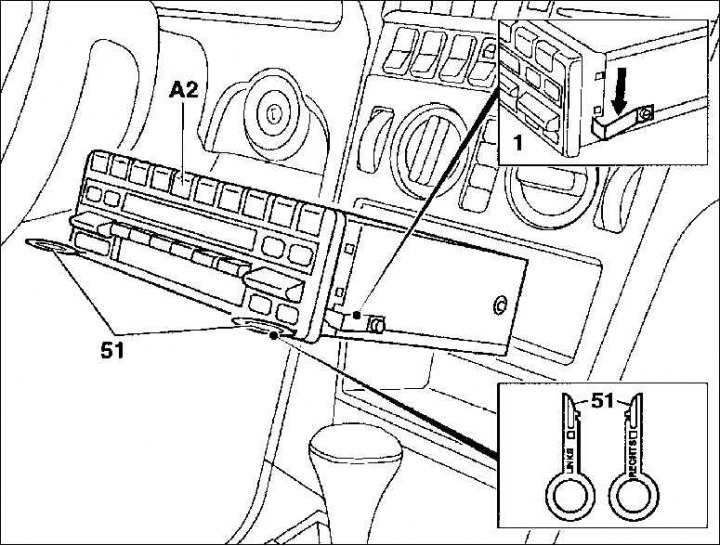
51. Dismantling keys; A2. Radio receiver
Removal
Attention! Both serially installed and commercially purchased receivers have a code number. It protects the receiver from unauthorized use. After switching on the radio receiver, it is necessary to enter the code number in accordance with the operating instructions, otherwise it cannot be switched on. If the radio receiver is coded, determine the radio code before disconnecting the wires from the terminals of the battery or removing it. If the code is unknown, only the manufacturer can put the car receiver into operation. The individual code number is indicated in the radio receiver passport. This passport should not be kept in the car.
1. Disconnect the ground (–) cable from the battery terminal.
Attention! This will erase the radio's anti-theft code.
2. Slide in the two removal keys (51) and remove the radio (A2).
3. Press the locking springs (arrow) and pull out the removal keys.
4. On the back of the radio, label the wires with tape and remove them.
Installation
1. In a production car, an antenna cable is not installed, as well as a line to the antenna with remote control for its extension; they must be installed additionally.
2. Connect the wires to the back of the radio as labeled and in accordance with the manufacturer's instructions.
3. Press the radio into the console opening.
4. Connect the ground (-) wire to the battery terminal. Set the clock time and program the anti-theft code for the radio.
Instructions for additional installation of the radio receiver
Warning! If a serial connecting cable is not used, be sure to pay attention to the absence of unsecured, non-insulated wires. Otherwise, a short circuit will cause the wire to burn out. Adapters for connecting a radio receiver are available in stores.
Please ensure that only type-tested component sets are used (chokes, capacitors) to suppress interference (with a general vehicle operating permit ABE). Specially matched interference suppression kits for Mercedes vehicles are available in the trade, together with installation instructions.
Match the radio receiver to the antenna. To do this, tune a low-power medium-wave transmitter to approximately 1400 kHz. If you do not have a transmitter, you can use a noise generator to tune it. Turn the antenna matching screw with a small screwdriver (front left in the radio receiver housing) until the best reception or maximum noise level is achieved.
Caution: When doing this, turn the adjustment screw only a maximum of 1/2 turn.