



Examination
1. If there are faults in the system, the check consists of replacing it with known good units - however, before this, you can perform several preliminary checks described below.
2. Connect a voltmeter or 12V test lamp between the spark plug wire and a well-grounded part of the engine.
Caution: Make sure the positive cable connection does not touch the body or engine.
3. Have an assistant turn on the heating system by turning the ignition key for a few seconds. While doing this, check the supply voltage to the electrical contacts of the spark plugs.
Note: Initially, the supply voltage will be slightly lower than the battery voltage, but it will increase and, when the spark plugs warm up, it will reach the on-board network voltage. Then, when the warm-up period ends and the shutdown is triggered, the voltage will drop to zero.
4. If there is no voltage on the spark plugs, the fault lies either in the spark plug relay (where provided) or in the power cord.
5. To determine the faulty spark plug, first run the warm-up system to warm the spark plugs to operating temperature, then disconnect the negative terminal from the battery.
6. Refer to the next subsection and remove the power cable from the spark plug terminal. Measure the electrical resistance between the spark plug terminal and the engine ground. Values greater than a few ohms indicate that the spark plug is faulty.
7. If a high current ammeter is available, connect it between the spark plug and the power cable and read the current flowing (ignore the initial surge in current, which can be as much as 50% of the current). Compare the current readings with those listed in the Technical Data - Higher Current Readings section (or no current) indicate a faulty spark plug.
8. As a final check, remove the spark plugs and inspect them as described in the relevant paragraphs.
Removal
9. Disconnect the negative battery terminal.
10. Loosen the nuts on the spark plug contacts. Remove the cable connectors (see fig. 3.10). Please note that the nuts are fixed in the cable connectors.
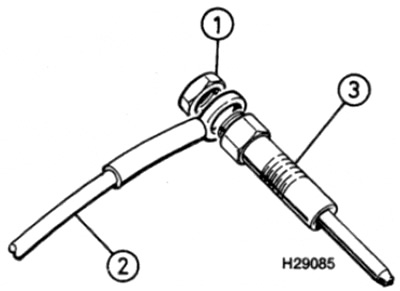
Fig. 3.10. Glow plugs and electrical connections
1 Terminal nut
2 Power cable
3 Spark plug
11. Loosen and remove the spark plugs (see Fig. 3.11, a, b).
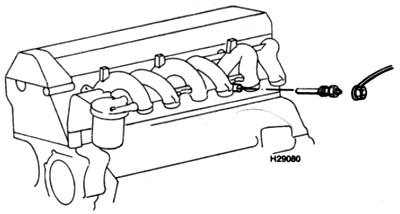
Fig. 3.11, a. Location of spark plugs - non-turbocharged engine
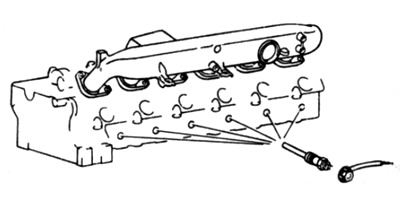
Fig. 3.11, b. Location of spark plugs - turbocharged engine
12. Check if the spark plug probe is damaged. A heavily burnt or sooty probe indicates a faulty fuel injector; for more information, see Chapter 4B.
Installation
13. Installation is carried out in the reverse order, while tightening the spark plugs to the required torque.